
 2026-10-14
 2
Introduction
The deployment of 5G telecommunications networks represents one of the most significant infrastructure transformations of the modern era. At the heart of every 5G base station, remote radio unit (RRU), and active antenna unit (AAU) lies a deceptively simple yet critically important component: the DC power plug. While optical fiber and RF connectors often capture the spotlight in discussions about 5G technology, the DC power plug serves as the literal lifeline that delivers electrical energy to the network's most power-hungry components. Understanding the technical requirements, standards, and design challenges associated with these connectors is essential for anyone involved in telecommunications infrastructure.
The transition from 4G to 5G has fundamentally altered the power demands placed on telecommunications equipment. A single 5G AAU unit consumes approximately 1000 watts of power, while individual base stations may draw 2.5 to 3 times more energy than their 4G predecessors. This dramatic increase in power consumption has cascading implications for every component in the power delivery chain, with the DC power plug bearing a disproportionate share of the burden due to its role as the primary electrical interface between the power source and the telecommunications equipment.
The Evolution of Telecom DC Power Standards
The telecommunications industry has long relied on standardized DC power systems to ensure interoperability, safety, and reliability across diverse equipment from multiple manufacturers. The foundational voltage standard for telecommunications DC power is -48V DC, a legacy specification inherited from the early telephone exchange era. Despite its nominal negative polarity, modern equipment typically operates within a voltage range of approximately -38.4V to -57.6V, with some standards permitting operation from -36V to -72V to accommodate different equipment and operating conditions.
The choice of -48V DC as the telecommunications standard reflects a careful engineering compromise between safety and efficiency. Voltages below 60V DC are generally considered safe for human interaction, making -48V an optimal balance point that provides sufficient electrical pressure for efficient long-distance power transmission while maintaining a substantial safety margin. This safety consideration is particularly important for field-installed equipment where technicians may need to work on connections under live conditions.
As telecommunications infrastructure has evolved, so too have the standards governing DC power connectors. The International Electrotechnical Commission (IEC) has developed a comprehensive framework for DC plugs and socket-outlets used in information and communication technology equipment installed in data centers and telecom central offices. IEC TS 62735-1, for instance, establishes requirements for a 2.6 kW plug and socket system, while the subsequent IEC TS 62735-2 addresses higher-capacity systems rated at 5.2 kW with a rated voltage range from 294 V to 400 V DC.
The 5.2 kW system defined in IEC TS 62735-2 represents a significant advancement in DC power distribution standards. The standard specifies maximum currents of 13 A at 400 V DC and 17.6 A at 294 V DC, with provisions for temporary current escalation to 20 A when the voltage drops to 260 V DC for durations up to 10 minutes. This standard has been adopted in China as GB/T 38428.2-2021, demonstrating international harmonization of DC connector requirements for telecommunications applications.
In North America, UL 2695-2013 provides the governing standard for DC-rated attachment plugs and outlet devices intended for use with information technology and telecommunications equipment installed in restricted access locations. This standard covers connectors rated for currents up to 20 amperes and DC voltages up to 600 volts, restricting their use to indoor installations where access is limited to service personnel. The restricted access requirement acknowledges that while DC power connectors are engineered for safety, they are not intended for general public use.
Electrical Requirements and Current-Carrying Capacity
The electrical performance requirements for 5G DC power plugs have escalated dramatically alongside the power demands of modern telecommunications equipment. The most fundamental requirement is high current-carrying capacity, which necessitates the use of low-resistance materials such as brass and phosphor bronze, combined with thick platings of gold or silver to minimize contact resistance and thermal generation.
Contact resistance represents a critical performance parameter because even milliohm-level resistance at high currents can generate significant heat. For a connector carrying 55 A, a contact resistance of just 1 milliohm would produce approximately 3 watts of dissipated power at each contact interface—a seemingly modest amount that can nonetheless cause localized heating and long-term reliability degradation. The Ericsson RRU Plug DC Connector RNT447 exemplifies the industry's approach to this challenge, featuring a two-position power cable connector rated for 55 A at 60 V DC with screw termination contacts designed for cables ranging from 2.5 to 16 mm².
The challenge of high-current transmission is compounded by the need for compact form factors. Modern 5G base stations are increasingly space-constrained, with Massive MIMO antenna configurations (64T64R) and multi-band radio modules competing for the same internal volume that must also accommodate DC power connectors. This spatial competition has driven innovations in connector design, including the use of copper strip integrated molding techniques that maximize current-carrying capability within constrained dimensions.
The voltage drop across a DC power connector must also be carefully managed. At 55 A, every milliohm of contact resistance produces a voltage drop of 55 millivolts. While this may appear trivial in isolation, cumulative voltage drops across multiple connectors and cable terminations in a power distribution chain can significantly reduce the voltage available at the equipment input. Since telecommunications equipment is designed to operate within specific voltage ranges, excessive voltage drop can trigger low-voltage shutdown conditions or force equipment to operate at reduced efficiency.
Thermal Management and Materials Science
Heat dissipation is perhaps the most vexing challenge in 5G DC power plug design. The combination of high currents, compact dimensions, and outdoor installations subject to solar loading creates a thermal environment that pushes materials to their limits. Connector designers employ a multi-faceted approach to thermal management, addressing the problem at the material, design, and system levels.
At the material level, the selection of contact materials and plating thicknesses plays a decisive role in thermal performance. Copper alloys provide the optimal combination of electrical conductivity and mechanical strength, with beryllium copper and phosphor bronze being common choices for high-reliability applications. The plating material and thickness affect both contact resistance and wear resistance. Gold plating offers superior corrosion resistance and stable contact resistance over thousands of mating cycles, while silver plating provides lower initial contact resistance but is more susceptible to tarnish and wear.
The connector housing material must also withstand the thermal environment while maintaining mechanical integrity. High-temperature engineering thermoplastics such as PBT (polybutylene terephthalate) and LCP (liquid crystal polymer) are commonly employed for their dimensional stability at elevated temperatures and their resistance to UV degradation in outdoor applications. These materials must maintain their dielectric properties across temperature ranges that may span from -40°C to +105°C or beyond.
Structural optimization provides another avenue for thermal management. The use of thermally conductive copper strip integrated molding in power connector contacts allows heat to be conducted away from the contact interface more effectively than through wire conductors alone. Some advanced designs incorporate heat pipes or thermal conductors directly into the connector body to channel heat toward cooler regions of the equipment enclosure.
The thermal challenge extends beyond steady-state conditions to encompass transient events. When a 5G AAU activates additional antenna elements or increases transmit power in response to network demand, the current drawn through the DC power connector may spike dramatically. These current transients must be accommodated without causing excessive temperature rise at the contact interface, which could lead to contact degradation or even failure.
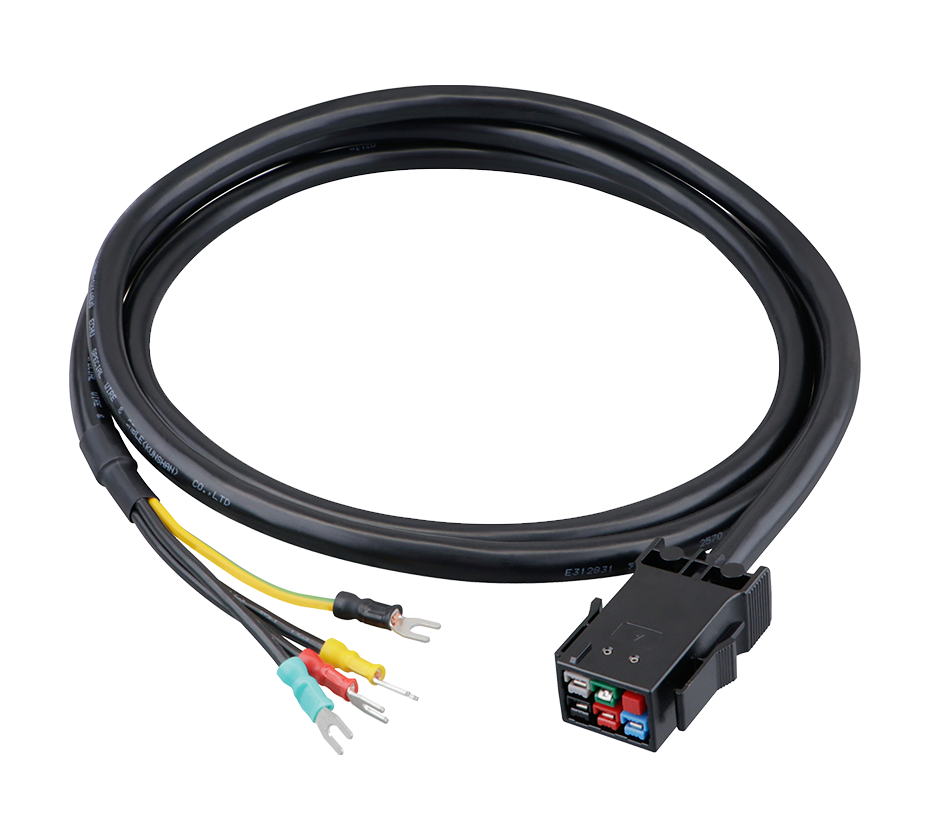
Environmental Protection and Reliability
Telecommunications equipment is frequently deployed in outdoor environments where connectors must withstand rain, dust, temperature extremes, UV radiation, and physical vibration. The ingress protection (IP) rating system quantifies a connector's ability to resist environmental intrusion, with IP67 and IP68 ratings being the most common for outdoor telecommunications applications.
IP67 certification indicates that a connector can withstand temporary immersion in water up to 1 meter for 30 minutes, while IP68 indicates continuous immersion under specified pressure conditions. For most cell tower installations, IP67 protection is sufficient, but connectors deployed in underground vaults or flooding-prone areas require the more stringent IP68 rating.
Achieving these ingress protection ratings requires careful engineering of sealing systems. Silicone rubber gaskets and O-rings are the most common sealing elements, selected for their wide temperature tolerance and resistance to compression set. The connector housing design must ensure that sealing elements remain properly compressed throughout the mating cycle and across the full range of operating temperatures. Bonded sealing elements, which are permanently attached to the connector housing, provide superior reliability compared to loose gaskets that may be lost or misaligned during field installation.
Beyond environmental sealing, 5G DC power plugs must address electromagnetic compatibility requirements. The high currents flowing through power conductors generate magnetic fields that can couple into nearby signal conductors, while external electromagnetic fields from radio transmitters can induce currents in power circuits. Electromagnetic shielding, typically provided by metallic connector housings or conductive coatings, prevents interference between power and signal circuits and helps maintain signal integrity in sensitive telecommunications equipment.
Mechanical reliability is equally critical for outdoor connectors. The bayonet coupling mechanisms and snap-locking systems used in 5G power connectors must maintain secure mating under vibration conditions that could cause simple friction-fit connections to loosen over time. Corrosion-resistant platings on housing components, such as nickel or tin plating over zinc shells, protect against the corrosive effects of atmospheric moisture and pollutants.
The -48V DC Ecosystem and Power Architecture
The -48V DC power standard has shaped the architecture of telecommunications power systems in profound ways. A typical telecom DC power system converts AC utility input into regulated -48V DC output, which is then distributed to base stations, transmission equipment, and other infrastructure components. Battery backup systems, typically using lead-acid or lithium-ion batteries, are connected in parallel with the DC power bus to provide uninterrupted power during grid outages.
The -48V standard offers several architectural advantages for telecommunications deployments. The relatively low voltage minimizes insulation requirements and reduces the risk of electrical breakdown in harsh environments. The negative polarity configuration, with the positive terminal grounded, reduces electrochemical corrosion of underground metal structures by making them cathodic relative to the DC system. This grounding convention, inherited from the early telephone network, continues to provide practical benefits for modern installations.
DC power distribution to remote radio units presents unique challenges due to the distance between the power source and the equipment. Voltage drop over long cable runs is proportional to current and cable resistance, meaning that higher currents result in greater voltage loss. The 5G power escalation, with AAU units drawing approximately 1000 watts, has forced network operators to use larger cable gauges or to deploy remote DC-DC converters that boost voltage for transmission and step it down at the point of use.
The DC power plug serves as the critical interface where all of these architectural considerations converge. It must accept conductors sized appropriately for the current and voltage drop requirements, provide low-resistance electrical connections that minimize losses, and maintain reliable operation over years of outdoor exposure. The connector's current rating must exceed the maximum expected load with an appropriate safety margin, while its voltage rating must accommodate transient overvoltages that may occur during switching operations or lightning events.
Connector Types and Application-Specific Requirements
The diversity of 5G deployment scenarios has spawned a corresponding diversity of DC power plug designs, each optimized for specific applications and environments. Circular connectors dominate outdoor applications due to their inherent sealing advantages and robust mechanical construction. The Amphenol Amphe-TVS, for example, combines bayonet coupling, EMI shielding, and IP67 environmental protection in a rugged circular package suitable for tower-mounted equipment. This connector is available in 2-pole configurations for DC power and 3-pole configurations for AC power, supporting applications up to 80 A with appropriate contacts.
For board-to-board power distribution within equipment enclosures, rectangular connectors with multiple power contacts provide higher density and lower profile than circular alternatives. These connectors must achieve very low DC resistance to minimize power loss and heat generation, with design targets in the milliohm range. The inductance of board-to-board power connectors is also a consideration, particularly for supplying power to high-speed digital circuits where rapid current transients can cause voltage droop and signal integrity problems.
The Ericsson RNT447 connector illustrates the application-specific optimization common in the industry. Designed specifically for connecting Ericsson RRUs to DC power supply systems, this connector features a 2-pole configuration with screw termination contacts, IP65 protection, and a zinc shell construction with EMI shielding. The screw termination design accommodates field installation with cables ranging from 2.5 to 16 mm², providing flexibility for different power distribution architectures. Operating temperature range of -40°C to +85°C ensures reliable performance across the full spectrum of outdoor environmental conditions.
Small cell and micro base station deployments present different requirements, with smaller power demands but more stringent constraints on connector size and installation simplicity. These applications often favor push-pull or snap-locking connector mechanisms that can be mated quickly without specialized tools. The reduced power levels, typically below 200 watts, allow the use of smaller contact geometries and lighter-weight housing materials.
Future Directions and Emerging Technologies
The evolution of 5G DC power plugs continues to be driven by the inexorable increase in power demands and the parallel push toward miniaturization. Emerging technologies such as 5G-Advanced and 6G promise even higher data rates and greater antenna element counts, with corresponding increases in power consumption. Connector designers are responding with innovations in materials, contact geometries, and thermal management techniques.
Intelligent power management represents a promising direction for future DC power connector development. The integration of identification and communication capabilities into power connectors could enable automatic configuration of power delivery parameters based on the connected equipment's requirements. Such "smart" connectors might communicate via a low-speed data channel overlaid on the power conductors, negotiating voltage and current settings without requiring separate control connections.
Advanced materials are also opening new possibilities for connector performance enhancement. Graphene-enhanced copper composites offer the potential for higher electrical conductivity and improved thermal performance compared to conventional copper alloys. Nano-structured surface treatments can reduce contact resistance while improving wear resistance and corrosion protection. These emerging materials may enable connector designs that are smaller, more efficient, and more reliable than current products.
The concept of co-packaged optics, in which optical interconnects are integrated directly with electronic circuits, may eventually influence DC power connector design by changing the physical layout of equipment. As optical connections become more tightly integrated with processing elements, the spatial relationships between power and data connections will evolve, potentially leading to new hybrid connector architectures that combine power delivery with optical or electrical data transmission.
The 5G DC power plug occupies a position of critical importance in telecommunications infrastructure that belies its relatively modest appearance. It must deliver increasing amounts of electrical power to equipment that is simultaneously becoming more compact and more powerful, all while maintaining reliable operation in harsh outdoor environments. The standards, materials, and design techniques that have evolved to meet these demands represent a sophisticated engineering discipline that combines electrical, thermal, mechanical, and materials engineering.
As 5G networks continue to densify and evolve toward higher performance, the demands on DC power connectors will only intensify. The industry's response—characterized by standardized interfaces, advanced materials, and application-specific optimization—provides a solid foundation for meeting these future challenges. For network operators, equipment manufacturers, and component suppliers alike, a thorough understanding of DC power plug technology is essential for building the reliable, efficient, and cost-effective telecommunications infrastructure that modern society depends upon.
 Yang.taya@aitmpower.com
Tel: 15382891313
Phone: 0769-88878951
Fax: 0769-88878955
Wechat: 15382891313


 CN
 CN
 Home >


