
 2026-10-14
 2
Executive Summary
High-current terminal blocks for forklifts represent a critical class of electrical interconnect components engineered to handle the demanding power requirements of electric material handling equipment. These components must reliably transmit currents ranging from 30A to over 350A while withstanding the harsh operational environments typical of industrial warehouses, manufacturing floors, and outdoor logistics operations. This comprehensive analysis examines the technical specifications, material science, safety standards, and application considerations essential for specifying and implementing high-current terminal blocks in forklift systems.
The forklift industry has undergone significant electrification over the past decade, driven by indoor air quality regulations, noise reduction requirements, and operational cost advantages. Electric forklifts now constitute a substantial majority of new material handling equipment sold in developed markets. This transition has elevated the importance of robust electrical interconnection systems that can safely manage the high currents required for both propulsion and battery charging operations.
High-current terminal blocks serve as the critical interface between battery systems, charging infrastructure, motor controllers, and power distribution networks within forklifts. Unlike standard terminal blocks found in low-power control circuits, these specialized components must address unique challenges including extreme vibration, temperature fluctuations, chemical exposure, and the necessity for rapid, safe connection and disconnection during battery swapping operations.
1. Technical Specifications and Performance Parameters
Current and Voltage Ratings
The defining characteristic of forklift terminal blocks is their current-carrying capacity. Industry-standard components typically range from 80A to 350A continuous rating, with peak capacities reaching 500A for short-duration demands. The voltage ratings for these components commonly span from 150V to 600V, accommodating the 24V, 36V, 48V, and 80V battery systems prevalent in modern electric forklifts.
BlockMaster Electronics offers single-pole terminal blocks rated at 60A and 1,000V specifically designed for forklift applications, demonstrating the upper range of voltage handling capabilities. More specialized high-current configurations, such as the Anderson SB350 series, achieve UL-rated currents up to 500A when paired with appropriately sized conductors (up to 350 MCM / 185 mm²).
The relationship between current rating and conductor size is fundamental to terminal block selection. A 350A connector typically accommodates wire sizes from 2/0 AWG to 350 MCM, while lower-current variants like the SB120 handle up to 1 AWG (42.4 mm²) with 240A capability. This relationship ensures that the thermal characteristics of the connector align with the heat dissipation capacity of the attached conductors.
Contact Resistance and Thermal Management
Contact resistance represents a critical performance parameter for high-current terminal blocks. Low-resistance connections minimize power loss (P = I²R) and reduce heat generation at the contact interface. Premium forklift connectors employ silver-plated or tin-plated copper contacts to maintain contact resistance below 1 milliohm throughout their service life.
The thermal management strategy for high-current terminal blocks involves both material selection and geometric design. Copper contacts provide superior electrical conductivity compared to aluminum alternatives, reducing resistance by approximately 20%. Polycarbonate housings, commonly specified for these applications, offer enhanced thermal stability and UV resistance compared to ABS plastics, extending operational lifespan in outdoor applications.
Temperature rise testing is essential for validating terminal block designs. A well-designed high-current connector maintains temperature rise below the limits specified in IEC 60947-7-1, typically ensuring that the contact temperature does not exceed ambient by more than 45K at rated current. The advanced models from manufacturers like TE Connectivity incorporate improved power distribution geometry that lowers temperature rise, thereby extending service life.
Mechanical Durability and Cycle Life
Forklift battery connectors must withstand frequent mating and unmating cycles throughout their operational life. Standard battery connectors are designed for a minimum of 5,000 mating cycles, while premium solutions for AGV applications achieve 30,000 cycles or more. This durability is achieved through robust contact designs, precise manufacturing tolerances, and careful material selection.
The Anderson Powerpole and SB series connectors employ a flat wiping contact system that provides minimal contact resistance at high current while the wiping action cleans the contact surface during each disconnection. This self-cleaning mechanism helps maintain low resistance even in dusty or contaminated environments.
For applications requiring automated connection, such as AGV charging stations, connectors must accommodate alignment tolerances. The TE Connectivity HDC floating charge connectors provide 0.5mm of floating tolerance, enabling vehicles to correct mating positions automatically. This feature is particularly valuable in warehouse automation applications where precise vehicle positioning may be challenging.
2. Material Science and Construction
Contact Materials and Plating
The electrical contacts within high-current terminal blocks represent the most critical elements for performance and reliability. Copper-based alloys serve as the primary contact material due to their excellent electrical conductivity and thermal properties. Brass, a copper-zinc alloy, offers a balance of conductivity, machinability, and cost-effectiveness, making it suitable for many standard applications.
Contact plating significantly influences both performance and longevity. Silver plating provides the lowest contact resistance and excellent resistance to oxidation, but may be subject to tarnishing in sulfur-rich environments. Tin plating offers good corrosion resistance and is more economical, though with slightly higher contact resistance. Nickel plating serves as an effective barrier layer between the base metal and precious metal plating, preventing diffusion and enhancing durability.
The contact geometry also affects performance. Dual-core copper contacts, as employed in high-current forklift connectors, reduce heat buildup by approximately 15% compared to single-core designs. The increased surface area facilitates better heat dissipation and distributes current more evenly across the contact interface.
Housing Materials and Environmental Protection
Terminal block housings must provide mechanical protection, electrical insulation, and environmental sealing while maintaining dimensional stability across temperature extremes. Polycarbonate (PC) has emerged as the material of choice for high-current forklift connectors due to its excellent balance of mechanical strength, thermal stability, and flame retardancy.
The flame retardancy of housing materials is typically specified according to UL94 standards. Forklift terminal blocks generally require V-0 rated materials, indicating self-extinguishing characteristics within 10 seconds of flame removal and no dripping of flaming particles. This requirement is particularly important in battery charging applications where the risk of electrical faults exists.
Environmental sealing ratings, expressed as IP codes, indicate the connector‘s resistance to dust and moisture ingress. Standard forklift connectors typically achieve IP54 (dust-protected and splash-resistant), while premium models for washdown or outdoor applications achieve IP67 (dust-tight and immersion-resistant) or even IP68 (continuous immersion). The selection of sealing level depends on the specific operating environment and cleaning procedures employed.
Spring and Screw Connection Technologies
High-current terminal blocks employ various connection technologies to secure conductors. Screw connection, the traditional approach, uses a screw-driven clamping mechanism to compress the conductor against a current bar. This method offers high contact force and is suitable for a wide range of conductor sizes, though it requires periodic retightening to maintain proper torque.
Spring-cage technology, exemplified by WAGO’s CAGE CLAMP system, uses a spring-loaded mechanism to maintain constant contact pressure regardless of temperature fluctuations or vibration. This approach eliminates the need for periodic retightening and provides excellent resistance to loosening under vibration—a significant advantage in mobile equipment applications.
For the highest current applications, specialized connection systems may employ busbar contacts rather than wire terminations. These designs enable direct connection to the forklift’s power distribution system, reducing the number of interfaces and potential failure points.
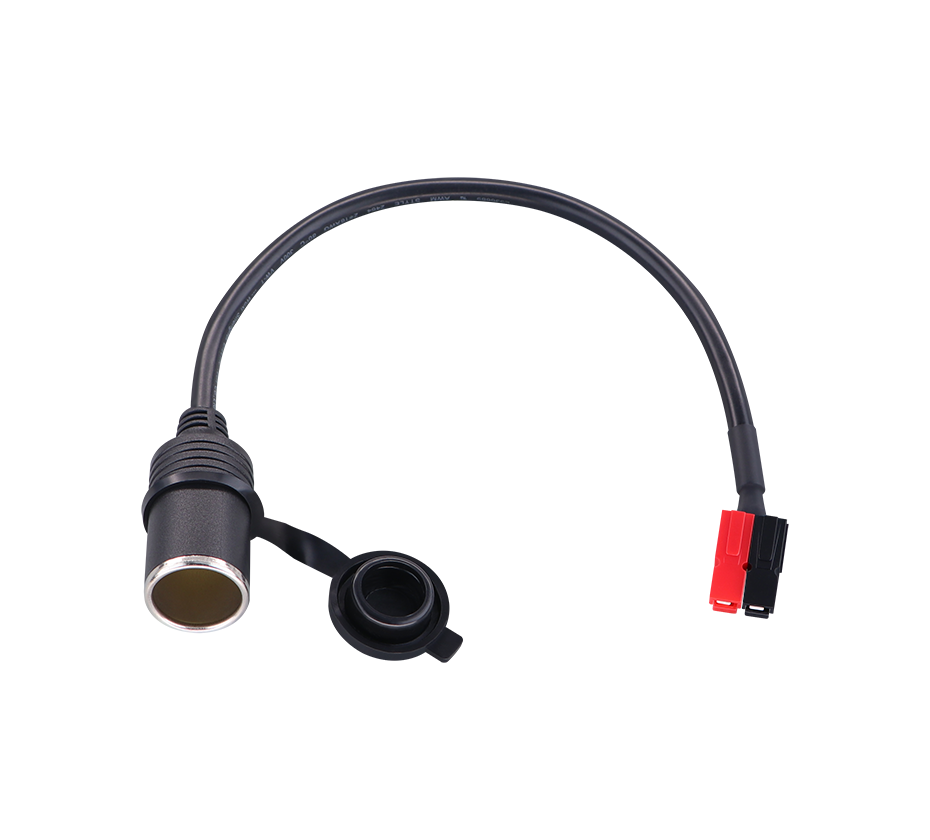
3. Forklift Battery Connector Standards and Configurations
The Anderson SB Series and Industry Standardization
The Anderson SB (Standard Battery) series has become the de facto industry standard for forklift battery connections, particularly in North American markets. These connectors are available in current ratings from 50A (SB50) through 350A (SB350), with the higher-rated versions capable of UL-recognized currents up to 500A when used with appropriate conductors.
A defining characteristic of the SB series is its genderless design, where identical connectors mate with each other. This design simplifies inventory management and reduces the number of parts that must be stocked for maintenance operations. The connectors employ mechanical keying through color-coded housings, preventing accidental mating of components operating at different voltage levels.
The SB series connectors feature silver-plated copper contacts that maintain low resistance across thousands of mating cycles. The flat wiping contact design ensures that the contact surfaces are cleaned of contaminants during each disconnection, maintaining reliable performance in industrial environments.
DIN Standards and European Specifications
In European markets, DIN 43589-1 and DIN 43594 standards govern forklift battery connector design. These standards specify dimensions, contact arrangements, and performance requirements that ensure interchangeability between different manufacturers‘ products. The DIN 43589-1 standard is particularly important for compliance with EN1175 safety requirements for industrial trucks.
DIN-style forklift connectors typically feature two main power contacts plus auxiliary signal contacts for battery monitoring and communication. The auxiliary contacts enable battery management systems to communicate state-of-charge, temperature, and other parameters to the forklift’s control system and charging equipment.
European forklift connectors often incorporate safety interlocks that prevent disconnection under load, reducing the risk of arc flash incidents. These interlocks may be mechanical (preventing handle operation when current is flowing) or electrical (sending a signal to the controller to reduce current before disconnection).
High-Current Connectors for Fast Charging and Battery Swapping
Modern forklift operations increasingly demand fast charging capabilities and rapid battery swapping to minimize vehicle downtime. These applications require connectors that can handle higher currents and withstand more frequent mating cycles than standard battery connectors.
Anderson Power’s Industrial Battery Connector (IBC) series, introduced in 2025, represents a next-generation solution for these demanding applications. Available in 80A, 160A, and 320A platforms, the IBC series offers configurable signal options with color-coded contact carriers. The 320A and 160A platforms support 4 auxiliary contacts, 2 auxiliary contacts with 2 air tubes, or up to 10 auxiliary contacts, enabling comprehensive battery management and communication capabilities.
The IBC series features integrated strain relief for both power and signal wires, acid-resistant performance per EN1175, and multiple accessory options including temperature sensing kits, latching handles, and IP68 sealing kits. These features address the full range of challenges encountered in modern material handling operations, from battery health monitoring to operation in harsh environments.
4. Safety Standards and Regulatory Compliance
UL and CSA Certification Requirements
Underwriters Laboratories (UL) certification is a fundamental requirement for forklift terminal blocks in North American markets. The relevant standard, UL 1977 (Component Connectors for Use in Data, Signal, Control and Power Applications), specifies requirements for current-carrying capacity, temperature rise, dielectric withstand voltage, and mechanical durability.
CSA certification, required for Canadian markets, imposes similar requirements through standards such as CSA C22.2 No. 182.3. Terminal blocks must demonstrate compliance with both UL and CSA requirements to be marketed throughout North America.
The current ratings assigned by UL and CSA agencies often differ from IEC ratings due to variations in test conditions and safety margins. A connector rated at 350A under IEC standards may receive a UL rating of 300A or less, reflecting the more conservative approach of North American standards. Specifiers must carefully review the specific agency ratings when selecting components for regulated applications.
IEC Standards and International Compliance
International Electrotechnical Commission (IEC) standards provide the framework for terminal block design and testing in most global markets. IEC 60947-7-1 (Low-voltage switchgear and controlgear – Part 7-1: Ancillary equipment – Terminal blocks for copper conductors) specifies requirements for terminal blocks used in industrial applications.
The standard addresses rated cross-section, rated current, rated voltage, temperature rise limits, and dielectric properties. Compliance with IEC 60947-7-1 ensures that terminal blocks meet internationally recognized safety and performance requirements.
Additional standards applicable to forklift terminal blocks include EN 61984 (Connectors – Safety requirements and tests), IEC 60512 (Connectors for electronic equipment – Tests and measurements), and IEC 60529 (Degrees of protection provided by enclosures).
EN1175 and Forklift-Specific Safety Requirements
EN1175 (Safety of industrial trucks – Electrical requirements) establishes specific safety requirements for electrical systems on industrial trucks, including forklifts. This standard addresses battery connector design, requiring features such as arc-resistant housings, safety interlocks, and clear polarity marking.
The acid-resistant performance requirement of EN1175 is particularly relevant for battery connectors, as lead-acid batteries (still widely used in forklift applications) can release sulfuric acid vapors during charging. Connector housings must resist degradation from acid exposure to maintain their insulating properties and mechanical integrity throughout the vehicle‘s service life.
RoHS and Environmental Compliance
The Restriction of Hazardous Substances (RoHS) directive restricts the use of specific hazardous materials in electrical and electronic equipment. Forklift terminal blocks must comply with RoHS requirements, which limit the use of lead, mercury, cadmium, hexavalent chromium, and certain flame retardants.
Compliance with RoHS requirements affects material selection, particularly for contact plating and housing flame retardants. Manufacturers must balance performance requirements with environmental regulations, often resulting in the development of new material formulations that meet both objectives.
5. Application-Specific Considerations
Manual Battery Swapping vs. Opportunity Charging
The selection of high-current terminal blocks depends significantly on the intended battery management strategy. Manual battery swapping operations require connectors that can be easily and safely disconnected by operators, often in less-than-ideal conditions. These applications favor connectors with ergonomic handles, clear polarity marking, and mechanical keying to prevent incorrect connections.
Opportunity charging applications, where vehicles are charged during breaks and shift changes, may employ connectors that remain mated for extended periods. These applications prioritize low contact resistance and thermal stability over rapid disconnection features. The connector selection may also consider whether charging occurs in the vehicle or whether the battery is removed for charging.
Automated Guided Vehicles and Autonomous Mobile Robots
The integration of AGVs and AMRs into material handling operations introduces additional requirements for charging connectors. These vehicles must autonomously navigate to charging stations and establish electrical connections without human intervention. The connection process must accommodate positioning tolerances that may result from navigation system limitations or floor irregularities.
TE Connectivity‘s HDC floating charge connectors address these requirements through a floating design that provides 0.5mm of tolerance in all directions. This allows the AGV or AMR to correct mating positions automatically, ensuring reliable connections even when perfect alignment is not achieved. The connectors also feature compact hybrid designs that combine power and signal transmission in a single connector, reducing space requirements and enabling vehicle miniaturization.
The 30,000 mating cycle rating of these connectors is essential for AGV applications, where vehicles may connect to charging stations multiple times per day. This durability ensures that the connectors will provide reliable service throughout the vehicle’s operational life without requiring replacement.
Environmental and Operational Challenges
Forklift terminal blocks must perform reliably across a wide range of environmental conditions. Temperature extremes, from freezer warehouses to outdoor yards in summer heat, subject connectors to thermal cycling that can cause contact relaxation and increased resistance. Operating temperature ranges of -40°C to +125°C are typical for premium forklift connectors.
Vibration represents another significant challenge. Forklifts operate on rough floors, often traversing expansion joints, dock plates, and other surface irregularities that generate shock and vibration. Connectors must maintain contact integrity under these conditions, with secure locking mechanisms and vibration-resistant contact designs.
Chemical exposure, particularly to battery electrolytes and cleaning agents, can degrade connector materials over time. Acid-resistant housings, as required by EN1175, provide protection against sulfuric acid exposure from lead-acid batteries. For facilities using caustic cleaning agents, additional chemical resistance may be required.
6. Selection Criteria and Best Practices
Matching Connectors to Application Requirements
Selecting the appropriate high-current terminal block requires careful analysis of application requirements. The first step involves determining the continuous and peak current requirements of the application, with appropriate safety margins. Connectors should be selected with a continuous current rating at least equal to the maximum expected continuous current, with peak capacity sufficient for surge currents during motor starting or fast charging.
Voltage rating must match or exceed the system voltage, with consideration for transient overvoltages that may occur during switching operations. The rated impulse voltage, typically 4kV to 8kV for forklift connectors, indicates the connector’s ability to withstand these transients.
Environmental requirements, including IP rating, temperature range, and chemical resistance, must be matched to the operating environment. Connectors intended for washdown areas or outdoor use require higher IP ratings than those in protected indoor environments.
Installation and Maintenance Considerations
Proper installation is essential for achieving the rated performance of high-current terminal blocks. Conductor preparation must follow manufacturer specifications, including strip length, wire class (solid, stranded, or fine-stranded), and any required ferrules or terminal treatments. Improper conductor preparation can result in increased contact resistance, overheating, and premature failure.
Torque specifications for screw-terminated connectors must be followed precisely. Under-torquing results in insufficient contact pressure and high resistance, while over-torquing can damage the connector or conductor. Periodic torque verification, particularly for high-vibration applications, helps maintain reliable connections.
Maintenance programs for forklift terminal blocks should include regular inspection for signs of overheating (discoloration, melted insulation), corrosion, or mechanical damage. Contact resistance measurements can identify degradation before it results in failure. Connectors should be replaced when resistance exceeds specified limits or when mating cycles reach 80% of the rated lifespan.
Emerging Technologies and Future Trends
The forklift industry continues to evolve, with trends toward higher voltages (80V and above), fast charging, and increased automation. These trends will drive demand for terminal blocks with higher current ratings, improved thermal performance, and enhanced communication capabilities.
The integration of battery management systems with charging connectors represents a significant trend. Connectors with integrated signal contacts enable communication between the battery, vehicle, and charger, supporting functions such as state-of-charge monitoring, temperature management, and fault diagnostics. The Anderson IBC series, with its configurable auxiliary contacts, exemplifies this trend toward intelligent connectors.
Wireless charging technology, while still emerging, may eventually reduce or eliminate the need for physical charging connectors in some applications. However, for the foreseeable future, high-current terminal blocks will remain essential for forklift battery connections, particularly for battery swapping operations and high-power fast charging.
High-current terminal blocks for forklifts represent a sophisticated class of electrical interconnect components that must balance electrical performance, mechanical durability, environmental resistance, and safety requirements. The evolution of forklift technology toward electrification, automation, and fast charging continues to drive innovation in connector design, with manufacturers developing solutions that address increasingly demanding application requirements.
Successful specification and implementation of these components requires a thorough understanding of application requirements, applicable standards, and the trade-offs inherent in different design approaches. By carefully matching connector capabilities to application needs and following best practices for installation and maintenance, operators can achieve reliable, long-lasting electrical connections that support productive material handling operations.
The industry‘s leading manufacturers continue to advance the state of the art, introducing connectors with higher current ratings, improved environmental protection, and enhanced intelligence. These developments will support the continued electrification of material handling equipment and the integration of autonomous vehicles into warehouse and manufacturing operations.
 Yang.taya@aitmpower.com
Tel: 15382891313
Phone: 0769-88878951
Fax: 0769-88878955
Wechat: 15382891313


 CN
 CN
 Home >