
 2026-10-14
 2
The forklift wiring harness serves as the central nervous system of modern material handling equipment, distributing electrical power and control signals throughout the vehicle. At the heart of this system are the connectors that join individual harness segments, interface with sensors and actuators, and link the vehicle to external power sources and diagnostic equipment. Forklift wiring harness connectors must perform reliably under conditions that combine high current loads, continuous vibration, exposure to moisture and chemicals, and extreme temperature variations.
This article examines the design, construction, and application of forklift wiring harness connectors from an engineering perspective. It covers connector architecture, material selection, environmental performance, industry standards, installation practices, and emerging trends in connector technology for electric material handling equipment.
The Forklift Electrical System Architecture
Power Distribution Circuits
The forklift electrical system comprises several distinct power circuits, each with specific connector requirements. The main traction circuit carries current from the battery to the motor controller, typically at voltages ranging from 24V to 80V DC and currents from 50A to over 400A depending on the vehicle's power rating. This circuit requires connectors with large conductor cross-sections, high current-carrying capacity, and robust mechanical locking to prevent disconnection under vibration.
The auxiliary power circuit supplies lower-current loads such as lights, horns, and control electronics. While current requirements are lower, these circuits often incorporate signal-carrying conductors that are sensitive to electromagnetic interference. The charging circuit interfaces the battery with external chargers and must accommodate the specific voltage and current requirements of the battery technology—flooded lead-acid, gel, or lithium-ion.
Signal and Communication Networks
Modern forklifts increasingly employ controller area network (CAN) communication for coordination between electronic control units (ECUs). SAE J1939 is the dominant protocol for heavy-duty vehicle networks, utilizing a two-wire, twisted-pair bus operating at 250 kbps with options for 500 kbps in higher-bandwidth applications. The J1939 network supports up to 30 ECUs with a maximum bus length of 40 meters, using 9-pin or 6-pin connectors for interfacing.
The wiring for J1939 networks must meet specific requirements to ensure reliable data transmission. Cable specifications call for twisted-pair construction with 18 AWG to 22 AWG wire gauge, with CAN High typically colored yellow and CAN Low colored green. A minimum twist length of 33 twists per meter (10 twists per foot) is required to minimize electromagnetic interference.
Sensor and Actuator Interfaces
Forklift wiring harnesses connect a diverse array of sensors and actuators throughout the vehicle. These include position sensors for mast height and fork tilt, pressure sensors for hydraulic systems, temperature sensors for motor and battery monitoring, and switches for operator controls. The CY-CCWH-01 forklift wiring harness, for example, is designed to connect various sensors, fuel injection nozzles, ignition coils, and other electrical equipment of the entire vehicle, with custom-made configurations available to customer specifications.
Connector Types and Configurations
High-Current Battery Connectors
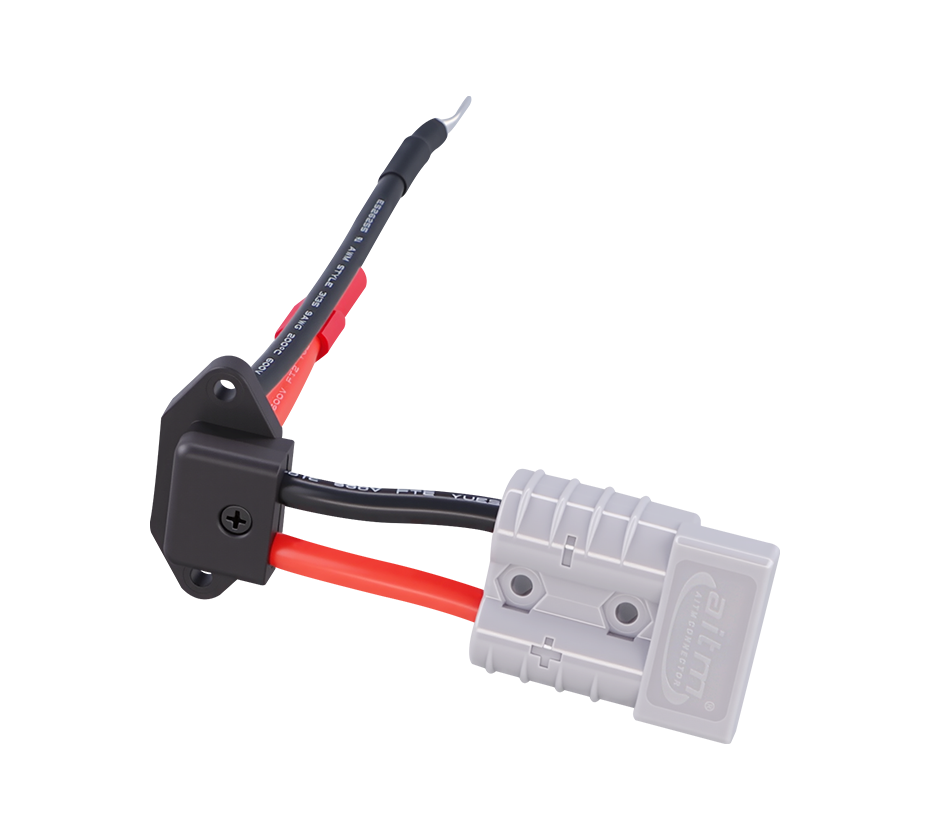
Battery connectors represent the most demanding application for forklift wiring harness connectors, combining high current-carrying requirements with the need for frequent connection and disconnection during battery swapping operations. The SMH 350A connector series is representative of this category, offering rated currents up to 350A and voltage ratings up to 900V in its pro model. These connectors employ copper contacts with triple-layer plating that reduces resistance by 20% compared to standard connectors, enhancing efficiency and reducing heat generation.
The physical construction of high-current battery connectors must address several challenges simultaneously. The contact interface must provide low electrical resistance to minimize voltage drop and heat generation. The mechanical locking mechanism must maintain contact pressure under vibration and shock. The housing must protect against environmental contaminants while allowing sufficient airflow for heat dissipation during high-current operation.
Signal-Level Connectors
At the opposite end of the current spectrum, signal-level connectors handle the low-voltage, low-current signals from sensors and communication buses. These connectors prioritize contact reliability, signal integrity, and resistance to electromagnetic interference over current-carrying capacity. M12 connectors with A-coded interfaces are commonly used for sensor connections in forklift applications, providing a standardized, compact interface with integrated sealing.
The challenge with signal-level connectors in forklift applications lies in maintaining signal integrity in an electrically noisy environment. The presence of high-current switching in the traction and hydraulic systems generates electromagnetic interference that can corrupt low-level sensor signals. Shielded cable construction, proper grounding practices, and careful routing of signal and power cables are essential to maintain signal quality.
Hybrid Power-Signal Connectors
An emerging trend in forklift connector design is the integration of power and signal conductors within a single connector housing. The XC01 series exemplifies this approach, offering configurations with main power contacts plus 1, 2, 3, or 4 signal terminals in the same connector body. This hybrid design eliminates the need for separate power and signal connectors, reducing harness complexity and simplifying installation.
Hybrid connectors also enable enhanced safety and functionality. The signal terminals can carry battery identification data, allowing the charger to verify that the connected battery is compatible before initiating charging. Temperature probe integration, available as an option on the XC01 series, provides real-time thermal monitoring of the connector interface, enabling protection against overheating conditions.
Material Science and Construction
Contact Materials and Plating
The contact interface is the most critical component of any electrical connector, determining resistance, heat generation, and long-term reliability. For forklift applications, copper alloys are the predominant contact material due to their excellent electrical conductivity and mechanical properties. The SMH connector series uses copper contacts with silver plating, providing high conductivity and producing less heat during operation.
Silver plating offers the lowest contact resistance of common plating materials, but it is susceptible to tarnishing in sulfur-containing environments. Gold plating provides superior corrosion resistance but at significantly higher cost, making it suitable primarily for low-current signal contacts. Nickel plating, often used as a barrier layer beneath gold or silver, provides excellent corrosion resistance in industrial settings.
The contact geometry also significantly influences electrical performance. Self-cleaning contact designs employ a wiping action during mating that removes oxide layers and contaminants from the contact surfaces, maintaining low resistance even in dusty environments. Stainless steel springs apply robust contact pressure, ensuring reliable electrical connection despite thermal cycling and vibration-induced movement.
Housing Materials and Sealing
Connector housings must provide mechanical protection, environmental sealing, and electrical insulation while withstanding the chemical exposure typical of warehouse environments. Polycarbonate (PC) is widely used for its excellent balance of mechanical strength, flame retardancy, and chemical resistance. PC housings rated UL94 V-0 provide self-extinguishing properties that prevent the spread of fire in the event of an electrical fault.
For applications requiring higher chemical resistance or temperature tolerance, PA66 (polyamide 66) housings offer superior performance. The 320A Rema battery connector employs PA66 housing with UL94 V-0 flame retardant rating, providing excellent mechanical strength and insulation properties that withstand vibration and collision during forklift operation.
Sealing systems use elastomeric gaskets, O-rings, and molded seals to prevent ingress of water, dust, and chemicals. The IP67 rating, achieved by many forklift connectors, indicates protection against immersion in water up to 1 meter for 30 minutes. The more stringent IP69K rating adds protection against high-pressure, high-temperature water jets, suitable for wash-down applications.
Strain Relief and Cable Management
The junction between the connector and the cable is a critical area for mechanical reliability. Strain relief features prevent mechanical loads from being transmitted to the electrical contacts, protecting both the termination and the contact interface from damage. Molded strain relief boots, commonly made from thermoplastic elastomers, provide flexibility while resisting abrasion and chemical attack.
Cable management is equally important, particularly in mobile equipment where cables are subject to continuous flexing and vibration. Proper cable routing, adequate bend radii, and secure cable retention prevent premature failure of both the cable and the connector. The forklift operating environment—with limited space, moving components, and exposure to hydraulic fluids and battery electrolytes—demands careful attention to cable routing and protection.
Performance Requirements and Testing
Electrical Performance
Forklift wiring harness connectors must meet rigorous electrical performance requirements. Contact resistance is the most fundamental parameter, directly affecting voltage drop, power loss, and heat generation. For high-current connectors, contact resistance is typically specified in milliohms, with values below 0.5 milliohms considered excellent for 350A class connectors.
Current-carrying capacity is specified as the maximum continuous current the connector can handle without exceeding its temperature rating. Derating factors apply when connectors are used at elevated ambient temperatures or when multiple connectors are grouped together. The operating temperature range for forklift connectors typically spans from -40°C to +125°C, accommodating both cold storage environments and high-temperature operations near motors and hydraulic systems.
Mechanical Performance
Mechanical performance requirements include insertion and withdrawal forces, mating cycles, and vibration resistance. The mating force must be low enough to permit easy connection by operators wearing gloves, yet high enough to provide tactile confirmation of proper engagement. Connectors rated for high mating cycle counts—such as the EK2S series with over 10,000 mating cycles—are suitable for battery swapping operations where connections are made multiple times per day.
Vibration resistance testing follows ANSI/EIA 364-28F, subjecting mated connector pairs to vibration in three axial directions. The standard specifies vibration levels that simulate the operating environment of the connector, with monitoring of contact resistance throughout the test to detect intermittent opens or increases in resistance that could indicate degradation.
Environmental Testing
Environmental testing verifies connector performance under the temperature, humidity, and chemical exposure conditions encountered in forklift operations. Thermal cycling tests subject connectors to repeated temperature excursions between low and high extremes, verifying that thermal expansion and contraction do not cause contact degradation or seal failure. Humidity testing verifies that moisture does not penetrate the connector interface or cause corrosion of contact surfaces.
Chemical resistance testing evaluates the connector's ability to withstand exposure to battery electrolytes (sulfuric acid for flooded lead-acid batteries), hydraulic fluids, cleaning agents, and other chemicals present in the operating environment. The housing materials and seal elastomers must maintain their properties despite prolonged exposure to these substances.
Industry Standards and Certification
International Standards Framework
Forklift wiring harness connectors are governed by a framework of international standards that specify performance requirements, test methods, and safety criteria. ISO 8092 specifies general requirements and test methods for connections used with on-board electrical wiring harnesses of road vehicles. SAE J2223/2 defines tests and general performance requirements for single-pole and multipole connectors used in on-board road vehicle electrical wiring harnesses.
For the specific application of battery connectors in industrial trucks, EN 1175 provides the electrical safety requirements. DIN VDE 0623 specifies requirements for battery connectors used in industrial trucks, ensuring compatibility and safety across different vehicle and battery manufacturers.
Certification and Compliance
Connectors intended for forklift applications typically require certification to demonstrate compliance with relevant standards. UL1977 certification covers connectors for use in data, signal, control, and power applications, with specific requirements for current-carrying capacity, temperature rise, and dielectric withstand voltage. The Eaxtron DIN connector series, for example, is UL approved and available in sizes rated to 160A, 320A, and 430A.
CE marking indicates compliance with European Union directives, including the Low Voltage Directive and the Electromagnetic Compatibility Directive. For connectors incorporating electronic components such as temperature sensors or identification chips, additional certification may be required under the Radio Equipment Directive or other applicable regulations.
Installation, Maintenance, and Troubleshooting
Proper Installation Practices
Correct installation is essential for reliable connector performance. The wire termination—whether crimped, soldered, or screw-connected—must achieve low resistance and high mechanical strength. Crimping is the preferred method for production environments, as it provides consistent results and is less sensitive to operator technique than soldering. Hydraulic or pneumatic crimping tools compatible with the specific wire gauge ensure high-quality, low-resistance terminations.
Connector assembly must follow the manufacturer's specifications for contact insertion, seal placement, and housing engagement. Incomplete insertion of contacts or improper seal positioning can lead to electrical failure or environmental ingress. Proper cable stripping lengths, contact orientation, and locking mechanism engagement must all be verified.
Maintenance and Inspection
Regular inspection of forklift wiring harness connectors should include visual examination of the housing for cracks or deformation, inspection of contacts for corrosion or wear, verification of seal integrity, and testing of locking mechanism function. Contact resistance measurements, performed periodically with a micro-ohmmeter, can detect degradation before it leads to functional failure.
The diagnostic connector plays a valuable role in maintenance, providing access to the vehicle's ECU network for fault code retrieval and performance monitoring. Standardized diagnostic connectors such as the J1939 9-pin Deutsch connector allow technicians to connect diagnostic tools without disassembling the vehicle's electrical system.
Troubleshooting Common Issues
Common connector-related issues in forklift applications include intermittent connections due to loose contacts or damaged locking mechanisms, overheating due to increased contact resistance or undersized conductors, and corrosion due to seal failure or chemical exposure. The troubleshooting process should begin with visual inspection, followed by resistance measurement across the connector interface and, if necessary, disassembly to inspect contact condition.
Preventive maintenance practices include periodic cleaning of connector interfaces, application of dielectric grease to seal surfaces (where approved by the connector manufacturer), verification of cable strain relief, and replacement of damaged seals or housings before they lead to electrical failure.
Emerging Trends and Future Directions
Smart Connectors with Integrated Monitoring
The integration of sensing and communication capabilities into forklift connectors is transforming them from passive components into active participants in vehicle health management. Temperature sensors embedded in the connector body can provide early warning of contact degradation or overcurrent conditions. Current sensors can monitor power consumption patterns and detect anomalies indicative of developing faults.
Battery identification through connector-integrated memory chips or resistance coding enables the charger to verify battery compatibility and adjust charging parameters accordingly. This is particularly important for lithium-ion battery systems, where incorrect charging parameters can cause thermal runaway and catastrophic failure.
High-Voltage Connector Development
As forklift systems evolve toward higher voltages for improved efficiency—some manufacturers now offer 80V and higher systems—connector designs must adapt to higher voltage requirements. Creepage and clearance distances must increase to prevent electrical breakdown, and insulation systems must withstand higher dielectric stresses. The SMH connector series already offers models rated up to 900V, anticipating the trend toward higher-voltage forklift systems.
Wireless and Contactless Interfaces
Emerging technologies may eventually reduce or eliminate the need for physical connector interfaces in certain applications. Inductive charging systems, already used in some automated guided vehicle (AGV) applications, eliminate the charging connector entirely. Wireless communication protocols could replace some signal-carrying connectors, reducing harness complexity and eliminating a potential failure point.
However, for the foreseeable future, physical connectors will remain essential for high-current power transfer and for applications requiring the highest levels of reliability and safety. The connector industry continues to innovate in materials, design, and manufacturing processes to meet the evolving demands of the material handling industry.
Forklift wiring harness connectors represent a sophisticated engineering discipline that bridges electrical engineering, materials science, mechanical design, and manufacturing quality. From high-current battery connectors that must survive thousands of mating cycles to precision signal connectors that maintain integrity in electrically noisy environments, these components are essential to the safe and reliable operation of modern electric forklifts.
The evolution of forklift connectors reflects broader trends in the material handling industry: increasing electrification and automation, growing emphasis on safety and reliability, and the integration of digital technologies for monitoring and diagnostics. For fleet operators and maintenance professionals, understanding the capabilities and limitations of wiring harness connectors is essential for specifying equipment, planning maintenance, and troubleshooting faults.
As the industry moves toward higher voltages, smarter battery systems, and increasingly automated operations, the demands on wiring harness connectors will continue to grow. Manufacturers who invest in robust design, rigorous testing, and quality manufacturing will be best positioned to meet these demands, while operators who prioritize proper connector selection and maintenance will benefit from improved uptime, reduced maintenance costs, and enhanced safety in their material handling operations.
 Yang.taya@aitmpower.com
Tel: 15382891313
Phone: 0769-88878951
Fax: 0769-88878955
Wechat: 15382891313


 CN
 CN
 Home >


