
 2026-10-14
 2
The quick-change forklift connector has emerged as a transformative technology in material handling operations, enabling rapid battery swapping that dramatically reduces vehicle downtime and maximizes fleet utilization. Unlike conventional battery connectors that prioritize permanent installation and infrequent disconnection, quick-change connectors are specifically engineered for high-frequency mating cycles, often multiple times per day, under full electrical load. This article provides a comprehensive analysis of quick-change forklift connectors, examining their design philosophy, mechanical and electrical characteristics, operational workflows, safety considerations, and economic impact. It explores the major product families—including genderless push-to-connect designs, lever-actuated connectors, and automated docking systems—and analyzes how these solutions address the unique demands of multi-shift warehouse operations, cold storage facilities, and automated guided vehicle fleets. The discussion also considers the emerging market for battery-as-a-service models, the role of international standards in ensuring interoperability, and future directions in connector technology as the industry moves toward fully automated battery swapping.
1.Overview
In the modern material handling landscape, vehicle uptime is the single most important determinant of operational efficiency. A forklift that is parked at a charging station is not moving goods, and every minute of charging downtime represents lost productivity. The traditional approach to forklift battery management—operating a vehicle until its battery is depleted, then charging it for six to eight hours—imposes a fundamental constraint on fleet utilization that becomes unacceptable in high-throughput operations running multiple shifts.
The quick-change forklift connector solves this problem by enabling rapid battery swapping. Rather than waiting for a battery to charge, operators can exchange a depleted battery for a fully charged one in minutes, returning the vehicle to service with minimal interruption. This operational model—variously called battery swapping, battery exchange, or quick-change battery—requires connectors that are specifically designed for frequent, rapid, and often under-load disconnection and reconnection.
The distinction between a conventional battery connector and a quick-change connector is not merely one of degree but of fundamental design philosophy. A conventional connector is optimized for permanent or semi-permanent installation, with low contact resistance and reliable long-term performance as the primary objectives. A quick-change connector must additionally prioritize ease of operation, ergonomic handle design, robust locking mechanisms that can be released and re-engaged thousands of times, and protection against arcing during under-load disconnection.
This article examines the quick-change forklift connector in depth, covering its design principles, operational characteristics, safety features, application scenarios, and the economic and market forces driving its adoption.
2. Design Philosophy and Operational Requirements
2.1 The Demands of High-Frequency Mating
A quick-change connector may be mated and unmated several times per day over a service life spanning years, resulting in thousands or even tens of thousands of cycles. This is an order of magnitude more demanding than a conventional connector application, and it imposes stringent requirements on every component of the connector assembly.
The contact system must maintain low and stable contact resistance despite repeated engagement and disengagement. Silver-plated copper contacts are the standard solution, as silver provides excellent conductivity, resists oxidation, and exhibits a self-cleaning property during mating that removes surface contaminants and maintains a low-resistance interface. Premium quick-change connectors may specify contact resistance of less than 500 micro-ohms after 10,000 mating cycles.
The locking mechanism must provide secure retention during operation while remaining easy to release when a battery change is required. This is a delicate balance: too much retention force makes the connector difficult to operate, especially for workers wearing gloves; too little retention force risks accidental disconnection during vehicle operation, which could cause power loss or, worse, electrical arcing.
2.2 Hot-Swap Capability
Many quick-change connector designs support hot-swap capability—the ability to disconnect and reconnect under full electrical load without interrupting current flow. This feature is critical for operations that cannot afford even momentary power interruption, such as automated guided vehicles (AGVs) that may be carrying loads at the moment of battery change.
Hot-swap capability requires careful attention to arc suppression. When a connector is disconnected under load, the current flowing through the contacts will attempt to maintain itself by arcing across the opening gap. This arc generates intense heat and can erode contact surfaces, eventually leading to failure. Quick-change connectors address this challenge through several mechanisms: the use of sacrificial arc contacts that open last and close first, magnetic arc blowout techniques, and physical separation distances that allow the arc to extinguish quickly.
2.3 Ergonomic and Human Factors Considerations
A quick-change connector is operated by human workers, often in challenging conditions: wearing gloves, in awkward positions, under time pressure. Ergonomic design is therefore not a luxury but a necessity. Key considerations include handle design that provides a secure grip even with gloved hands, insertion and extraction forces that are within the strength capabilities of the workforce, and visual or tactile indicators that confirm proper engagement.
The insertion and extraction forces for quick-change connectors typically range from 150N for smaller connectors to over 210N for high-current variants. These forces must be manageable across the entire workforce, including workers with smaller physical stature. Lever-actuated designs can reduce the force required by the operator through mechanical advantage, but add complexity and cost to the connector assembly.
3. Major Quick-Change Connector Architectures
3.1 Genderless Push-to-Connect Designs
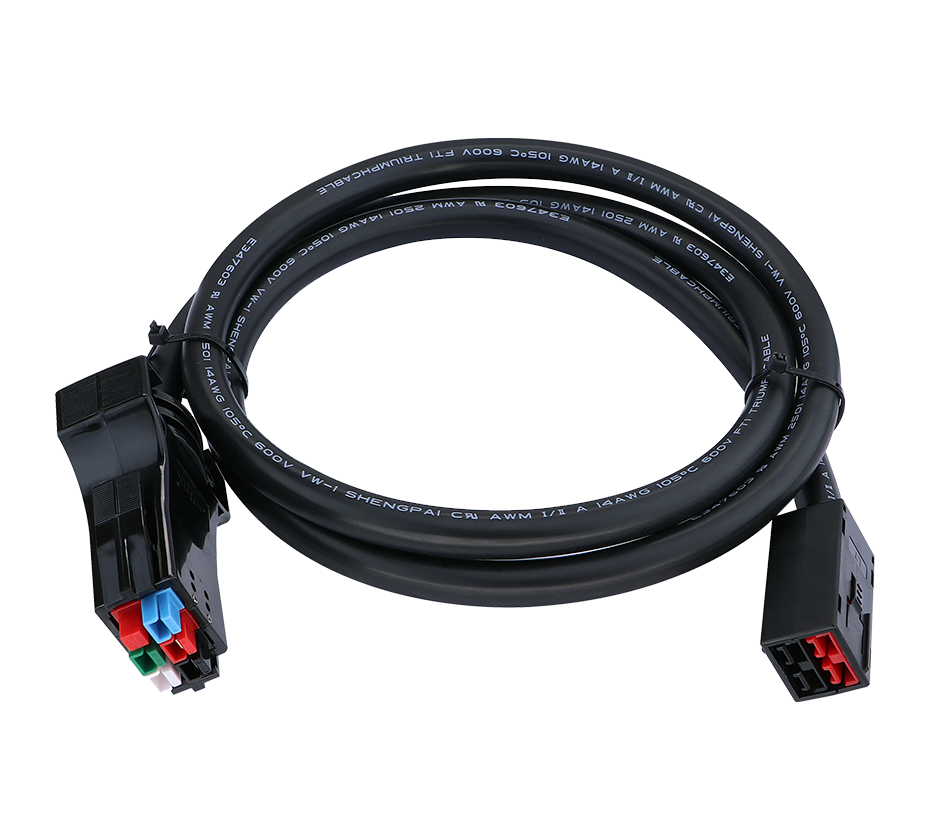
The genderless push-to-connect design, exemplified by the Anderson SB series and its many derivatives, is the most common quick-change connector architecture in the material handling industry. Both halves of the connector are identical, eliminating the need for orientation during mating and simplifying both operation and inventory management.
In this design, the connector is mated by simply pushing the two halves together until the locking mechanism engages. Disconnection is accomplished by pulling the connector halves apart with sufficient force to overcome the retention mechanism. Some variants incorporate a release lever or button to reduce the extraction force required.
The genderless design offers significant operational advantages in battery swapping. The operator does not need to determine which half is the plug and which is the socket; the connectors are simply pushed together regardless of orientation. This reduces the risk of damage from improper mating and speeds up the battery change process. The design also halves the number of unique part numbers that must be stocked, reducing inventory complexity and cost.
3.2 Lever-Actuated and Latching Connectors
While push-to-connect designs are simple and reliable, the extraction forces required for high-current connectors can be substantial. Lever-actuated connectors address this challenge by incorporating a mechanical lever that provides mechanical advantage, reducing the force the operator must apply.
The latch handle accessory available for Anderson Power's Industrial Battery Connector (IBC) series exemplifies this approach. The spring-loaded latch handle ensures a secure mechanical connection while allowing easy release, and is available across all IBC series and configurations. The lever mechanism multiplies the operator's force, making it feasible to disconnect even the highest-current connectors with modest effort.
3.3 Panel-Mount and Automated Docking Systems
For automated guided vehicles (AGVs) and autonomous mobile robots (AMRs), manual battery swapping is impractical. These vehicles require automated docking systems that can establish electrical connection without human intervention. Panel-mount connector configurations, which are designed to be mounted on a vehicle or charging station panel, are the foundation of these automated systems.
Automated docking systems typically employ a connector mounted on the vehicle that mates with a corresponding connector on a charging or battery-swapping station. Precision alignment features—guide pins, chamfers, and self-centering mechanisms—ensure reliable mating even when the vehicle's positioning is not perfectly repeatable. The robotic connector docking market for material handling equipment charging is projected to grow at a compound annual growth rate of 13.5% from 2025 to 2033, reaching a forecasted value of $4.19 billion by the end of 2033, reflecting the rapid adoption of automated material handling solutions.
4. Electrical and Thermal Characteristics
4.1 Current Ratings and Voltage Compatibility
Quick-change connectors are available in a range of current ratings to match different forklift classes and battery configurations. The most common ratings are 50A, 80A, 120A, 160A, 175A, 320A, and 350A. The appropriate rating depends on the vehicle's operating voltage, the battery capacity, and the expected charging rate.
For a typical counterbalance forklift operating at 48V with a 600Ah lead-acid battery, a 320A or 350A connector is standard. Smaller walkie pallet jacks may use 50A or 80A connectors. High-performance electric forklifts with lithium-ion batteries and fast-charging capability may require connectors rated for continuous currents approaching 500A.
Voltage compatibility is equally important. While the connectors themselves are typically rated for 600V, the battery systems they serve operate at voltages ranging from 24V to 96V. Color coding and mechanical keying are used to prevent accidental cross-connection of different voltage systems, which could result in equipment damage or safety hazards.
4.2 Thermal Management in Quick-Change Applications
The thermal environment of a quick-change connector differs from that of a conventional connector in important ways. Because the connector is frequently handled and may be disconnected under load, the contact surfaces are subject to greater mechanical wear and potentially more contamination. This can lead to higher contact resistance over time, which in turn generates more heat during operation.
The problem is compounded in fast-charging applications. Fast charging pushes higher currents through the connector, and Joule's Law dictates that heat generation increases with the square of the current. The 320A connector that operates comfortably at 200A during vehicle discharge may be pushed to its thermal limits when subjected to 400A or more during fast charging.
Temperature sensing is emerging as a key technology for managing thermal risk in quick-change connectors. NTC sensors embedded in the connector assembly can monitor contact temperature in real time, enabling the charging system to reduce current if safe thresholds are approached. Anderson Power's IBC series incorporates contact temperature sensing as a patent-pending accessory, described as a first for a high-powered battery connector.
5. Safety Features and Standards Compliance
5.1 Arc Prevention and Suppression
Arcing during disconnection is a primary safety concern for quick-change connectors, particularly in hot-swap applications. The arc that forms when a connector is separated under load can reach temperatures of several thousand degrees Celsius, sufficient to erode contact surfaces, ignite nearby combustible materials, and pose a risk of electric shock to the operator.
Several design strategies mitigate arc risk. Last-mate/first-break (LMFB) auxiliary contacts ensure that the power contacts make connection before any signal or control contacts, and break connection after them, providing a controlled sequence that minimizes arcing on the main power contacts. High-voltage interlock loop (HVIL) circuits can detect when a connector is about to be disconnected and signal the system to reduce or interrupt current before the contacts actually separate.
The physical design of the connector also plays a role. Contact geometries that promote rapid arc extinction, magnetic blowout structures, and adequate separation distances all contribute to arc suppression. Some connectors incorporate sacrificial arc contacts that are designed to absorb the arc energy and protect the primary power contacts.
5.2 Touch Safety and Operator Protection
Quick-change connectors are handled frequently, often in conditions of poor visibility or awkward positioning. Touch safety—preventing accidental contact with live electrical contacts—is therefore a critical design requirement. Female contact configurations, where the live contact is recessed within an insulating housing, are preferred for touch safety. The 160A and 320A DIN connectors, for example, feature female terminals designed to prevent accidental finger or probe contact with live contacts.
In addition to contact design, color coding and mechanical keying prevent mis-mating of connectors with different voltage ratings. The housing features eye-catching color coding and molded mechanical keys that prevent the accidental mating of different interfaces, eliminating mis-insertion risks and protecting battery packs and equipment from short-circuit damage.
5.3 Standards and Certification
Quick-change connectors for forklift applications must comply with a range of international standards. EN 1175 (and its national equivalents) governs the safety of industrial trucks and their electrical systems. DIN VDE 0623-589 specifies the requirements for battery connectors in industrial trucks. UL 1977 provides the safety standard for component connectors in the United States.
Compliance with these standards ensures that the connector will perform safely and reliably in its intended application, and that it will be interchangeable with connectors from other manufacturers that meet the same standards. For fleet operators managing multiple forklift brands, standard compliance is essential for ensuring that batteries and chargers can be freely exchanged between vehicles.
6. Operational Workflows and Economic Impact
6.1 The Battery Swapping Workflow
The quick-change battery swapping workflow typically involves the following steps: (1) the operator drives the forklift to the battery change station; (2) the discharged battery connector is disconnected, either manually or through an automated system; (3) the discharged battery is removed from the vehicle, either by rolling it out on a tray system or by lifting it with a crane or overhead hoist; (4) a charged battery is positioned in the vehicle; (5) the connector is re-engaged, with visual or tactile confirmation of proper engagement; and (6) the vehicle is returned to service.
The entire process, when properly designed and equipped, can be completed in as little as 5 to 10 minutes. This compares favorably with the 6 to 8 hours required to charge a depleted lead-acid battery in situ, and even with the 1 to 2 hours required for fast charging to 80% capacity. The time saving translates directly into increased vehicle utilization and reduced fleet size requirements.
6.2 Economic Benefits of Quick-Change Operations
The economic case for quick-change battery operations is compelling. By reducing vehicle downtime, a fleet can maintain the same throughput with fewer vehicles, reducing capital expenditure on equipment. Alternatively, the same fleet can achieve higher throughput with the same number of vehicles, increasing revenue without additional capital investment.
The operational savings extend beyond vehicle utilization. Battery swapping allows batteries to be charged at optimal rates—typically overnight or during off-peak hours—rather than being subjected to the thermal stress of fast charging. This extends battery life and reduces battery replacement costs. The batteries themselves can be managed as a pooled resource, charged and rotated to equalize usage and maximize lifespan.
Market research indicates that the global quick-change battery connectors market for material handling equipment was valued at $1.2 billion in 2024, and is forecast to reach $2.7 billion by 2033, growing at a compound annual growth rate of 9.8%. This growth reflects the recognition by fleet operators that quick-change capability is not merely a convenience but a strategic enabler of operational excellence.
6.3 Battery-as-a-Service and Fleet Management
The quick-change model has given rise to new business models in material handling. Battery-as-a-Service (BaaS) arrangements allow fleet operators to outsource battery management to a third party, who owns the batteries, manages the charging and swapping infrastructure, and guarantees uptime. The connector is the physical interface through which this service is delivered, and its reliability and ease of use directly impact the quality of the service.
BaaS models are particularly attractive for operations with variable demand or seasonal fluctuations, where owning sufficient batteries and charging infrastructure to cover peak demand would result in excess capacity during off-peak periods. By subscribing to a battery service, operators pay only for the capacity they need, when they need it.
7. Future Directions and Emerging Technologies
7.1 Automated and Robotic Battery Swapping
The trend toward automation in material handling is extending to battery swapping. Automated guided vehicles (AGVs) and autonomous mobile robots (AMRs) operate without human drivers, and requiring manual intervention for battery changes would undermine the economic case for automation. Automated battery swapping systems use robotic mechanisms to disconnect, extract, insert, and reconnect batteries without human intervention.
These systems require connectors that are designed for robotic handling: precise alignment features, low and repeatable insertion forces, and robust locking mechanisms that can be reliably actuated by a robot. Panel-mount connector configurations that provide a fixed, precise mating interface are essential for automated systems.
7.2 Standardized Charging Interfaces
The proliferation of connector types and charging standards is a challenge for fleet operators who need to manage batteries and chargers from multiple manufacturers. Standardized charging interfaces, such as the LiCom system defined in VDE 0622, aim to establish a unified mechanical and electrical interface for low-voltage DC fast charging.
The LiCom standard specifies connectors for lithium-ion battery packs that support voltages up to 120V DC and currents up to 500A, while also supporting data communication for battery and machine status monitoring. A standardized interface would simplify fleet management, allowing batteries and chargers from different manufacturers to be used interchangeably.
7.3 Integrated Diagnostics and Predictive Maintenance
The connectors of the future will be intelligent components capable of self-diagnosis and predictive maintenance. Embedded sensors can monitor contact resistance, temperature, and mating cycle count, providing early warning of degradation before it leads to failure. This data can be integrated into fleet management systems, enabling maintenance to be scheduled proactively rather than reactively.
The industrial battery connector IBC series already incorporates capabilities for battery monitoring through its auxiliary signal contacts, and the trend is toward more sophisticated diagnostic capabilities in future connector generations.
The quick-change forklift connector is a deceptively simple component that plays an outsized role in the efficiency and productivity of modern material handling operations. By enabling rapid battery swapping, it transforms the fundamental economics of electric forklift operation, reducing downtime, increasing vehicle utilization, and enabling new business models such as battery-as-a-service.
The design of a quick-change connector involves a complex optimization across multiple dimensions: electrical performance, thermal management, mechanical durability, ergonomics, and safety. Advances in materials, contact design, sealing technology, and integrated sensing are continuously pushing the boundaries of what these connectors can achieve.
As the material handling industry continues its trajectory toward electrification, automation, and sustainability, the quick-change connector will remain a critical enabling technology. Its evolution—from simple push-to-connect designs to sophisticated modular architectures with integrated thermal management and diagnostic capabilities—mirrors the broader transformation of industrial equipment toward greater intelligence, efficiency, and reliability. For fleet operators, the choice of quick-change connector technology is not merely a procurement decision but a strategic choice that impacts operational flexibility, total cost of ownership, and competitive position in an increasingly demanding marketplace.
 Yang.taya@aitmpower.com
Tel: 15382891313
Phone: 0769-88878951
Fax: 0769-88878955
Wechat: 15382891313


 CN
 CN
 Home >