
 2026-10-14
 1
Multi-pole wire-to-board connectors are indispensable components in modern medical electronic systems, providing the electrical interface between printed circuit boards and the sensors, transducers, and peripheral assemblies that connect to them. As medical devices evolve toward greater functional density, portability, and diagnostic capability, the demands placed on these connectors have intensified. This article examines the technical requirements, design considerations, product landscape, and regulatory framework governing multi-pole wire-to-board connectors for medical applications. It covers the full spectrum from fine-pitch micro-connectors for wearable devices to high-density platforms supporting hundreds of contacts for advanced imaging and electrophysiology systems.
1. The Role of Wire-to-Board Connectors in Medical Electronics
Wire-to-board connectors serve as the physical and electrical bridge between the conductors of a cable assembly and the contact pads of a printed circuit board. In medical devices, this connection must be reliable, repeatable, and capable of withstanding the environmental and mechanical stresses of clinical use. Multi-pole configurations—typically ranging from a few contacts to several hundred—are required for applications that need to transmit multiple signal channels, power, and control lines through a single interface.
The medical connectors market is experiencing sustained growth, projected to reach USD 2.45 billion by 2030 at a compound annual growth rate of 7.1% from 2025. Within this market, wire-to-board connectors represent a fundamental building block for virtually every category of medical electronic device, from patient monitors and diagnostic imaging systems to surgical instruments and implantable devices.
2. Technical Requirements and Performance Specifications
2.1 Contact Pitch and Density
Contact pitch—the center-to-center spacing between adjacent contacts—is the primary parameter determining a connector's density and, consequently, the amount of board space it occupies. Medical wire-to-board connectors are available in a wide range of pitches, from standard 2.54 mm (0.100") headers to fine-pitch solutions measuring 0.40 mm or less.
The 2.54 mm pitch remains widely used in medical devices where space constraints are less severe and where the robustness and ease of handling offered by larger contacts are valued. Molex's 2.54 mm pitch 2210 series, for example, is specified for medical applications with a current rating of 4 A per contact and a mating pitch of 2.54 mm. Other common pitches include 2.00 mm, which offers a balance between density and current-carrying capacity; Molex's CLIK-Mate and MicroClasp series in this pitch range can carry up to 3.0 A per contact. At the fine-pitch end of the spectrum, connectors with pitches of 0.80 mm and below are increasingly common in wearable and portable medical devices. The ERNI MicroCon series, for instance, features a 0.8 mm grid with pole counts from 12 to 100 in a miniaturized double-row configuration.
For the most demanding high-density applications, TE Connectivity offers a zero insertion force (ZIF) wire-to-board connector with 260 pins, designed for point-of-care ultrasound systems and proven to support up to 20,000 mating cycles. The VERSIO platform pushes density even further, providing up to 208 contact positions in a PCB-based connector platform with a diameter of just 1 inch (2.26 mm).
2.2 Current Rating and Voltage
Current and voltage ratings determine the power transmission capability of a wire-to-board connector. In medical devices, current requirements range from a few hundred milliamperes for signal-level applications to several amperes for power delivery to motors, actuators, and high-intensity light sources.
The current rating of a connector depends on multiple factors including contact material, cross-sectional area, plating, and the thermal environment in which the connector operates. Molex's CLIK-Mate series in 2.00 mm pitch offers a current carrying capability of 3.0 A at 250 V, while the MicroClasp system achieves the same 3.0 A rating in a compact design with low insertion and withdrawal forces. For higher current applications, TE Connectivity's ERNI Multi-Point IDC terminals support up to 8 A at +20°C, making them suitable for medical equipment requiring moderate power delivery.
Voltage ratings for medical wire-to-board connectors typically range from 125 V to 250 V AC/DC for standard configurations, with higher voltage options available for specialized applications such as electrosurgical generators and defibrillators. The creepage and clearance requirements of IEC 60601-1 directly influence the minimum connector dimensions for a given voltage rating, as discussed in Section 4.
2.3 Contact Resistance and Signal Integrity
Contact resistance is a critical parameter for signal-carrying connectors, as excessive or unstable resistance can attenuate signals, introduce noise, and generate heat. Medical-grade wire-to-board connectors typically specify contact resistance of 20 mΩ or less. The A3961 series, for example, specifies a maximum contact resistance of 10 mΩ with a voltage rating of 250 V and a temperature range of -40°C to 105°C.
Maintaining low and stable contact resistance over many mating cycles is essential for applications where connectors are regularly disconnected and reconnected, such as patient monitoring leads and diagnostic catheters. Gold plating is widely used in these applications to prevent oxidation of the base metal and to provide a stable, low-resistance contact interface. The thickness of gold plating—commonly specified at 10 microinches or 30 microinches—directly affects durability and is selected based on the expected number of mating cycles and the severity of the operating environment.
2.4 Mechanical Durability and Mating Cycles
The mechanical durability of wire-to-board connectors is expressed in terms of the number of mating cycles the connector can withstand while maintaining specified electrical performance. Medical applications span a wide range of mating cycle requirements, from single-use disposable devices that may be mated only once, to reusable capital equipment that may be connected and disconnected thousands of times over its service life.
For general-purpose medical wire-to-board connectors, mating cycle ratings typically range from 30 to several hundred cycles. High-reliability designs intended for frequent mating applications employ dual-beam spring contact designs and reinforced outer walls to maintain contact force over repeated cycling. The TE Connectivity ZIF connector achieves 20,000 mating cycles, demonstrating that even high-density wire-to-board solutions can be engineered for exceptional durability.
For applications requiring very high cycle counts, the use of hyperboloid contacts—in which the mating pin is engaged by multiple wires twisted into a hyperboloid shape—provides both low insertion force and high reliability over thousands of cycles. Molex's TheraVolt Medical Connectors feature hyperboloid contacts and are rated for 1,000 mating cycles at 1.0 A per pin.
2.5 Operating Temperature Range
Medical devices must operate reliably across a range of environmental conditions, and wire-to-board connectors are typically specified for operating temperatures from -40°C to 105°C or wider. Connectors used in devices that undergo autoclave sterilization must withstand short-term exposure to temperatures of 134°C or higher, while those used in cryogenic applications such as certain surgical procedures must function at temperatures well below freezing.
The 3M Four-Wall Header 2500 Series is specified with a high-temperature plastic insulator that tolerates modern no-lead solder processes and IR reflow environments, supporting both through-hole and paste-in-hole assembly techniques. This capability is increasingly important as medical device manufacturers transition to lead-free soldering in compliance with environmental regulations.
3. Connector Types and Configurations
3.1 Through-Hole and Surface Mount Configurations
Wire-to-board connectors are available in two primary mounting configurations: through-hole and surface mount. Through-hole connectors are inserted into plated holes in the PCB and soldered, typically by wave soldering. This configuration provides the most robust mechanical attachment and is preferred for applications subject to vibration, mechanical stress, or frequent mating and unmating.
Surface mount connectors are soldered to pads on the surface of the PCB, typically by reflow soldering. This configuration allows for higher component density and is often used in compact medical devices where board real estate is at a premium. The ERNI MicroCon series is available in SMD (surface mount device) configurations, enabling compact layouts in intensive care medical equipment and portable diagnostic devices.
Some connector series, such as the 3M Four-Wall Header 2500 Series, offer both mounting options along with right-angle and straight configurations, providing designers with flexibility to optimize the connector orientation for their specific PCB layout.
3.2 Locking and Retention Mechanisms
Medical wire-to-board connectors employ various locking and retention mechanisms to prevent accidental disconnection, which in a clinical setting could interrupt monitoring or therapy and potentially endanger the patient. Common mechanisms include friction locks, positive latches, and screw-down retention.
Positive latching mechanisms provide an audible or tactile confirmation of complete mating and require a deliberate action to disconnect. This is particularly important in patient monitoring applications where cables may be subjected to pulling forces as the patient moves. The ERNI MicroCon series incorporates blind-mate pre-centering with increased catch range to ensure more secure plugging, while the reinforced outer walls of the multipole connector allow a high degree of robustness.
For applications subject to high vibration, such as devices mounted on mobile carts or used in emergency transport, optional retainer clips can secure mating components and maintain connection integrity. The 3M Four-Wall Header 2500 Series offers optional retainer clips for vibration resistance, providing enhanced reliability in demanding environments.
3.3 High-Density Multi-Pole Configurations
The trend toward greater functionality in smaller medical devices has driven the development of high-density multi-pole wire-to-board connectors that pack increasing numbers of contacts into ever-smaller packages. These connectors must balance competing requirements: high contact density reduces the space available for insulation between contacts, which can compromise electrical isolation and increase susceptibility to crosstalk.
The ERNI MicroCon series addresses this challenge through a dual-beam spring contact design that provides good contact over a wide contact area while maintaining high holding force on the printed circuit board. The connector is available with pole counts from 12 to 100 in a 0.8 mm grid, offering designers a scalable solution that can be tailored to the specific channel count required by each application.
For applications requiring the highest possible density, the VERSIO connector platform employs a PCB-based design in which the connector itself incorporates a multilayer printed circuit board with up to 12 layers available for trace routing. This approach allows individual contacts to be populated as needed up to 208 positions, providing exceptional design flexibility for high-channel-count applications such as electrophysiology mapping catheters.
3.4 Hybrid Signal and Power Connectors
Many medical applications require the transmission of both signal and power through a single connector interface. Hybrid wire-to-board connectors address this need by combining signal contacts with power contacts of larger cross-section within the same housing.
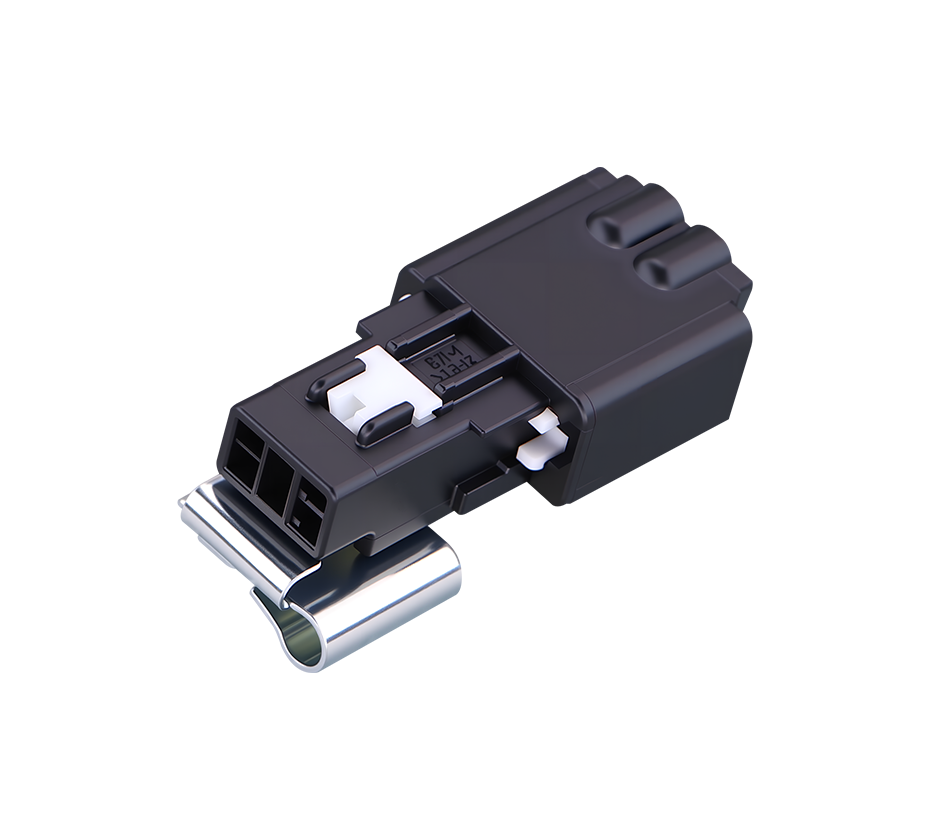
The Bellwether Multi-Hi Hybrid™ connector is specifically designed for applications requiring multi-signal and multi-power mixed transmission, with applications in medical instruments as well as servers, industrial equipment, and automotive electronics. This type of connector reduces the total number of interconnects required in a system, simplifying assembly and reducing the potential for connection errors.
Hybrid connectors can also incorporate pneumatic or fluidic channels alongside electrical contacts, enabling medical devices to manage both electrical and fluid connections through a single interface. This is particularly valuable in applications such as dialysis machines, infusion pumps, and surgical irrigation systems where both types of connection are required.
4. Regulatory Compliance: IEC 60601-1 and Related Standards
4.1 The 2 MOPP / 2 MOOP Requirement
IEC 60601-1, the foundational standard for medical electrical equipment safety, establishes the requirement for two means of patient protection (2 MOPP) and two means of operator protection (2 MOOP) in medical electronic devices. This requirement is directly relevant to wire-to-board connectors, which must provide adequate creepage and clearance distances to prevent electric shock even if one protective measure fails.
Achieving 2 MOPP and 2 MOOP through connector selection offers significant advantages over circuit-level protection. By selecting connectors that inherently meet these requirements, device manufacturers can simplify their risk analysis and reduce the number of additional safety components in their designs. Connectors designed for IEC 60601-1 compliance typically feature extended insulating collars or sleeves around pins, or asymmetrical pin arrangements that increase the creepage and clearance distances beyond what would otherwise be achievable in a compact connector.
4.2 Creepage and Clearance Considerations
Clearance is defined as the shortest distance between two conductive parts through air, while creepage is the shortest distance along the surface of an insulating material. Both parameters are critical for preventing electrical breakdown and are specified in IEC 60601-1 based on the working voltage, pollution degree, and material group of the insulation.
For wire-to-board connectors used in medical applications, achieving the required creepage and clearance distances often requires design compromises. Increasing the spacing between contacts reduces the achievable contact density, while adding insulating barriers between contacts increases connector size. The challenge for connector designers is to satisfy these safety requirements while still providing the density and compactness demanded by modern medical devices.
The required distances vary by device classification. Type B devices (no patient contact) require 2.5 mm creepage and 2.0 mm clearance, while Type BF devices (patient contact, not cardiac) require 5 mm creepage and 4.0 mm clearance. Type CF devices (cardiac contact) require the most stringent protection at 8 mm creepage and 5 mm clearance. Wire-to-board connectors specified for Type BF and Type CF applications must be selected with these requirements in mind.
4.3 Electromagnetic Compatibility
IEC 60601-1-2 specifies electromagnetic compatibility requirements for medical electrical equipment. Wire-to-board connectors can contribute to both emissions and immunity issues. Poorly designed connectors can act as antennas, radiating electromagnetic energy that interferes with other equipment, or as entry points for external electromagnetic fields that disrupt sensitive circuitry.
Connectors with metal shells or shielding provisions can help maintain EMC performance by containing electromagnetic emissions and providing a controlled path for interference currents. The use of grounded terminals and shielded cable assemblies in conjunction with wire-to-board connectors supports high-speed protocols such as low-voltage differential signaling (LVDS), which is commonly used in medical imaging and high-resolution patient monitoring applications.
4.4 Certification and Testing
Wire-to-board connectors intended for medical use should be evaluated for compliance with applicable standards through recognized certification programs. The IECEE Component Certification Program (CCP) supports certification to IEC 60601-1 and IEC/ISO 80601 requirements, allowing components already covered by these standards to be evaluated through regular CB Test Certificates. This certification provides device manufacturers with assurance that the connector has been independently evaluated against the relevant safety requirements.
Connector manufacturers serving the medical market typically maintain ISO 13485 certification for their quality management systems. This certification covers the design, development, manufacture, assembly, inspection, testing, and sale of interconnect solutions for medical devices, providing evidence of a systematic approach to quality and regulatory compliance.
5. Material Selection for Medical Wire-to-Board Connectors
5.1 Housing Materials
The housing of a wire-to-board connector serves multiple functions: it provides mechanical support for the contacts, electrical insulation between adjacent circuits, and a durable interface for mating and unmating. In medical applications, the housing material must also be compatible with sterilization processes and, in some cases, biocompatible.
Common housing materials for medical wire-to-board connectors include:
Liquid Crystal Polymer (LCP) : LCP is widely used in fine-pitch connectors due to its excellent flow properties, which allow thin-wall molding, and its high dimensional stability, which maintains contact alignment through reflow soldering and thermal cycling. LCP is also resistant to most sterilization methods.
Polyphthalamide (PPA) : PPA offers a good balance of thermal performance, mechanical strength, and cost. It is commonly used in 2.54 mm and 2.00 mm pitch connectors for medical and industrial applications.
Polybutylene Terephthalate (PBT) : PBT is a cost-effective material for standard-pitch connectors, offering good electrical properties and chemical resistance. However, its thermal performance is more limited than LCP or PPA.
High-Temperature Nylons : These materials provide good mechanical properties and are compatible with lead-free soldering processes, though they may be more susceptible to moisture absorption than LCP.
The selection of housing material must consider the specific sterilization method or methods to which the connector will be exposed. Autoclave sterilization, with its combination of elevated temperature and moisture, is the most demanding for plastic materials. Connectors intended for repeated autoclave cycles should be evaluated for hydrolytic stability and resistance to stress cracking.
5.2 Contact Materials and Plating
Contact materials for medical wire-to-board connectors are typically copper alloys selected for their combination of electrical conductivity, mechanical strength, and spring properties. Common alloys include:
Phosphor Bronze : Offers an excellent balance of conductivity, strength, and spring properties, making it suitable for most connector applications.
Beryllium Copper : Provides higher strength and better spring properties than phosphor bronze, making it suitable for high-reliability and high-cycle applications. Beryllium copper is also preferred for non-magnetic applications.
Brass : Offers good conductivity at lower cost but has lower spring properties than phosphor bronze or beryllium copper. It is typically used in larger-pitch connectors where contact force requirements are less demanding.
Contact plating serves two primary functions: preventing oxidation of the base metal and providing a stable, low-resistance contact interface. Gold plating is the preferred choice for signal-critical medical applications, with typical thicknesses ranging from 10 to 30 microinches. Thinner gold plating (flash or 10 microinches) is suitable for applications with limited mating cycles, while thicker plating (30 microinches or more) is specified for high-cycle applications or where the connector may be exposed to corrosive environments. Tin plating is sometimes used for power or non-critical signal contacts, but tin oxide buildup can increase contact resistance over time and tin whiskers present a reliability concern in some applications.
6. Application Examples Across Medical Device Categories
6.1 Patient Monitoring Systems
Patient monitoring devices rely extensively on wire-to-board connectors to interface sensors and electrodes with the processing and display electronics. In a typical multi-parameter patient monitor, wire-to-board connectors may be used for ECG lead connections, SpO₂ sensor interfaces, blood pressure transducer inputs, and temperature probe connections.
These connectors must transmit low-level analog signals with high fidelity while withstanding frequent mating and unmating as sensors are applied to and removed from patients. The connectors are often subjected to cleaning and disinfection between uses, requiring materials that resist degradation from alcohol, quaternary ammonium compounds, and other common healthcare disinfectants.
6.2 Diagnostic Imaging Equipment
Diagnostic imaging systems such as MRI, CT, and ultrasound machines employ wire-to-board connectors for internal board-to-board connections within the imaging console and for external connections to patient interface modules and imaging probes. In MRI systems, non-magnetic connector materials are essential to prevent interference with the magnetic field and to eliminate safety hazards.
Ultrasound systems, particularly point-of-care ultrasound (POCUS) devices, have driven demand for high-density, high-cycle wire-to-board connectors. The TE Connectivity ZIF connector with 260 pins and 20,000 mating cycle capability was developed specifically for POCUS applications, where the ultrasound probe is regularly connected and disconnected from the main unit.
6.3 Surgical and Interventional Devices
Surgical and interventional devices require wire-to-board connectors that can withstand the rigors of the operating room environment, including exposure to bodily fluids, irrigation solutions, and sterilization processes. Electrosurgical generators, which deliver high-frequency electrical energy for tissue cutting and coagulation, require connectors with high voltage ratings and robust insulation.
Catheter-based devices for electrophysiology mapping and ablation employ high-density wire-to-board connectors to transmit signals from multiple electrodes on the catheter to the mapping system. The VERSIO platform, with its up to 208 contact positions and 12-layer PCB routing capability, was designed specifically for these advanced minimally invasive applications. The Eclipta™ series from Smiths Interconnect employs an innovative edge card dual-face contact system that uses the PCB itself as the disposable connector contact, eliminating the cost of contact systems on the disposable side.
6.4 Portable and Home Healthcare Devices
The growth of home healthcare and portable medical devices has created a need for wire-to-board connectors that are compact, lightweight, and easy to use by patients with limited dexterity. These connectors must also be robust enough to withstand the less controlled environment of the home, where they may be subjected to temperature variations, humidity, and occasional rough handling.
Fine-pitch wire-to-board connectors with pitches of 0.80 mm and below are increasingly used in portable diagnostic devices, wearable monitors, and home infusion pumps. The Amphenol FitMate 0.80 mm wire-to-board connector system, for example, is designed for ultra-fine pitch applications with wire sizes ranging from 32 AWG to 28 AWG and current ratings up to 0.5 A.
7. Supplier Landscape and Product Ecosystem
7.1 Major Connector Manufacturers
The medical wire-to-board connector market is served by a diverse ecosystem of established connector manufacturers, each offering distinct product platforms and engineering capabilities.
Molex offers a broad portfolio of medical wire-to-board connectors including the MicroClasp and CLIK-Mate series, which provide 3.0 A current capability in compact 2.00 mm pitch designs, and the TheraVolt series for high-reliability circular medical applications. Molex's medical connectors are widely used in patient monitoring, diagnostic equipment, and therapeutic devices.
TE Connectivity, through its ERNI brand and VERSIO platform, provides both standard and custom wire-to-board solutions for medical applications. The ERNI MicroCon series offers 0.8 mm pitch connectors with pole counts from 12 to 100 for intensive care and portable diagnostic devices, while the VERSIO platform addresses the high-density requirements of minimally invasive catheter-based devices.
Amphenol manufactures medical-grade connectors through several business units, including Amphenol LTW, Amphenol Alden, and Amphenol RF. The company's portfolio includes wire-to-board headers, lock headers, I/O connectors, and custom solutions for medical applications. Amphenol RF's non-magnetic SMPM and MCX connector lines serve MRI and other magnetic-field-sensitive applications.
LEMO is a leader in high-reliability circular connectors for medical applications. While the company's primary focus is on circular push-pull connectors rather than wire-to-board headers, its REDEL P and REDEL SP series offer important solutions for medical device applications requiring high-density connectivity in compact form factors.
Smiths Interconnect provides the Eclipta™ series of high-density medical connectors employing edge card technology, designed for mapping and ablation catheters, RF generators, and other advanced medical devices. The Eclipta design uses fine-pitch edge card contacts to achieve a smaller footprint while maintaining finger-proof safety for patients and medical personnel.
7.2 Custom and Application-Specific Solutions
Standard catalog connectors do not always meet the specific requirements of medical device applications. In these cases, connector manufacturers offer custom design services to develop application-specific solutions. Customization may involve:
Contact arrangement optimization to match specific pinout requirements
Material selection to meet particular sterilization or biocompatibility requirements
Housing design to accommodate unique mounting or ergonomic considerations
Cable assembly integration to provide a complete interconnect solution
The trend toward early supplier involvement in the design process has significant benefits for medical device manufacturers. Early involvement of connector suppliers in the design-in process can simplify risk management, reduce product development costs, and accelerate the approval process if components from suppliers already fully comply with applicable standards.
8. Design Considerations and Best Practices
8.1 PCB Layout and Footprint Design
The PCB footprint for a wire-to-board connector must accommodate the connector's mounting requirements while providing adequate solder joint strength and thermal relief. For through-hole connectors, the hole size and annular ring dimensions must be carefully specified to ensure reliable solder joints. For surface mount connectors, pad dimensions and solder paste stencil design are critical for achieving consistent reflow results.
High-density connectors with fine pitches require precision PCB fabrication and assembly processes. The 3M Four-Wall Header 2500 Series, for example, is designed for compatibility with "paste-in-hole" techniques, which allow through-hole connectors to be soldered simultaneously with surface mount components in a single reflow process.
8.2 Strain Relief and Cable Management
Proper strain relief is essential for ensuring the long-term reliability of wire-to-board connections in medical devices. Without adequate strain relief, mechanical forces applied to the cable can be transmitted to the solder joints, leading to fatigue cracking and eventual failure. Strain relief can be provided by the connector housing itself, through the use of crimp ferrules or overmolded boots, or by separate cable clamping components.
In medical devices, cable management is particularly important because cables must often be routed through tight spaces and may be subjected to repeated flexing as the device is moved or the patient changes position. Hybrid connectors that combine multiple signal and power connections in a single interface reduce the number of cables required, simplifying cable management and reducing the risk of entanglement.
8.3 Testing and Qualification
Wire-to-board connectors for medical applications should be subjected to a comprehensive qualification program that includes:
Electrical testing to verify contact resistance, insulation resistance, and dielectric withstanding voltage
Mechanical testing to verify mating and unmating forces, contact retention, and resistance to vibration and shock
Environmental testing to verify performance after exposure to temperature cycling, humidity, and sterilization processes
Reliability testing to verify performance over the expected number of mating cycles and operating life
Many connector manufacturers offer pre-qualified products with documented test results that can be used to support regulatory submissions. Selecting connectors with existing qualification data can significantly reduce the testing burden on the medical device manufacturer.
9. Failure Modes and Reliability Considerations
9.1 Common Failure Mechanisms
Understanding the failure modes of wire-to-board connectors is essential for designing reliable medical devices. Common failure mechanisms include:
Fretting corrosion: Repeated small-amplitude movements between mating contacts can cause wear of the plating and accumulation of oxide debris, leading to increased contact resistance. This is particularly relevant for medical connectors in high-vibration environments.
Stress relaxation: Over time, the spring properties of contact materials can degrade, leading to reduced contact force and increased resistance. Higher operating temperatures accelerate stress relaxation.
Solder joint fatigue: Thermal cycling and mechanical stress can cause fatigue cracking of solder joints, particularly in through-hole connectors where the solder joint must withstand mechanical forces transmitted through the cable.
Housing cracking: Environmental stress cracking of plastic housings can occur when incompatible chemical agents contact stressed areas of the housing. This has been identified as a field failure mode in medical devices, with ABS polymer housings exhibiting environmental stress cracking that led to potential sterility breaches and clinical usability issues.
Moisture ingress: Inadequate sealing can allow moisture to reach the contact interface, causing corrosion and current leakage. In one study of commercial connectors for active neural implants, a connector failed due to current leakage between channels caused by moisture at the connecting interface, along with corrosion at three solder joints.
9.2 Design for Reliability
Designing wire-to-board connectors for high reliability requires attention to several factors:
Contact design: Dual-beam spring contacts provide redundancy and maintain contact force over a wider range of conditions than single-point contacts. The ERNI MicroCon series employs dual-beam spring contacts to ensure good contact over a wide contact area.
Plating selection: Thicker gold plating provides better protection against corrosion and wear. For high-reliability applications, gold plating thickness of 30 microinches or more is recommended.
Material compatibility: All materials in the connector system—housing, contacts, plating, and any adhesives or potting compounds—must be compatible with each other and with the sterilization and cleaning agents to which they will be exposed.
Redundant sealing: For applications requiring high moisture resistance, multiple sealing barriers (such as individual contact seals plus an overall housing seal) provide redundancy that maintains performance even if one seal is compromised.
10. Future Trends and Emerging Technologies
10.1 Continued Miniaturization
The trend toward smaller pitch and higher density in medical wire-to-board connectors shows no signs of abating. Sub-millimeter pitch headers with solder-reflowable silicone over-molds are being developed to address the board space constraints of capsule endoscopes and micro-pumps. These ultra-fine-pitch connectors require advances in PCB fabrication and assembly technology to achieve reliable manufacturing.
10.2 Integrated Smart Features
The integration of sensor and microchip technology into connectors enables real-time monitoring of connection status and predictive maintenance. Smart connectors can detect incomplete mating, contact degradation, moisture ingress, and other conditions that might lead to failure, allowing maintenance to be performed before a device fails in clinical use. This capability is particularly valuable in medical applications where connector failure could have serious patient safety implications.
10.3 Sustainable and Eco-Friendly Solutions
The medical device industry is increasingly focused on sustainability, driven by both regulatory requirements and environmental responsibility. This trend is influencing connector design in several ways: reduced use of hazardous materials, improved recyclability of connector components, and development of connectors that enable longer device lifetimes through improved durability.
10.4 Wireless Connectivity and Its Impact
While wireless connectivity is expanding in medical devices, particularly for patient monitoring and wearable sensors, it is unlikely to eliminate the need for wire-to-board connectors in the foreseeable future. Wireless connections have inherent limitations in terms of power delivery, data reliability, and security that make wired connections preferable or necessary for many applications. The growing preference for wireless connectivity solutions may moderate growth in some connector segments, but the expansion of medical device functionality and the increasing number of sensors per device are expected to sustain demand for high-density wire-to-board connectors.
Multi-pole wire-to-board connectors are fundamental components in medical electronic systems, providing the electrical and mechanical interface between printed circuit boards and the cables that connect to sensors, transducers, and other peripheral assemblies. The requirements for these connectors are among the most demanding in the electronics industry, combining the need for high signal integrity, compact size, mechanical durability, sterilization compatibility, and regulatory compliance with IEC 60601-1 and related standards.
The market offers a diverse range of solutions spanning from standard 2.54 mm pitch headers for general-purpose applications to 0.40 mm fine-pitch connectors for wearable devices and high-density platforms with hundreds of contacts for advanced imaging and electrophysiology systems. Major manufacturers including Molex, TE Connectivity, Amphenol, LEMO, and Smiths Interconnect provide extensive portfolios supported by engineering expertise and regulatory documentation.
For medical device designers, successful connector selection requires early engagement with qualified suppliers, a thorough understanding of the application requirements and regulatory constraints, and careful attention to material selection, PCB layout, strain relief, and reliability considerations. As medical devices continue to evolve toward greater functionality, miniaturization, and patient-centric design, wire-to-board connectors will remain essential building blocks for the reliable transmission of signals and power that enable these advances.
 Yang.taya@aitmpower.com
Tel: 15382891313
Phone: 0769-88878951
Fax: 0769-88878955
Wechat: 15382891313


 CN
 CN
 Home >


