
 2026-10-14
 2
Executive Summary
Multi-pole power connectors serve as the primary electrical interface for electric forklifts, reach stackers, and other heavy-duty material handling equipment, transmitting both main battery power and auxiliary signals through a single, integrated connection point. Unlike single-pole designs that prioritize modularity and independent circuit routing, multi-pole connectors optimize for installation speed, operator safety, and foolproof mating by bundling all necessary circuits into one interface. This comprehensive analysis examines the technical characteristics, application requirements, selection criteria, and industry trends shaping multi-pole connector deployment in forklift and heavy material handling applications. As electric forklift adoption accelerates globally—driven by emissions regulations, indoor air quality requirements, and total cost of ownership advantages—understanding the nuanced engineering of multi-pole connectors becomes essential for fleet managers, equipment designers, and maintenance professionals.
1. Introduction to Multi-Pole Connectors in Forklift Applications
1.1 Defining Multi-Pole Architecture
A multi-pole connector integrates two or more electrical contacts within a single housing, enabling simultaneous connection of multiple circuits through one mating operation. In forklift applications, multi-pole connectors typically combine main power contacts (positive and negative battery terminals) with auxiliary contacts for battery management system communication, charger interlock signals, temperature sensors, or other control functions. The integrated design ensures that power and signal circuits mate in the correct sequence and orientation, preventing damage from misconnection and simplifying operator procedures.
The DIN series of module power connectors, available in 80A, 160A, 320A, and 640A configurations, exemplifies multi-pole connectors designed specifically for the logistics market and electric forklift truck applications . These connectors follow dimensional and performance standards that ensure interchangeability among vehicles, batteries, and chargers from different manufacturers, a critical requirement in fleet operations where equipment from multiple vendors may be deployed.
1.2 Historical Context and Evolution
The evolution of forklift power connectors parallels the broader history of electric material handling. Early electric forklifts, introduced in the mid-twentieth century, relied on simple two-pole connectors for battery connection and charging. As forklift electrical systems grew more sophisticated—incorporating electronic controllers, battery monitoring, and communication interfaces—the need for multi-pole connectors with auxiliary circuits became apparent. The DIN 43589-1 standard, which governs connector dimensions and performance for industrial trucks, emerged as a key reference for ensuring compatibility across the European material handling industry.
The "E Series" power connectors from various manufacturers comply with DIN 43589-1 and are UL1977 compliant, meeting all minimum requirements of EN1175-1 . This standards compliance ensures that connectors from different suppliers can be used interchangeably, reducing inventory requirements and enabling competitive sourcing. The "A Series" connectors offer higher current ratings up to 450A UL, with all component materials complying with RoHS .
1.3 Distinguishing Characteristics from Single-Pole Designs
The fundamental distinction between single-pole and multi-pole connectors for forklift applications lies in their optimization priorities. Single-pole connectors excel when modularity, independent circuit routing, or application-specific flexibility are paramount. Multi-pole connectors, by contrast, optimize for:
Speed of connection: A single mating operation connects all circuits, reducing the time required for battery changes or charging connections. In high-throughput operations where forklifts may undergo battery changes multiple times per day, this time savings accumulates significantly.
Operator safety: Integrated connectors with keyed housings and sequential mating ensure that circuits connect in the correct order and orientation. This prevents the arcing, short circuits, and equipment damage that can result from misconnecting individual poles.
Foolproof operation: Multi-pole connectors are designed so that incorrect connection is mechanically impossible or requires deliberate effort. Color coding, keying features, and asymmetric housing shapes guide operators toward correct mating.
Environmental sealing: A single sealed housing protects all circuits from contamination, whereas single-pole connectors require individual sealing for each pole.
Cable management: A single multi-conductor cable or bundled cable assembly is easier to route, secure, and protect than multiple individual cables.
2. Technical Specifications and Performance Characteristics
2.1 Current and Voltage Ratings
Multi-pole connectors for forklift applications span a wide range of current ratings, reflecting the diversity of forklift classes and battery voltages. The DIN series provides 80A, 160A, 320A, and 640A module power connectors, covering the majority of electric forklift applications from small warehouse models to heavy-duty reach stackers . The EBC A/E series power connectors offer rated currents up to 340A UL (E series) and 450A UL (A series), with contact barrel wire sizes ranging from 8 AWG to 4/0 AWG (10 mm² to 120 mm²) .
Voltage ratings for forklift connectors typically encompass the range of industrial battery voltages: 24V, 36V, 48V, 72V, 80V, and higher. DIN 43589-1 compliant connectors are rated for the voltages commonly used in industrial trucks, with dielectric withstand capabilities that provide safety margin against transient overvoltages. The operating temperature range for these connectors is typically -25°C to 75°C for standard versions, with high-temperature variants extending to 105°C for applications where connectors may be exposed to elevated temperatures during fast charging .
2.2 Contact Configuration and Auxiliary Circuits
The contact configuration of multi-pole forklift connectors reflects the specific requirements of battery-powered material handling. At minimum, a forklift connector includes two main power contacts: positive and negative battery terminals. These contacts are sized to carry the full charging or discharging current of the battery, with adequate cross-sectional area to minimize resistance and heat generation.
Beyond the main power contacts, modern forklift connectors increasingly incorporate auxiliary contacts for:
Battery management system (BMS) communication: As lithium-ion batteries become more common in forklift applications, communication between the battery management system and the vehicle or charger becomes essential. Auxiliary contacts can carry CAN bus, RS-485, or other communication protocols.
Temperature sensing: Battery temperature monitoring is critical for safe charging, particularly with lithium-ion chemistries. Auxiliary contacts can connect temperature sensors within the battery to the charger's control system.
Charger interlock: A pilot or interlock circuit ensures that the vehicle cannot be driven while connected to a charger, preventing damage to cables, connectors, and charging equipment.
Battery identification: Resistor or memory-based identification circuits allow the charger to recognize battery type, capacity, and voltage, enabling optimal charging parameters.
Anderson Power's IBC series offers configurable signal options with color-coded contact carriers, providing options such as 4 auxiliary contacts for the 80A platform, 4 auxiliary or 2 auxiliary with 2 air tubes or 6 auxiliary for the 160A platform, and 4 auxiliary or 2 auxiliary with 2 air tubes or 10 auxiliary for the 320A platform . This configurability enables fleet operators to standardize on a connector family while accommodating the specific requirements of different vehicle types.
2.3 Mechanical Design and Mating Characteristics
The mechanical design of multi-pole forklift connectors prioritizes robust construction, reliable mating, and operator-friendly operation. Housings are typically constructed from high-impact thermoplastics or die-cast metals, with features such as:
Keyed mating: Asymmetric housing shapes or keying pins ensure that connectors can only mate in the correct orientation, preventing damage from reversed polarity or misaligned auxiliary contacts.
Sequential mating: The contact arrangement ensures that ground and auxiliary circuits connect before main power contacts, and disconnect after main power contacts. This sequence prevents arcing at the main power contacts and ensures that control circuits are established before power flows.
Latching mechanisms: Positive locking features prevent accidental disconnection due to vibration, impact, or cable tension. Anderson Power's IBC series offers standard handle and latching handle kits, providing options for different operational requirements .
Strain relief: Integrated strain relief for both power and signal wires protects the electrical connections from mechanical stress transmitted through the cable. The IBC series incorporates integrated strain relief as a standard feature .
Guiding features: Chamfered lead-ins and alignment ribs guide the connector halves into proper alignment during mating, reducing the precision required from the operator.
The mechanical durability of forklift connectors is validated through standards such as EN1175, which specifies requirements for industrial truck electrical systems including connectors. The IBC series meets EN1175, RoHS, and DIN VDE 0623-589 standards, providing assurance of conformity to recognized safety and performance requirements .
2.4 Environmental Sealing and Protection
Forklift operating environments present significant environmental challenges for connectors: dust, moisture, battery electrolyte, cleaning chemicals, and temperature extremes. Multi-pole connectors address these challenges through sealing and material selection.
IP ratings for forklift connectors range from IP54 (dust and splash protection) to IP68 (continuous immersion) and IP69K (high-pressure, high-temperature washdown). The appropriate rating depends on the specific application: indoor warehouse forklifts may require only basic protection, while outdoor or food processing applications demand the highest levels of sealing.
The IBC series offers an optional IP68 sealing kit for applications requiring the highest environmental protection . Chemical resistance is another critical consideration, particularly for lead-acid battery applications where sulfuric acid mist may be present during charging. The IBC series is rated for acid-resistant performance per EN1175 , providing confidence in applications where battery electrolyte exposure is possible.
3. Application Scenarios in Forklift Operations
3.1 Battery Charging and Opportunity Charging
The primary application of multi-pole connectors in forklift operations is battery charging. Forklift batteries are typically charged daily, often during off-shift hours, though opportunity charging during breaks and shift changes is increasingly common. The connector must reliably carry charging current, which may range from 50A for small warehouse forklifts to 300A or more for heavy-duty applications.
During charging, the connector remains mated for extended periods—typically 8 to 12 hours for overnight charging. During this time, the connector must maintain low contact resistance to minimize energy loss and heat generation. The temperature rise at the contact interface depends on current, contact resistance, and heat dissipation characteristics. Multi-pole connectors with generous contact cross-sections and effective thermal paths to the housing manage this heat effectively, but adequate ventilation and ambient temperature control remain important.
Opportunity charging, where forklifts are charged during brief pauses in operation, places different demands on connectors. The connector must endure higher mating cycle frequencies, as vehicles may connect and disconnect from chargers multiple times per shift. GridPower's development of a new alloy extending mating cycles to 100,000 addresses this requirement, enabling connectors to survive years of high-frequency opportunity charging without significant degradation .
3.2 Battery Swapping
Battery swapping, while less common than charging in place, remains a viable strategy for operations requiring continuous forklift availability. In battery swap operations, the connector is disconnected from the depleted battery and reconnected to a charged battery, often multiple times per day. This application demands connectors with high cycle life, robust construction, and operator-friendly mating characteristics.
The multi-pole connector's integrated design facilitates battery swapping by reducing the number of connections required. A single mating operation connects power, communication, and control circuits, minimizing the time and skill required for the swap. Color coding and keying features prevent incorrect connections, which could damage batteries or vehicle systems.
3.3 Vehicle-to-Charger Communication
Modern forklift charging systems increasingly rely on communication between the vehicle, battery, and charger to optimize charging parameters, monitor battery health, and ensure safe operation. Multi-pole connectors with auxiliary contacts enable this communication by providing a physical pathway for data signals alongside power conductors.
Common communication protocols in forklift charging include CAN bus, which is widely used in industrial vehicle applications for its robustness and noise immunity. The auxiliary contacts in multi-pole connectors can also carry simpler signals: temperature sensor outputs, voltage sense lines, or discrete interlock signals. The specific configuration depends on the battery and charger manufacturers' requirements, which is why configurable auxiliary contact arrangements—such as those offered by the IBC series—are valuable for fleet standardization .
3.4 Heavy-Duty and Specialty Applications
Beyond standard counterbalance forklifts, multi-pole connectors serve a range of heavy-duty and specialty material handling equipment. Reach stackers, container handlers, and large tow tractors require connectors capable of handling higher currents and voltages than standard forklifts. The IBC series, with its 320A platform and configurable signal options, is designed for these demanding applications, including reach stacker charging .
Specialty applications may impose additional requirements. Cold storage forklifts operate at temperatures as low as -40°C, demanding connectors with materials and sealing systems that remain flexible and effective at extreme cold. Explosion-proof applications in hazardous environments require connectors designed to prevent spark ignition, with special materials and construction techniques. Food processing applications require connectors that withstand frequent washdown with caustic cleaning agents and high-pressure water.
4. Selection Criteria and Design Considerations
4.1 Standards Compliance and Interoperability
Standards compliance is a foundational consideration in forklift connector selection. The primary standards governing forklift connectors include:
DIN 43589-1: This German standard specifies dimensions, performance requirements, and test methods for battery connectors used in industrial trucks. Connectors compliant with DIN 43589-1 can be expected to mate with other compliant connectors, enabling interchangeability among vehicles, batteries, and chargers from different manufacturers.
EN1175: This European standard covers the safety requirements for industrial trucks, including electrical systems and connectors. The standard addresses acid resistance, temperature rise, and mechanical durability, among other requirements.
UL 1977: The Underwriters Laboratories standard for component connectors for use in data, signal, control and power applications provides a North American safety certification pathway.
DIN VDE 0623-589: This standard specifies requirements for connectors used in electric vehicles and industrial trucks.
The IBC series meets EN1175, RoHS, and DIN VDE 0623-589 standards , while the EBC E series complies with DIN 43589-1 and is UL1977 compliant, meeting all minimum requirements of EN1175-1 . Selection of compliant connectors ensures compatibility, safety, and regulatory acceptance.
4.2 Electrical and Thermal Design Verification
Verifying that a connector can handle the electrical and thermal demands of a specific forklift application requires analysis of several factors:
Continuous current rating: The connector must carry the maximum continuous charging or discharging current without exceeding its temperature rating. Manufacturer current ratings are typically specified under specific conditions (e.g., 25°C ambient, specific wire gauge), and must be derated for higher ambient temperatures, smaller wire, or continuous duty.
Contact resistance: Low contact resistance minimizes energy loss and heat generation. Silver-plated copper contacts, standard in quality forklift connectors, provide low resistance and stable performance over many mating cycles.
Thermal management: The connector's ability to dissipate heat depends on its mass, surface area, and thermal path to the environment. Connectors mounted in poorly ventilated battery compartments may require derating or forced cooling.
Voltage drop: Total voltage drop across the connector (including both power contacts and any auxiliary contacts carrying current) must be compatible with charger and vehicle voltage sensing requirements.
4.3 Mechanical and Environmental Qualification
Mechanical and environmental qualification ensures that the connector will survive the rigors of forklift operation:
Vibration and shock: Forklifts experience continuous vibration from rough floors and periodic shock from impacts with loads or infrastructure. Connectors must maintain reliable contact under these conditions.
Mating cycle life: The connector must achieve the required number of mating cycles without excessive contact wear or spring force degradation.
Environmental sealing: The IP rating must match the application environment. Acid resistance is essential for lead-acid battery applications.
Temperature range: The connector must operate reliably across the full range of ambient and self-heating temperatures.
Chemical resistance: Connectors must resist exposure to battery electrolyte, cleaning agents, hydraulic fluids, and other chemicals present in the operating environment.
4.4 Human Factors and Operational Considerations
Multi-pole connectors for forklifts must be designed for the operators who use them. Key human factors considerations include:
Ease of mating: Connectors should require reasonable force (typically 50-100N for the complete mating operation) and provide tactile or audible confirmation of complete engagement.
Visual indicators: Color coding, alignment marks, and engagement indicators help operators verify correct connection.
Ergonomics: Handle designs, grip surfaces, and cable routing should accommodate operators wearing gloves and working in awkward positions.
Safety: Connectors should be designed to prevent accidental contact with live parts, and to ensure that disconnection under load (if it occurs) does not create a safety hazard.
5. Leading Products and Manufacturers
5.1 Anderson Power Products
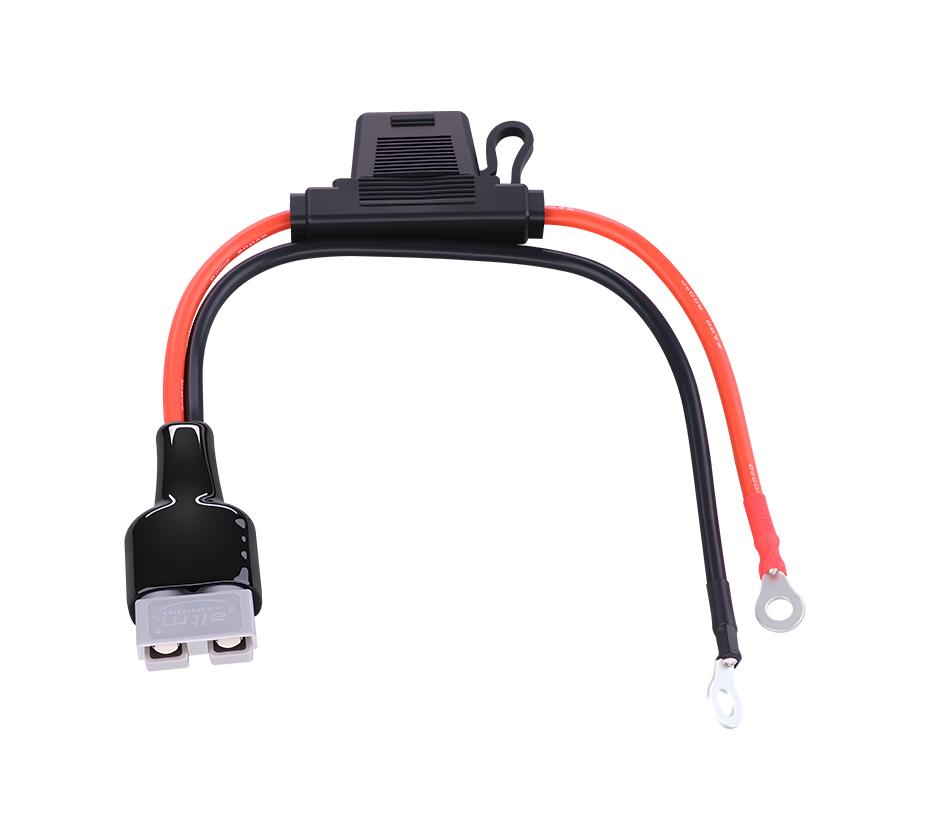
Anderson Power Products offers a comprehensive range of multi-pole connectors for material handling applications. The SB series, SBX series, and SBSX-75A sealed waterproof connectors are widely deployed in forklift and battery charging applications . The new Industrial Battery Connector (IBC) series represents the company's latest innovation for high-current material handling, with 80A, 160A, and 320A platforms, configurable signal options, integrated strain relief, acid-resistant performance per EN1175, and compliance with RoHS and DIN VDE 0623-589 . Accessories including temperature sensing kits, latching handle kits, and IP68 sealing kits provide application-specific customization.
5.2 EBC Series (DIN 43589-1 Compliant)
The EBC A/E series power connectors, available from manufacturers such as those represented on industrial product platforms, are designed specifically for forklift trucks and battery chargers . The E series complies with DIN 43589-1 and is UL1977 compliant, meeting all minimum requirements of EN1175-1. The A series offers higher current ratings up to 450A UL with RoHS-compliant materials. With contact barrel wire sizes from 8 AWG to 4/0 AWG (10 mm² to 120 mm²), these connectors accommodate the full range of forklift battery cable sizes. Operating temperature ranges of -25°C to 75°C (E series) and -25°C to 105°C (A series) cover most forklift applications.
5.3 GridPower DIN Series
GridPower offers a DIN series of module power connectors at 80A, 160A, 320A, and 640A specifically for the logistics market and electric forklift truck applications . The company's extensive product portfolio also includes MPC, GPS, GPO/GPE, and GPD series with multi-pole power and signal contacts. GridPower's manufacturing certifications include UL, ULC, TUV, REACH, and RoHS, providing assurance of quality and regulatory compliance. The company's development of a new alloy extending mating cycles to 100,000 reflects a focus on durability for high-frequency applications.
5.4 Wieland Electric
Wieland Electric's revos connector family provides heavy-duty multi-pole solutions for industrial applications including material handling. The revos POWER contact inserts and adapter units are designed for currents up to 100A and are available in mixed amperage contact versions . The revos MODULAR system combines data, power, and communication connections in one customizable connector, enabling hybrid interfaces for modern forklifts with sophisticated battery management and communication systems . The robust construction of revos connectors provides protection against mechanical stress and environmental factors, with UL recognition under categories PVVA2 and PVVA8.
6. Emerging Trends and Future Directions
6.1 Lithium-Ion Battery Integration
The transition from lead-acid to lithium-ion batteries in forklift applications is driving significant changes in connector requirements. Lithium-ion batteries require more sophisticated battery management, including cell balancing, temperature monitoring, and state-of-charge estimation. These functions demand communication between the battery and charger, increasing the demand for auxiliary contacts in multi-pole connectors. Additionally, lithium-ion batteries can accept higher charging currents, pushing connector current ratings upward.
6.2 Fast Charging and High-Power Connectors
Fast charging of forklift batteries—at rates exceeding 1C—enables opportunity charging strategies that keep forklifts in service with minimal downtime. Fast charging requires connectors capable of handling higher currents without excessive temperature rise, as well as communication between battery and charger to manage charging rates safely. Multi-pole connectors with high-current power contacts and robust communication circuits are essential enablers of fast charging strategies.
6.3 Telematics and Fleet Management
Forklift fleet management systems increasingly rely on telematics to monitor vehicle utilization, battery health, and maintenance requirements. Connectors that incorporate data communication capabilities—whether through dedicated auxiliary contacts or hybrid interfaces—enable the transmission of battery and charging data to fleet management systems. This data supports predictive maintenance, optimal charging strategies, and informed decisions about battery replacement or fleet expansion.
6.4 Standardization and Global Harmonization
While DIN 43589-1 and EN1175 provide European standards for forklift connectors, global operations require connectors that meet multiple regional standards. The harmonization of standards across regions—or the development of connectors that comply with multiple standards—would simplify procurement and maintenance for multinational fleet operators. Anderson Power's IBC series, with compliance to EN1175, RoHS, and DIN VDE 0623-589, represents progress toward this goal .
6.5 Sustainability and Circular Economy
Environmental considerations are influencing forklift connector design through RoHS compliance, recyclability, and extended service life. Connectors that achieve higher mating cycle life reduce replacement frequency and waste. The development of new alloys and contact materials that extend cycle life—such as GridPower's 100,000-cycle alloy—contributes to sustainability by reducing the consumption of connector components over the vehicle's service life .
Multi-pole power connectors for forklifts represent a mature, standards-driven technology that continues to evolve in response to changing battery chemistries, charging strategies, and fleet management requirements. Their integrated design, which bundles power and auxiliary circuits into a single mating interface, provides advantages in installation speed, operator safety, and environmental protection that are essential in material handling operations.
Selection of the appropriate connector requires careful consideration of current and voltage ratings, contact configuration, environmental sealing, standards compliance, and human factors. Leading manufacturers including Anderson Power Products, EBC series suppliers, GridPower, and Wieland Electric offer products spanning the performance and cost spectrum, each with distinctive features addressing specific forklift applications. Emerging trends toward lithium-ion integration, fast charging, telematics, and standardization will shape the next generation of multi-pole connectors, enabling forklift fleets to operate with greater efficiency, reliability, and sustainability. As electric material handling continues its global expansion, the multi-pole connector will remain a critical component in the electrical architecture of forklifts and other industrial vehicles, reliably transmitting power and data through countless charging cycles over years of demanding service.
 Yang.taya@aitmpower.com
Tel: 15382891313
Phone: 0769-88878951
Fax: 0769-88878955
Wechat: 15382891313


 CN
 CN
 Home >