
 2026-10-14
 3
Single-pole connectors represent a specialized category of electrical interconnection devices that utilize individual, independently housed contacts to transmit power in automated guided vehicle (AGV) systems. Unlike multi-pole configurations that bundle multiple circuits within a single connector shell, single-pole designs prioritize modularity, high current capacity per contact, and application-specific flexibility. This comprehensive analysis examines the technical characteristics, application scenarios, selection criteria, and emerging trends shaping single-pole connector deployment in AGV and autonomous mobile robot (AMR) platforms. As AGV fleets scale globally and charging infrastructure proliferates, understanding the nuanced requirements of single-pole interconnection technology becomes critical for system integrators, fleet operators, and design engineers seeking reliable, maintainable, and cost-effective power delivery solutions.
1. Introduction to Single-Pole Connectors in AGV Systems
1.1 Defining Single-Pole Architecture
A single-pole connector, in its most fundamental form, consists of one conductive contact housed within an insulating shell designed to mate with a corresponding contact of opposite polarity. This seemingly simple architecture belies the sophisticated engineering required to achieve reliable, high-cycle-life performance in demanding AGV environments. The defining characteristic of single-pole connectors lies in their modularity: each pole exists as an independent unit that can be stacked, configured, or combined with other poles to create application-specific power distribution schemes.
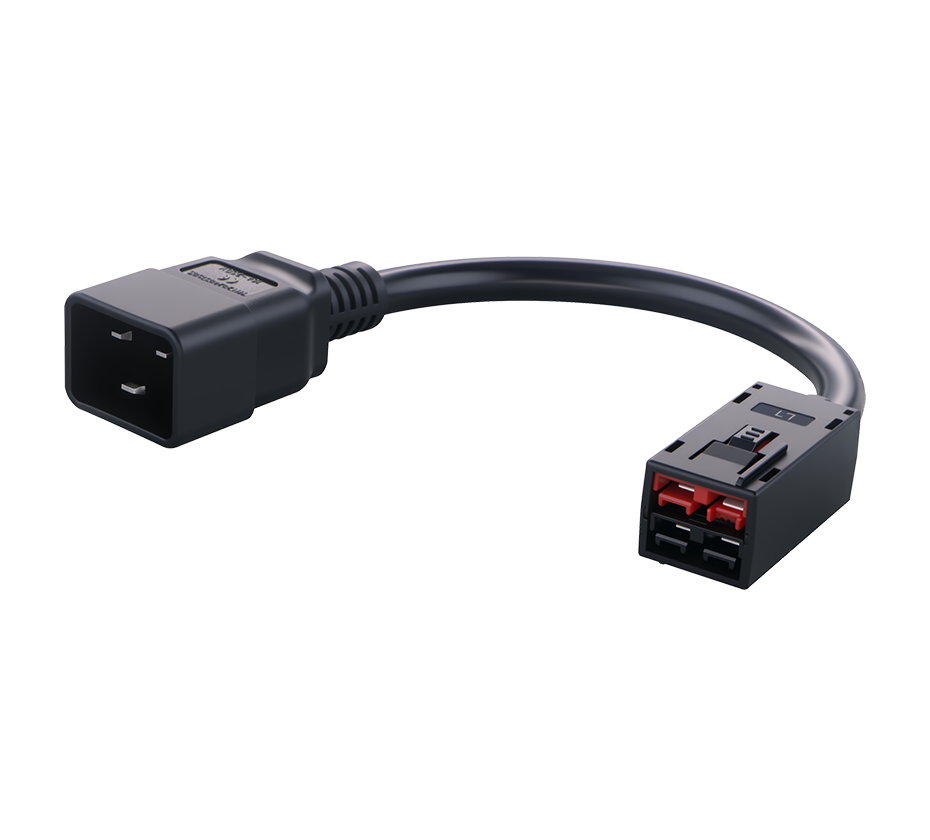
Anderson Power Products, a pioneer in this connector category, describes their single-pole connectors as available from 50A to 75A ratings for use with 600V continuous AC or DC operation . These ratings reflect the typical operating envelope for AGV charging applications, though specialized variants extend to considerably higher currents for forklift and heavy material handling equipment. The genderless design philosophy common to many single-pole connector families—exemplified by the Anderson Powerpole lineage—simplifies assembly and reduces inventory complexity by allowing identical housings to serve as either plug or receptacle .
1.2 Historical Evolution and AGV-Specific Requirements
The evolution of single-pole connectors for AGV applications reflects broader trends in industrial automation: the shift from manually operated equipment to autonomous fleets, the increasing demand for higher charging currents to minimize downtime, and the growing emphasis on predictive maintenance and operational reliability. Early AGV systems, often relying on lead-acid battery technology, required charging connectors capable of handling 30–60 amperes at 24 or 48 volts DC. Modern AGV platforms increasingly employ lithium-ion chemistries with higher charge acceptance rates, pushing connector requirements toward 100–200 amperes and beyond.
The AGV-specific connector must address several unique challenges not present in stationary industrial equipment. First, the connector must accommodate imperfect alignment during autonomous docking maneuvers. Unlike manual connections performed by human operators, AGV charging connections occur without visual feedback or tactile adjustment. This necessitates robust guiding features, self-aligning mechanisms, and tolerance for lateral and angular misalignment. Second, the connector must endure high cycle counts—typically 10,000 to 100,000 mating cycles over the vehicle's service life—without significant degradation in contact resistance or mechanical integrity. Third, the AGV environment exposes connectors to vibration, dust, moisture, and temperature fluctuations that demand environmental sealing and material stability.
1.3 Position Within the Broader Connector Landscape
Single-pole connectors occupy a distinct niche within the broader ecosystem of AGV power interconnection solutions. Multi-pole connectors, which bundle multiple power and signal circuits into a single interface, offer advantages in installation speed and foolproof mating—it is impossible to connect the wrong circuit when all circuits mate simultaneously. Single-pole connectors, by contrast, excel in scenarios requiring:
Modular current capacity: Each pole carries its own current, allowing system designers to add or remove poles to match specific power requirements without changing the entire connector interface.
Independent circuit routing: When power and return paths require physical separation for safety or electromagnetic compatibility reasons, single-pole connectors provide the necessary isolation.
Application-specific configuration: Some AGV designs utilize multiple single-pole connectors with different current ratings for different subsystems—for example, a high-current pair for battery charging and lower-current pairs for auxiliary systems.
Cost optimization at scale: For fleets with standardized voltage and current requirements, single-pole connectors often provide the most economical per-contact solution.
2. Technical Specifications and Performance Characteristics
2.1 Current and Voltage Ratings
The current-carrying capacity of single-pole AGV connectors spans a wide range, from compact 15-ampere units for small AMRs to heavy-duty 350-ampere connectors for large AGV platforms and automated forklifts. The BMC series from Multicomp Pro exemplifies the lower end of this spectrum, with single connectors rated from 15A to 45A and 50A to 75A variants, all suitable for 600V continuous AC or DC operation . These compact connectors find application in light-duty AGVs, electric wheelchairs, and smaller material handling equipment.
At the higher end, Harting's Han HPR single-pole connectors deliver current ratings of 250A, 350A, 650A, and 800A with voltage capabilities up to 4kV, operating temperature ranges of -40°C to +125°C, and IP68/69K protection . While these extreme ratings exceed typical AGV requirements, they illustrate the scalability of single-pole architecture and its relevance to heavy industrial material handling.
For mainstream AGV charging applications, the sweet spot typically falls between 50A and 200A at 24–80V DC. Anderson Power's SB series and similar connectors dominate this segment, offering a balance of current capacity, compact dimensions, and cost-effectiveness. The 320A, 160A, and 80A platforms of Anderson's new Industrial Battery Connector (IBC) series further illustrate the industry's move toward modular, configurable high-current solutions for material handling applications including forklift charging and reach stacker charging .
2.2 Contact Resistance and Thermal Management
Contact resistance directly impacts connector efficiency, heat generation, and service life. In AGV charging applications, where currents of 100 amperes or more may flow continuously for hours, even milliohm-level resistance generates significant heat. The SA30 multipole connector specification cites average contact resistance below 500 microohms, achieved through copper contacts with silver plating and a flat wiping contact system that cleans the contact surface during each mating cycle .
Single-pole connectors for AGVs typically employ one of two contact technologies: flat-wipe or pin/socket. Flat-wipe contacts, as the name suggests, use planar surfaces that slide against each other during mating, providing a wiping action that displaces oxide layers and contaminants. Pin/socket designs utilize a cylindrical pin engaging a resilient socket, often with multiple contact points to distribute current and reduce resistance. GridPower notes that their power connector contacts achieve "plane contact technology" with both "flat-wipe" and "pin/socket" options available, characterized by low cost, high quality, low resistance, hot swap capability, and long service life .
Thermal management in single-pole connectors relies primarily on the mass of the contact material, the surface area available for heat dissipation, and the thermal conductivity of the housing. Silver-plated copper contacts, standard in most high-current AGV connectors, provide excellent electrical and thermal conductivity. The insulating housing material—typically high-temperature thermoplastics or thermosets—must maintain dimensional stability and dielectric strength at operating temperatures. Operating temperature ranges of -20°C to +125°C are common for AGV connector housings, accommodating both cold storage environments and the elevated temperatures that occur during fast charging .
2.3 Mechanical Durability and Cycle Life
The mechanical durability of single-pole connectors encompasses several distinct performance dimensions: mating cycle life, contact retention force, housing robustness, and resistance to environmental degradation. Mating cycle ratings for AGV connectors range from 10,000 cycles for general-purpose connectors to 100,000 cycles for premium designs. GridPower highlights a new alloy development that extends mating cycles to 100,000, addressing the high-frequency charging requirements of automated fleets .
Conductix-Wampfler reports that their charging contacts achieve lifespans of 100,000 to 1,000,000 cycles on their Enduro+ and Nano+ product lines . This extraordinary range reflects the importance of cycle life in AGV applications, where a vehicle charging twice daily over a ten-year service life accumulates over 7,000 cycles—well within the capability of quality connectors, but demanding careful attention to contact wear and spring force retention.
Contact retention force—the force required to separate mated connectors—must balance two competing requirements. The force must be high enough to maintain reliable electrical connection despite vibration and thermal cycling, yet low enough to permit disengagement by the AGV's docking mechanism or, in emergency situations, by maintenance personnel. The SA30 connector specification cites an average connection/disconnection force of 45N and a connector holding force of 200N minimum . Anderson Powerpole connectors utilize stainless steel springs to create "robust force between the contacts that holds the connector in the mated condition, but allows it to be quickly disconnected" .
2.4 Environmental Sealing and Protection Ratings
AGV operating environments vary dramatically, from clean semiconductor fabrication facilities to dusty warehouse floors, from refrigerated food distribution centers to outdoor logistics yards. Single-pole connectors for AGV applications must therefore offer environmental protection appropriate to the intended deployment. IP67, indicating protection against dust ingress and temporary immersion, represents the baseline for most AGV charging connectors. Higher ratings, such as IP68 (continuous immersion) and IP69K (high-pressure, high-temperature washdown), are available for demanding applications .
Sealing is achieved through multiple design features: O-rings or gaskets at the mating interface, sealed cable entries using compression glands or overmolded strain relief, and sealed housing constructions that prevent moisture ingress through seams or mounting interfaces. The Han HPR series incorporates a recessed O-ring and metal contour interface to achieve IP68/69K protection . Anderson Power's IBC series offers an optional IP68 sealing kit for applications requiring the highest level of environmental protection .
Beyond ingress protection, AGV connectors must resist chemical exposure—battery electrolytes, cleaning agents, hydraulic fluids—and ultraviolet radiation for outdoor applications. The IBC series is rated for acid-resistant performance per EN1175, addressing the sulfuric acid exposure common in lead-acid battery charging areas . Material selection for housings and seals must account for the specific chemicals present in each application.
3. Application Scenarios in AGV Systems
3.1 Opportunity Charging and Autonomous Docking
The most significant application of single-pole connectors in AGV systems is opportunity charging: the practice of charging vehicle batteries during brief, frequent pauses in the operational cycle rather than during extended overnight periods. Opportunity charging extends battery life in lead-acid systems by avoiding deep discharge, reduces the required battery capacity, and eliminates the need for battery swapping infrastructure. For lithium-ion AGVs, opportunity charging enables continuous operation with smaller, lighter batteries.
The autonomous docking process that initiates opportunity charging places unique demands on connector design. The AGV must position itself relative to the charging station with sufficient precision to achieve electrical connection, often using only onboard sensors and pre-programmed docking routines. Single-pole connectors used in this application typically incorporate generous lead-in chamfers, self-aligning features, and compliance mechanisms that tolerate several millimeters of misalignment.
Conductix-Wampfler's charging contacts for AGVs use conductive brushes to transfer power from the charging station to the vehicle battery. When the mobile unit docks, charging contacts make electrical contact with charging points on the vehicle . This brush-based approach tolerates alignment variation and accommodates the relative motion that may occur during the charging process. Pilot or auxiliary contacts can be included to detect proper alignment and inhibit charging until contacts are correctly positioned, preventing arcing and ensuring safe operation .
A notable innovation in AGV docking connectors is the elastic deviation correction mechanism described in recent patent literature. This mechanism interposes spring-loaded elements between the connector housing and its mounting base, allowing the housing to shift relative to the vehicle during mating. As the AGV approaches the charging station, the connector housing contacts a guiding cavity on the station side and self-adjusts to achieve alignment, with the springs returning the housing to its neutral position after disconnection . Such mechanical intelligence reduces the precision requirements for AGV docking and increases charging reliability.
3.2 Battery Swapping and Fast Charging
While opportunity charging dominates AGV fleet operations, some applications require battery swapping or high-rate fast charging. Battery swapping involves physically exchanging depleted batteries for charged ones, typically using automated handling equipment. The connectors used in swap applications must withstand the rigors of repeated manual or robotic handling, including potential drops, impact, and misalignment. Single-pole connectors with robust housings and generous guiding features are well-suited to this application.
Fast charging, typically defined as charging at rates exceeding 1C (the battery's capacity in ampere-hours), requires connectors capable of handling sustained high currents without excessive temperature rise. Single-pole connectors rated at 200A or higher, with low contact resistance and efficient heat dissipation, enable fast charging without the complexity of liquid-cooled cables or connectors. The modular nature of single-pole systems allows multiple poles to be paralleled for even higher current capacity when required.
3.3 Auxiliary Power and Signal Distribution
Beyond main battery charging, AGV systems require power and signal distribution for auxiliary systems: onboard computers, sensors, communication modules, motors, and actuators. Single-pole connectors serve these applications in several configurations. Low-current single-pole connectors, such as the 15A–45A BMC series, provide compact, reliable interconnection for auxiliary circuits . Where multiple auxiliary circuits must be connected simultaneously, single-pole connectors can be ganged together using mounting brackets or combined into hybrid configurations.
An emerging trend in AGV connector design is the integration of data and power transmission in a single interface. The TE Connectivity SPE-M12 hybrid connector, while not a single-pole design, illustrates this convergence: it combines Single Pair Ethernet data transmission up to 1 Gbps with power delivery up to 1 kW (2 x 8 A) in an M12 form factor . For AGV applications, such hybrid interfaces reduce connector count and simplify cable management, though they require careful attention to signal integrity and power isolation.
3.4 Heavy-Duty Material Handling: Forklifts and Beyond
While AGVs represent the primary focus of this analysis, single-pole connectors also serve the broader material handling ecosystem, including automated forklifts, reach stackers, and pallet jacks. The power requirements for these vehicles—often 48V, 80V, or higher, with currents exceeding 300A—demand heavy-duty connectors that exceed typical AGV specifications. Anderson Power's Industrial Battery Connector (IBC) series, available in 80A, 160A, and 320A platforms, addresses this segment with configurable signal options, integrated strain relief, and compliance with EN1175 and DIN VDE 0623-589 standards .
The distinction between AGV and forklift connector requirements lies primarily in scale and environment. Forklifts operate in rougher environments, with greater vibration, impact, and contamination exposure. Connectors for these applications prioritize robustness and environmental sealing over the compactness and precision required for small AMRs. However, the fundamental principles of single-pole connector design—modularity, reliable contact, and ease of mating—apply across the full spectrum of material handling equipment.
4. Selection Criteria and Design Considerations
4.1 Electrical Requirements Assessment
Selecting the appropriate single-pole connector for an AGV application begins with a thorough assessment of electrical requirements. The designer must determine the maximum continuous current, peak current (during acceleration or fast charging), system voltage, and any requirements for auxiliary circuits or pilot signals. These parameters establish the minimum current and voltage ratings for the connector.
Current rating must account not only for steady-state conditions but also for transient events and derating factors. Connector manufacturers typically specify current ratings under specific conditions: a maximum ambient temperature, a maximum contact temperature rise, and often with a specific wire gauge. When the actual application conditions differ from these reference conditions—for example, higher ambient temperature, smaller wire, or continuous rather than intermittent duty—the effective current capacity must be derated accordingly.
Voltage rating determines the insulation requirements and creepage/clearance distances within the connector. AGV systems commonly operate at 24V, 48V, or 80V DC, well within the 600V rating of most single-pole connectors. However, higher-voltage systems, including some fast-charging architectures, may approach or exceed 600V, requiring careful selection of connectors with appropriate voltage ratings and dielectric withstand capability.
4.2 Mechanical and Environmental Considerations
The mechanical and environmental context of the AGV application shapes connector selection in several critical ways. The available mounting space, cable routing constraints, and mating mechanism design all impose requirements on connector form factor and mounting provisions. Single-pole connectors offer advantages in tight spaces because individual poles can be routed independently, but they require more mounting hardware and cable management than integrated multi-pole connectors.
Mating mechanism design is particularly critical for autonomous AGV applications. The connector must guide itself into alignment during docking, tolerate the misalignment inherent in dead-reckoning or sensor-based positioning, and disengage cleanly when charging is complete. Connectors with large lead-in chamfers, floating mounts, or compliance mechanisms are preferred for these applications. The elastic deviation correction assembly described in recent AGV connector patents represents a sophisticated approach to this challenge .
Environmental protection requirements derive from the operating environment. Indoor AGVs in climate-controlled facilities may require only basic dust protection, while outdoor or washdown environments demand IP67 or higher sealing. Temperature range must encompass both the coldest and hottest conditions the connector will experience, including self-heating during high-current charging. Chemical resistance must address the specific chemicals present: battery electrolyte, cleaning solutions, lubricants, and hydraulic fluids.
4.3 Reliability and Maintenance Factors
Reliability in AGV connector applications is a function of design quality, application conditions, and maintenance practices. The connector's cycle life rating provides a baseline for estimating service interval requirements, but actual life depends heavily on factors such as alignment accuracy during mating, current loading, ambient temperature, and contamination exposure.
Maintenance requirements for single-pole connectors are generally minimal: periodic inspection for contact wear, cleaning of contact surfaces if contaminated, and verification of spring force and retention characteristics. Charging contacts require periodic cleaning for optimal performance, with frequency depending on operating conditions and usage . In high-cycle AGV applications, preventive replacement of contact elements at defined intervals may be more economical than reactive maintenance after failure.
A critical but often overlooked aspect of connector reliability is the mating cycle "quality"—the alignment and velocity of engagement. Connectors that are consistently mated with proper alignment and controlled velocity achieve far longer life than those subjected to misaligned, high-impact engagement. AGV docking system design should therefore prioritize precise alignment and controlled approach speed to maximize connector life.
4.4 Cost and Availability Considerations
Total cost of ownership for single-pole connectors encompasses initial purchase cost, installation labor, maintenance and replacement costs, and the operational cost of downtime if connectors fail. While single-pole connectors often have lower per-unit costs than equivalent multi-pole connectors, the need for separate mounting, cable management, and connection operations may offset these savings in some applications.
Availability and supply chain resilience have become increasingly important considerations in recent years. Designers should favor connectors from established manufacturers with proven track records in material handling applications, multiple distribution channels, and documented long-term availability commitments. The ISO certification and UL, TUV, REACH, and RoHS compliance of suppliers such as GridPower provide assurance of quality and regulatory conformity .
5. Leading Products and Manufacturers
5.1 Anderson Power Products
Anderson Power Products has been a dominant force in single-pole power connectors for decades, with their Powerpole and SB series connectors widely deployed in electric vehicles, forklifts, and industrial equipment. The company's BMC series single connectors, available from 15A to 75A, exemplify the compact, cost-effective end of the AGV connector spectrum . The genderless housing design, color-coded mating, and simple assembly of these connectors have made them a de facto standard in many material handling applications.
Anderson's recent introduction of the Industrial Battery Connector (IBC) series signals a strategic focus on the evolving requirements of automated material handling. The IBC series offers 80A, 160A, and 320A platforms with configurable signal options, integrated strain relief for power and signal wires, acid-resistant performance per EN1175, and optional IP68 sealing . The modular architecture of the IBC series enables custom configurations without custom tooling, addressing the diverse requirements of AGV and forklift fleets.
5.2 Harting
Harting's Han HPR single-pole connectors represent the high-power, high-reliability end of the AGV and industrial connector market. With current ratings from 250A to 800A, voltage capability to 4kV, and IP68/69K protection, these connectors address applications where environmental extremes and high power density converge . While their cost and size may exceed typical AGV requirements, they demonstrate the scalability of single-pole architecture and its relevance to heavy material handling and outdoor logistics applications.
5.3 Conductix-Wampfler
Conductix-Wampfler specializes in charging solutions for mobile equipment, including AGVs, mobile robots, and electric forklifts. Their charging contacts, supporting load currents from 5A to 600A, are designed for the high-cycle, autonomous docking requirements of AGV fleets . The availability of pilot or auxiliary contacts for alignment detection and charge control, combined with lifespans of 100,000 to 1,000,000 cycles, makes these products particularly well-suited to opportunity charging applications.
5.4 GridPower
GridPower (Shenzhen Power Connection Co., Ltd.) offers a comprehensive portfolio of power connectors including single-pole power connectors, MPC, GPS, and DIN series for the logistics market. Their DIN series provides module power connectors at 80A, 160A, 320A, and 640A specifically for electric forklift truck applications . The company's development of a new alloy extending mating cycles to 100,000 reflects the industry's focus on durability and maintenance reduction.
5.5 Multicomp Pro
Multicomp Pro's BMC series single connectors provide a cost-effective option for lower-current AGV and auxiliary applications. Available from 15A to 45A and 50A to 75A, these connectors feature same-color mating to prevent misconnection, simple and fast assembly, and operating temperature ranges of -20°C to +125°C . Their suitability for UPS systems, telecommunications, forklift trucks, and electric vehicles demonstrates the broad applicability of well-designed single-pole connectors.
6. Emerging Trends and Future Directions
6.1 Higher Current Density and Fast Charging
The push toward higher charging rates, driven by the adoption of lithium-ion batteries with high charge acceptance, is increasing the current requirements for AGV connectors. Connectors rated at 200A, 300A, and even higher are becoming more common in AGV charging applications. This trend challenges connector designers to increase current density—more current in the same or smaller package—through improved contact materials, optimized geometries, and advanced thermal management.
6.2 Hybrid Power and Data Interfaces
The convergence of power and data transmission in single connector interfaces is gaining momentum. Hybrid connectors that combine high-current power contacts with Ethernet, CAN bus, or other communication protocols reduce cable count, simplify docking interfaces, and enable new capabilities such as battery management system communication during charging. While hybrid designs often deviate from pure single-pole architecture, the principles of modular, configurable interconnection remain relevant.
6.3 Predictive Maintenance and Condition Monitoring
The integration of sensors into connectors—temperature sensors, contact resistance monitors, cycle counters—enables predictive maintenance strategies that reduce unplanned downtime. Anderson Power's IBC series offers a temperature sensing kit as an accessory, illustrating this trend toward intelligent connectors that report their own condition . For AGV fleets, where connector failure can strand a vehicle and disrupt operations, condition monitoring provides valuable early warning of degradation.
6.4 Standardization and Interoperability
Industry standards such as IEC 63171-7 for Single Pair Ethernet and EN1175 for industrial trucks provide frameworks for interoperability and safety. The TE Connectivity SPE-M12 hybrid connector's full compliance with IEC 63171-7 ensures interoperability across devices and manufacturers . For AGV connectors, standardization of form factors, ratings, and interfaces would reduce integration costs and enable multi-vendor sourcing, though the diversity of AGV designs may limit the applicability of rigid standards.
6.5 Sustainability and Material Innovation
Environmental considerations are influencing connector design through RoHS compliance, recyclability, and reduced material usage. The development of new alloys that extend mating cycles—such as GridPower's 100,000-cycle alloy—contributes to sustainability by reducing replacement frequency and waste . As AGV fleets electrify and expand, the cumulative environmental impact of connector production, use, and disposal becomes a more significant consideration.
Single-pole connectors for AGV systems represent a mature yet continuously evolving technology at the intersection of electrical engineering, mechanical design, and industrial automation. Their modular architecture, high current capacity per contact, and application-specific flexibility make them ideally suited to the autonomous docking, opportunity charging, and auxiliary power distribution requirements of modern AGV fleets. From compact 15A connectors for light-duty AMRs to heavy-duty 800A connectors for industrial material handling, the single-pole connector family spans the full range of AGV power requirements.
Selection of the appropriate connector requires careful assessment of electrical, mechanical, environmental, and reliability factors specific to each application. Leading manufacturers including Anderson Power Products, Harting, Conductix-Wampfler, GridPower, and Multicomp Pro offer products spanning the performance and cost spectrum, each with distinctive features addressing particular AGV challenges. Emerging trends toward higher current density, hybrid power-data interfaces, predictive maintenance, and standardization will shape the next generation of single-pole connectors, enabling AGV fleets to operate with greater reliability, efficiency, and autonomy. As the material handling industry continues its rapid automation, the humble single-pole connector will remain a critical enabler of reliable, high-cycle power interconnection.
 Yang.taya@aitmpower.com
Tel: 15382891313
Phone: 0769-88878951
Fax: 0769-88878955
Wechat: 15382891313


 CN
 CN
 Home >


