
 2026-10-14
 1
Introduction
The modern data center is undergoing a profound architectural transformation driven by the relentless demands of artificial intelligence, high-performance computing, and cloud-scale workloads. At the physical layer of this transformation lies an often-overlooked but critically important component class: the data center module connector. These connectors serve as the physical and electrical interface between servers, storage arrays, networking equipment, and the modules that populate them, and their performance characteristics directly determine whether a data center can achieve the bandwidth, density, and reliability required by contemporary applications.
The global data center connectors market was valued at USD 4.8 billion in 2025 and is projected to reach USD 14.5 billion by 2035, advancing at a compound annual growth rate of 10.7% over the forecast period. This growth is not merely a function of expanding data center footprints; it reflects a structural realignment of data center architecture toward AI-native, high-bandwidth interconnect designs that demand greater connector density, higher signal integrity, and faster migration from copper to optical interfaces than at any prior point in the industry's evolution. Understanding the technology, standards, and market dynamics of data center module connectors is therefore essential for engineers, procurement specialists, and infrastructure architects alike.
Defining Data Center Module Connectors
Data center module connectors encompass a broad family of interconnect solutions designed to facilitate high-speed signal transmission, power delivery, and sideband communication between modular components within data center equipment. Unlike external I/O connectors that interface with networking cables, module connectors operate within the chassis, connecting line cards to backplanes, accelerator modules to baseboards, and storage devices to host controllers.
The defining characteristics of these connectors include high signal density, controlled impedance, low insertion loss, and the mechanical robustness to withstand repeated mating cycles in thermally challenging environments. The applications in question demand slim, cost-effective connectors that provide high levels of signal integrity, modularity, and scalability, and that minimize downtime through ease of maintenance and repair.
Primary Categories of Module Connectors
Data center module connectors can be broadly categorized into several functional groups. Board-to-board connectors establish direct electrical connections between parallel or perpendicular printed circuit boards, commonly used for mezzanine cards, accelerator modules, and system-on-module designs. Card edge connectors mate with the gold-finger edge of add-in cards, providing a cost-effective and space-efficient interface for NICs, SSDs, and other pluggable modules. Cable connectors terminate high-speed twinaxial or optical cables that carry signals over longer distances within the rack, enabling flexible system architectures where the physical separation of components improves thermal management or signal routing. Power connectors deliver regulated DC power to modules, with contemporary designs supporting increasingly higher current densities as rack power consumption escalates from approximately 40 kW to as much as 1,000 kW in AI-optimized facilities. Liquid cooling connectors represent a rapidly growing category, enabling the circulation of coolant to cold plates and immersion tanks that manage the thermal load of high-power processors.
Key Standards Governing Module Connectors
The interoperability and performance of data center module connectors are governed by a complex ecosystem of industry standards developed by organizations including the Storage Networking Industry Association, the Open Compute Project, the PCI Industrial Computer Manufacturers Group, and various IEEE working groups.
SFF-TA-1002 and the EDSFF Ecosystem
The SFF-TA-1002 standard, developed by the SNIA Small Form Factor committee, defines the physical, electrical, and mechanical requirements for a family of high-speed card edge connectors commonly referred to as the 4C and 4C+ interfaces. This standard has been adopted by the Enterprise and Datacenter Standard Form Factor committee for solid-state drive applications and by the Open Compute Project for NIC 3.0 applications.
The SFF-TA-1002 connector specification supports data rates rated up to 56 Gbps PAM-4 (112 Gbps aggregate), meets all current protocol performance requirements for PCIe Gen 3 and Gen 4, and is available in multiple pin configurations including 2C (x8) and 4C/4C+ (x16) in right angle and straddle mount orientations. The 0.60 mm pitch design with 85-ohm impedance has become a de facto standard for high-density module connectivity, enabling transmission distances of up to one meter while meeting PCIe, NVMe, OCP NIC, and Gen-Z specifications.
SFF-TA-1034 and SFF-TA-1037: The Hyper Cool Edge Specification
More recent standards development has focused on supporting the emerging class of pluggable multi-purpose modules. Amphenol's Hyper Cool Edge connectors are designed to support the pluggable multi-purpose module defined in SFF-TA-1034 and meet the SFF-TA-1037 specifications, delivering high-speed signal, sideband communication, and power connectivity in a unified interface. These 0.6 mm pitch connectors support xPU, CXL, and NIC modules for data center, server, storage, accelerator, AI, and machine learning applications, with vertical, right angle, and straddle mount board-to-board configurations available.
The Hyper Cool Edge design is notable for its integration of high-speed signaling, power delivery, and thermal management provisions into a single connector footprint. The 4C+ EP receptacle supports x16 PCIe lanes, sideband signals, and 200 W of power, while an additional 108-pin receptacle supports sixteen additional transmit and receive PCIe lanes, and a 2-pin power receptacle supports up to an additional 400 W. This level of integration represents a significant advance over earlier module connectors that required separate interfaces for signal, power, and sideband functions.
OCP NIC 3.0: A Case Study in Modular Connector Design
The Open Compute Project NIC 3.0 specification provides an instructive example of how module connectors are standardized to meet hyperscale requirements. OCP NIC 3.0 connectors are compliant with the 4C+ and 4C connectors defined in the SFF-TA-1002 specification for right angle or straddle mount form factors. The primary connector is a 4C+ implementation with 168 pins, while the secondary connector is a 4C implementation with 140 pins, and both include support for up to 32 differential pairs.
The OCP NIC 3.0 standard supports two card form factors: a small card measuring 76 mm by 115 mm and a large card measuring 139 mm by 115 mm, each supporting a primary connector and optionally a secondary connector. The connector pinout includes provisions for PCIe Gen 4 and Gen 5 signaling, 12V and 3.3V auxiliary power, and a 100 MHz reference clock, reflecting the comprehensive electrical requirements of modern network interface cards.
The adoption of OCP NIC 3.0 has been driven by hyperscale operators seeking to reduce the physical footprint of networking cards while increasing their functionality. By standardizing the connector interface, OCP NIC 3.0 enables multi-vendor sourcing and simplifies system integration, reducing both procurement costs and engineering overhead.
Signal Integrity Considerations in Module Connector Design
Maintaining signal integrity when designing compact modular connectivity solutions is critical, and selecting the correct impedance is essential to achieving this. At data rates of 56 Gbps PAM4 and beyond, the connector becomes a significant contributor to the overall channel loss budget, and its impedance discontinuities, crosstalk characteristics, and insertion loss performance directly affect the achievable bit error rate.
Impedance Options and Their Applications
Module connectors are available in multiple impedance options, including 85 ohms, 92 ohms, and 95 ohms, each optimized for different system architectures and interoperability requirements. The 85-ohm impedance is commonly associated with PCIe Gen 4 and Gen 5 applications, where the electrical characteristics of the channel have been designed around this target. The 92-ohm option is frequently used in Gen-Z and certain storage applications, while the 95-ohm impedance finds application in systems where the connector must interface with legacy infrastructure.
The impedance selection process is complicated by the many types of PCIe interconnects, including midplane, backplane, and cabled configurations, each presenting different electrical environments that the connector must accommodate. Designers must consider not only the connector's intrinsic impedance but also the impedance of the PCB traces and vias to which it connects, ensuring a smooth transition across the entire channel.
Insertion Loss and Crosstalk Performance
The connector's insertion loss performance is a critical determinant of the maximum channel length that can be supported at a given data rate. The Hyper Cool Edge connectors, for example, support high-speed differential pairs up to 64 Gbps PAM4, with upgradeability to 112 Gbps PAM4, while maintaining the signal integrity required for reliable operation. This performance is achieved through careful design of the contact geometry, dielectric materials, and grounding structures within the connector.
Crosstalk suppression is equally important, particularly in high-density connector configurations where adjacent signal pairs are in close proximity. Recent patent developments in high-speed backplane connector design have focused on forming complete grounding shields around differential signal pairs to avoid signal crosstalk from other signal contacts, thereby improving signal quality and ensuring the stability of signal transmission. These grounding strategies are equally applicable to module connectors, where the miniaturization trend has made crosstalk management increasingly challenging.
Thermal Management and Power Delivery
The thermal environment within modern data center equipment has become a critical constraint on connector design. AI servers and high-performance computing nodes generate substantial heat loads, with rack-level power consumption reaching 1,000 kW in the most demanding installations. Connectors must not only survive these conditions but maintain their electrical performance and mechanical integrity over the system's operational lifetime.
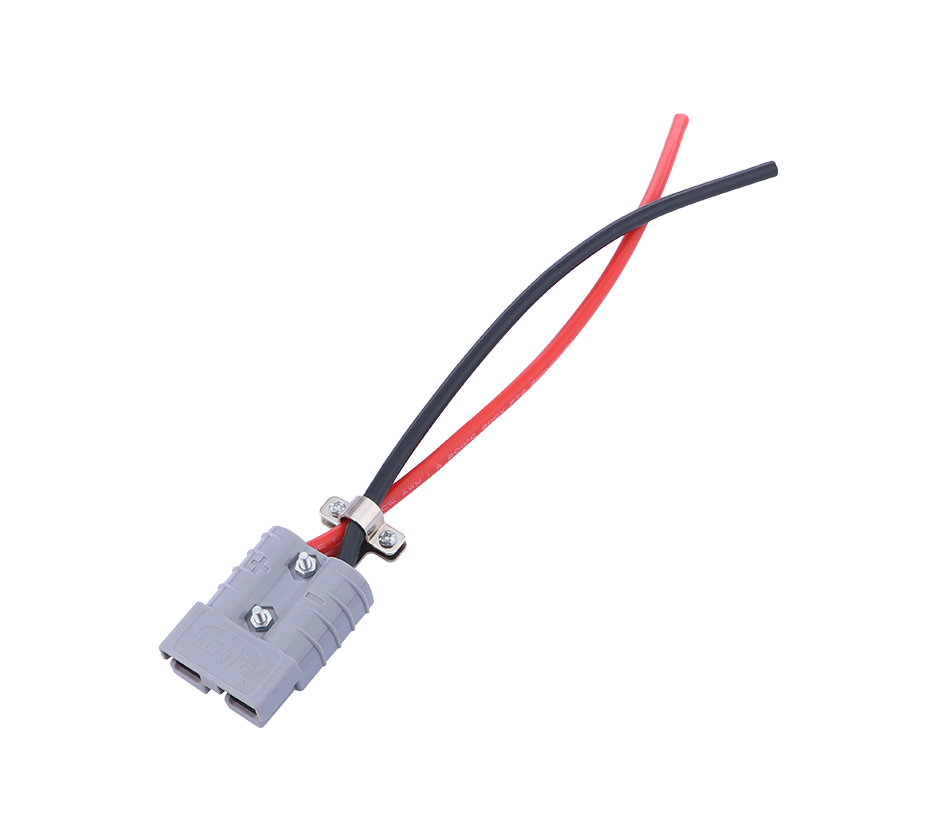
Liquid Cooling Connector Solutions
The growing adoption of liquid cooling in data centers has created new demands for connector systems that can reliably transport coolant while maintaining the electrical isolation required for safe operation. The global market for data center liquid-cooled connectors was estimated at USD 231.54 million in 2025 and is projected to reach USD 915.20 million by 2032, growing at a compound annual growth rate of 20.48% from 2026 to 2032.
The Open Compute Project has developed the Large Quick Connector specification to standardize liquid cooling interconnects at the rack level. The specification defines performance requirements for dripless and interoperable liquid transport connections with high flow rates and minimal pressure drop, with working pressure increased from 35 psi to 50 psi in recent revisions. Amphenol's UQD and UQDB connectors have been enhanced to fully comply with OCP Rev 2.0 specifications, with flow performance up to 800 L/min and hybrid configurations enabling the UQD plug to mate with a UQDB socket.
Power Delivery Requirements
Module connectors must deliver increasing amounts of power to support higher-performance processors and accelerators. The Hyper Cool Edge design provides a useful benchmark, with the 4C+ EP receptacle supporting 200 W and the dedicated power receptacle supporting up to an additional 400 W. This power density requires careful thermal design of the connector contacts and housing materials to prevent localized heating that could degrade performance or safety.
At the material level, connector manufacturers are developing advanced contact platings and alloys to handle higher current loads. TE Connectivity's ECONIDUR plating technology, for example, employs a complex stacked structure with a nickel-phosphorus layer replacing traditional precious metals, delivering comparable reliability performance while offering sustainability benefits. For high-current applications, copper alloys including beryllium copper and Corson alloy are widely used for their combination of conductivity, strength, and thermal stability.
Market Landscape and Key Manufacturers
The data center connectors market is characterized by a high degree of concentration, with the top five players collectively holding 61% of market share in 2025. Amphenol led with over 21% market share, followed by Corning, Luxshare Precision, Molex, and TE Connectivity. These manufacturers compete across multiple connector categories and invest heavily in research and development to introduce high-performance solutions addressing evolving AI, cloud computing, and high-speed networking requirements.
Competitive Dynamics and Innovation
The competitive distinction between suppliers is shifting from commodity form factor delivery to application-specific, AI-qualified product development forces. This shift reflects the growing complexity of data center architectures, where a generic connector solution is unlikely to satisfy the demanding requirements of a specific system design.
Amphenol's portfolio spans the full range of module connectivity, from the Hyper Cool Edge connectors supporting emerging CXL and xPU modules to the ExaMAX2 backplane connector system supporting 112 Gbps PAM4 signaling. Molex has developed the Impulse backplane connector system with a density of 101 differential pairs per square inch and support for cable, conventional, and orthogonal board-to-board connectivity at speeds up to 112 Gbps. TE Connectivity's MCIO (Mini Cool Edge I/O) connectors are specifically designed for server internal connections, enabling CPU-to-backplane, CPU-to-NIC, and CPU-to-riser card connectivity in SAS and PCIe Gen 4/Gen 5 applications.
Future Directions
The future of data center module connectors will be shaped by several converging trends. The migration toward 800G and 1.6T optical interfaces is accelerating, with the share of 800G+ optical modules in data center deployments projected to grow from approximately 20% in 2024 to more than 60% by 2026. This transition will require module connectors that can interface with optical transceivers while maintaining the signal integrity and thermal management characteristics required by high-density optical modules.
The continued adoption of CXL (Compute Express Link) as a cache-coherent interconnect will drive demand for module connectors that can support the low-latency, high-bandwidth requirements of disaggregated memory and accelerator architectures. The Hyper Cool Edge connector's support for xPU/CXL/NIC modules positions it well for this transition, but further innovation will be required to support the even higher data rates and tighter latency requirements of future CXL generations.
Standardization efforts will continue to evolve, with the OCP and SNIA committees working to define the next generation of module connector form factors. The challenge will be to balance the competing demands of higher performance, greater density, and backward compatibility, ensuring that new standards can be adopted without requiring complete system redesigns.
Data center module connectors represent a critical enabling technology for the AI-driven compute infrastructure of the twenty-first century. From the SFF-TA-1002 card edge interface to the emerging Hyper Cool Edge specification, these connectors embody a sophisticated balance of electrical performance, mechanical reliability, thermal management, and standardization. The market's projected growth from USD 4.8 billion to USD 14.5 billion over the next decade reflects the fundamental importance of these components to data center architecture, and the ongoing innovation by manufacturers including Amphenol, Molex, TE Connectivity, and emerging Chinese suppliers ensures that the technology will continue to evolve in step with the ever-increasing demands of modern computing.
 Yang.taya@aitmpower.com
Tel: 15382891313
Phone: 0769-88878951
Fax: 0769-88878955
Wechat: 15382891313


 CN
 CN
 Home >