
 2026-10-14
 2
The Power Delivery Challenge in High-Performance Computing
The trajectory of high-performance computing (HPC) and artificial intelligence workloads has created power delivery requirements that push the limits of conventional connector technology. Graphics processing units (GPUs) and specialized accelerators designed for AI training and inference can dissipate 700 watts or more per device, with the latest generations of data center GPUs approaching power levels that were once the province of entire servers. The cumulative power draw of a single HPC rack can exceed 100 kilowatts, requiring power distribution infrastructure that can deliver enormous currents with minimal resistive loss and effective thermal management.
The 12VHPWR connector, also known as the 12+4 pin PCI Express power connector, emerged as a response to these escalating power requirements. Originally developed for consumer graphics cards but increasingly deployed in enterprise and HPC contexts, the 12VHPWR connector replaces the multiple 8-pin PCIe power connectors that would otherwise be required, reducing cable count and improving airflow in densely packed systems . Intel’s Ponte Vecchio data center GPU, a flagship product for HPC and AI applications, implements the 16-pin 12VHPWR connector to deliver power to the accelerator . The adoption of this connector in an enterprise context reflects the broader convergence of consumer and data center power delivery requirements, as both domains grapple with the challenge of delivering ever-increasing power to ever-more-compact packages.
The electrical performance requirements for HPC power connectors are significantly more demanding than those for general-purpose data center equipment. Contact resistance must be minimized to reduce resistive heating, which not only wastes power but also elevates operating temperatures and accelerates degradation of both the connector and adjacent components. The Molex UltraWize connector, designed specifically for data center applications including GPU servers, achieves a contact resistance of just 0.4 milliohms while supporting currents up to 170 amps . This low resistance is achieved through the COEUR socket technology, which employs conical sockets to ensure a large conductive surface area, reducing both contact resistance and voltage drop . The reduction in voltage drop is particularly important for high-current applications, where even small resistances can produce significant power losses that must be dissipated as heat.
High-Current Busbar and Cable Assembly Solutions
The power distribution architecture of an HPC rack encompasses far more than the individual connector interfaces. The busbar system that distributes power throughout the rack, the cable assemblies that connect the power shelf to the IT equipment, and the interfaces between these components all contribute to the overall efficiency and reliability of the power delivery system. The Open Compute Project (OCP) has driven the development of standardized power distribution solutions that enable interoperability and simplified system design.
The OCP Open Rack Version 3 (ORv3) architecture defines a power distribution framework designed to support the high currents and high densities of modern HPC and AI workloads. TE Connectivity’s HDC Lite power connectors and cable assemblies are compliant with ORv3 and High-Power Rack (HPR) architectures, supporting operations up to 60 amps . These connectors are designed for use in power shelves, battery backup unit shelves, and IT gear shelves, providing a standardized interface that simplifies system design and ensures compatibility across components from different manufacturers. The HDC Lite connectors meet key electrical safety standards including UL 1977, UL 62368-1, and UL 2875, allowing for agency recognition and certification .
For the highest current applications, the BB1000 output connector for busbar and cable assemblies supports a 1000-amp dual-pole current rating, delivering the power required by next-generation AI accelerators . The design of the BB1000 optimizes power performance between the power shelf and the busbar, minimizing power loss and ensuring efficient energy transfer. The connector includes chassis grounding features and interfaces compliant with OCP ORv3 requirements, ensuring compatibility with the standardized power distribution infrastructure being deployed in modern HPC data centers .
The mechanical design of high-current connectors must address the challenge of maintaining consistent contact force over thousands of mating cycles and across wide temperature variations. The CROWN CLIP JR. side-exit cable design, for example, uses a special cable-to-contact termination that accommodates larger wire sizes and multiple wire gauge combinations, enabling higher current transmission while reducing the need for cable bending when routing beyond the center of the enclosure . The side-exit design saves 50 percent of the space required by traditional busbar cable assemblies, a critical advantage in dense HPC racks where every cubic centimeter of space must be optimized .
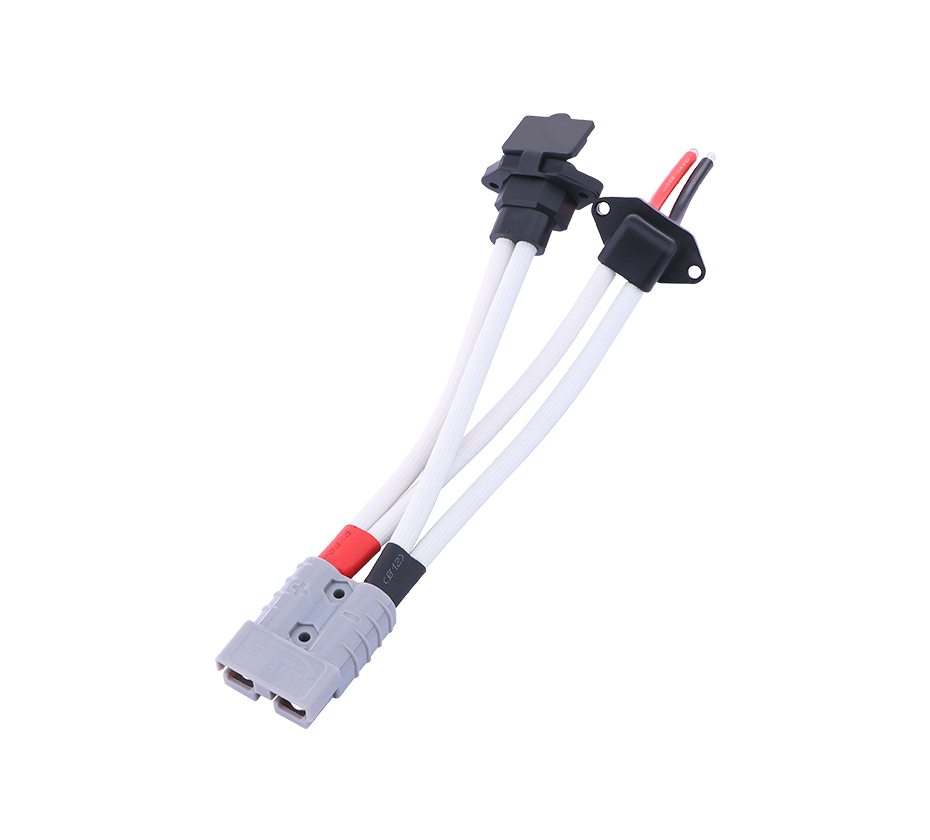
Connector Technologies for GPU and Accelerator Power Delivery
The power delivery requirements of GPUs and accelerators differ from those of general-purpose servers in several important respects. The power draw is concentrated in a single high-power device rather than distributed across multiple lower-power components, requiring connectors capable of handling concentrated high currents. The power delivery must be routed to the accelerator card, often at the end of the card where the connector does not obstruct airflow through the chassis. And the connector must be capable of being serviced or replaced without disturbing the surrounding infrastructure, a requirement that favors modular, pluggable designs.
The Molex UltraWize connector addresses these requirements through a design optimized for the constraints of modern data center GPU servers. With a current rating of 170 amps, the UltraWize provides ample capacity for even the most power-hungry accelerators . The cable-side exit configuration eliminates the cable-bend radius and reduces stack height, allowing the connector to be used in configurations where vertical clearance is limited . The staggered pin design occupies less space on the printed circuit board, leaving room for additional components, while the SMT reflow-capable headers in a pick-and-place package reduce processing costs and accelerate time to market .
The positive lock feature of the UltraWize connector prevents accidental unmating, a critical requirement for HPC systems where an unexpected power disconnect could interrupt a computation that has been running for hours or days . The connector operates over a temperature range of -40 to +125 degrees Celsius and meets UL 94V-0 flammability requirements, ensuring both functional performance across the full range of data center environmental conditions and safety in the event of a fault condition .
The Amphenol FCI Hyper Cool Edge connectors represent an alternative approach to accelerator power delivery, integrating power, high-speed signaling, and sideband signals into a single connector system . The 4C+ EP receptacle supports 16 PCIe lanes, sideband signals, and 200 watts of power, while an additional two-pin power receptacle supports up to 400 watts of additional power . This integrated approach reduces the number of separate connectors required for an accelerator module, simplifying the module design and reducing the space consumed by interconnection. The connector supports hot-plug operation, allowing accelerator modules to be replaced without powering down the entire system, a capability that is particularly valuable in HPC environments where system availability is paramount .
Thermal Management Considerations for Power Connectors
The thermal management of power connectors is a critical but often overlooked aspect of HPC power delivery system design. The resistive heating generated at connector interfaces, while small in absolute terms, can produce local temperature rises that accelerate degradation of contacts and insulating materials. A contact resistance of 0.4 milliohms carrying 170 amps produces approximately 11.6 watts of heat concentrated in a small volume, creating a localized hot spot that can exceed the bulk temperature of the surrounding components by tens of degrees.
The thermal design of power connectors must account for both the heat generated within the connector and the ambient temperature of the surrounding environment. In air-cooled systems, the connector may benefit from the airflow that passes over the server components, but in liquid-cooled or immersion-cooled systems, the thermal environment is fundamentally different. Liquid cooling loops maintain component temperatures well below the thresholds achievable with air cooling, but the connectors themselves may not be in direct contact with the coolant, relying instead on conduction through the surrounding structure. The use of high-conductivity materials for connector housings and contacts, combined with generous cross-sectional areas for current-carrying paths, helps to minimize temperature rise and ensure reliable operation.
The materials used in power connector construction must maintain their properties at elevated temperatures. The UL 94V-0 flammability rating, met by connectors such as the UltraWize, ensures that the connector will not support combustion in the event of an overload . The operating temperature range of -40 to +125 degrees Celsius encompasses the full range of conditions that a data center connector might experience, from cold-start conditions in an unheated facility to the elevated temperatures adjacent to high-power processors .
Standards and Compliance in HPC Power Delivery
The standardization of HPC power connectors through OCP specifications and industry standards has been essential to enabling the rapid deployment of high-density computing infrastructure. The OCP Open Rack standards define the mechanical, electrical, and thermal requirements for power distribution components, ensuring interoperability and simplifying system design. The ORv3 architecture, in particular, has provided a framework for the deployment of high-power racks that would be difficult or impossible to implement with proprietary solutions.
The electrical safety standards applicable to HPC power connectors include UL 1977, which covers component connectors for use in data processing equipment, UL 62368-1, the hazard-based safety standard for audio/video, information and communication technology equipment, and UL 2875, which addresses safety requirements for battery backup units and related equipment . Compliance with these standards ensures that the connectors have been evaluated for their ability to withstand the electrical, thermal, and mechanical stresses of their intended application and that they will not present a hazard under normal or reasonably foreseeable fault conditions.
The mechanical and environmental testing required for qualification of HPC power connectors encompasses a range of conditions intended to simulate the full service life of the product. Temperature cycling tests evaluate the ability of the connector to maintain contact force and sealing integrity across the thermal excursions experienced during operation. Mate and unmate testing verifies the durability of the connector interface over the number of cycles expected in the application, which may range from a few dozen for connectors that are rarely serviced to thousands for connectors that are routinely disconnected during maintenance. Vibration and shock testing ensures that the connector will maintain electrical continuity and mechanical retention under the mechanical stresses present in operating data centers.
The future of HPC power connector technology will be shaped by the continuing escalation of power requirements and the corresponding need for higher current densities, lower losses, and more effective thermal management. The trend toward higher voltages, including the adoption of 48-volt distribution in some architectures, offers the potential to reduce currents for a given power level, mitigating resistive losses and reducing the demands on connector current-carrying capacity. The development of new contact materials and geometries, improved sealing systems, and integrated thermal management features will continue to push the boundaries of what is possible in HPC power delivery, enabling the deployment of computing systems whose power requirements would have been unimaginable only a few years ago.
 Yang.taya@aitmpower.com
Tel: 15382891313
Phone: 0769-88878951
Fax: 0769-88878955
Wechat: 15382891313


 CN
 CN
 Home >