
 2026-10-14
 2
The 400A AGV power plug represents a specialized class of high-current electrical connectors designed specifically for the demanding requirements of automated guided vehicles (AGVs) and autonomous mobile robots (AMRs). In the rapidly evolving landscape of warehouse automation and intelligent material handling, AGVs have become indispensable tools for improving operational efficiency, reducing labor costs, and enabling 24/7 operation. At the heart of every AGV's power system lies the critical connection between the vehicle's battery and its charging infrastructure—a role fulfilled by the 400A power plug.
Unlike traditional forklift charging connectors, which are designed primarily for manual connection by human operators, AGV power plugs must accommodate the unique requirements of automated charging systems. These requirements include the ability to mate reliably without human intervention, withstand the mechanical stresses of automated docking procedures, and provide consistent high-current performance over thousands of automated charging cycles. The 400A rating places these connectors in the high-power category, capable of delivering the substantial charging currents required to keep AGV fleets operational around the clock.
This comprehensive guide examines every aspect of the 400A AGV power plug, from its technical specifications and design features to its applications in automated charging systems, installation considerations, and its role in the broader context of warehouse automation. Whether you are specifying connectors for a new AGV fleet, upgrading an existing charging infrastructure, or simply seeking to understand the technology, this guide provides the detailed information necessary for informed decision-making.
The 400A Rating in Context
Current Carrying Capacity
The “400A” designation indicates the connector's ability to continuously conduct up to 400 amperes of direct current without exceeding temperature limits that would compromise safety or reliability. This current level exceeds that of typical forklift charging connectors (160A-320A) and reflects the higher power requirements of modern AGV systems, which often employ larger battery capacities and faster charging rates to maximize vehicle uptime .
At 400A, the thermal management challenge intensifies significantly compared to lower-current connectors. The heat generated at contact interfaces is proportional to the square of the current, meaning that a 400A connector must manage approximately 78% more heat than a 300A connector at the same contact resistance. This thermal load demands careful attention to contact design, material selection, and heat dissipation pathways.
Voltage Ratings
AGV power plugs are typically rated for system voltages ranging from 48V to 100V, with some designs accommodating up to 600V or 1000V for specialized applications . The combination of 400A current and moderate voltage defines these connectors as high-power, low-voltage devices optimized for battery charging and power distribution within the AGV system.
TE Connectivity's HALVONEX Max connector, for example, supports up to 400A at 60V (with capability up to 100V), specifically designed for 48V architectures common in AGV and electric vehicle applications . This voltage rating aligns with the battery systems used in most AGV platforms, which typically employ 24V, 48V, or 80V battery packs.
Technical Specifications and Design Architecture
Contact System Design
The contact system in a 400A AGV power plug must satisfy several demanding requirements simultaneously: carry 400A continuously with minimal resistance, withstand thousands of automated mating cycles, and maintain reliable performance despite vibration, thermal cycling, and potential contamination from the warehouse environment.
High-quality AGV power plugs employ contacts manufactured from high-conductivity copper alloys with silver plating to minimize contact resistance and resist oxidation. The contact geometry is optimized for low insertion force and high contact pressure, often using spring-supported or multi-point contact designs .
TE Connectivity's HALVONEX Max connector utilizes PCON 21 terminal technology, designed specifically for high-power 48V architectures. This terminal system supports 50 to 95 mm² wire sizes and features a lever-lock mechanism that ensures secure mating while reducing insertion force .
For automated docking applications, the contact system must accommodate slight misalignments between the plug and receptacle that may occur during robotic docking procedures. Floating or self-aligning contact designs help ensure reliable mating even when perfect alignment cannot be guaranteed.
Housing and Materials
The housing of a 400A AGV power plug must provide mechanical protection, electrical insulation, and environmental sealing while withstanding the unique stresses of automated operation. Key material considerations include:
Flame retardancy: UL94 V-0 rated materials are standard for AGV connectors, ensuring that the housing will not sustain combustion if exposed to an ignition source .
Impact resistance: Automated docking procedures may involve higher impact forces than manual connection. Robust housing materials such as high-strength thermoplastics or aluminum alloy frames provide the necessary durability .
Chemical resistance: AGV charging areas may expose connectors to battery electrolytes, cleaning chemicals, and other industrial substances. Housing materials should resist degradation from these exposures.
Thermal stability: With 400A continuous current, the housing must maintain dimensional stability and mechanical properties at elevated temperatures. Operating temperature ranges of -40°C to +125°C are typical for high-quality AGV connectors .
Environmental Sealing and Protection
AGV power plugs are often required to achieve higher ingress protection ratings than manually operated forklift connectors. The automated nature of AGV charging means that connectors may be exposed to dust, moisture, and other contaminants without regular human inspection and cleaning.
IP67 and IP69K ratings are common for AGV power plugs, providing complete protection against dust and water immersion . Some designs incorporate additional sealing features such as protective caps or covers that engage when the connector is unmated, further enhancing environmental protection.
TE Connectivity's HALVONEX connectors feature IP67/IP69K sealing with protective covers, making them suitable for the harsh environments encountered in industrial and outdoor AGV applications .
Mechanical Design for Automated Mating
The most distinctive feature of AGV power plugs compared to manual connectors is their design for automated or semi-automated mating. Key design considerations include:
Blind-mate capability: AGV charging systems often employ blind-mate connectors that engage without visual alignment, relying on mechanical guides and floating contacts to ensure proper connection. The Sunkean BSC series, for example, features floating bolt mounting with ±2mm play in X and Y axes, accommodating minor misalignments during automated docking .
Low insertion force: While manual connectors must balance insertion force against contact pressure, AGV connectors prioritize low insertion force to reduce the mechanical demands on robotic docking systems. Lever-lock mechanisms and optimized contact geometry help achieve this balance .
Self-alignment features: Chamfered edges, guide pins, and other alignment features help guide the plug into the receptacle during blind-mate docking, ensuring proper engagement even when initial alignment is imperfect.
Robust locking mechanisms: The locking system must secure the connection against vibration and accidental disengagement while allowing reliable release when the AGV departs the charging station. Lever-locks and spring-loaded latches are common solutions .
Mating cycle life: AGV connectors must withstand far more mating cycles than manual forklift connectors. While a forklift charging connector might see 2-4 mating cycles per day, an AGV connector could experience 10-20 or more cycles daily in opportunity charging scenarios. High-quality AGV power plugs are rated for 10,000 to 12,000 mating cycles, with some designs targeting even higher cycle lives .
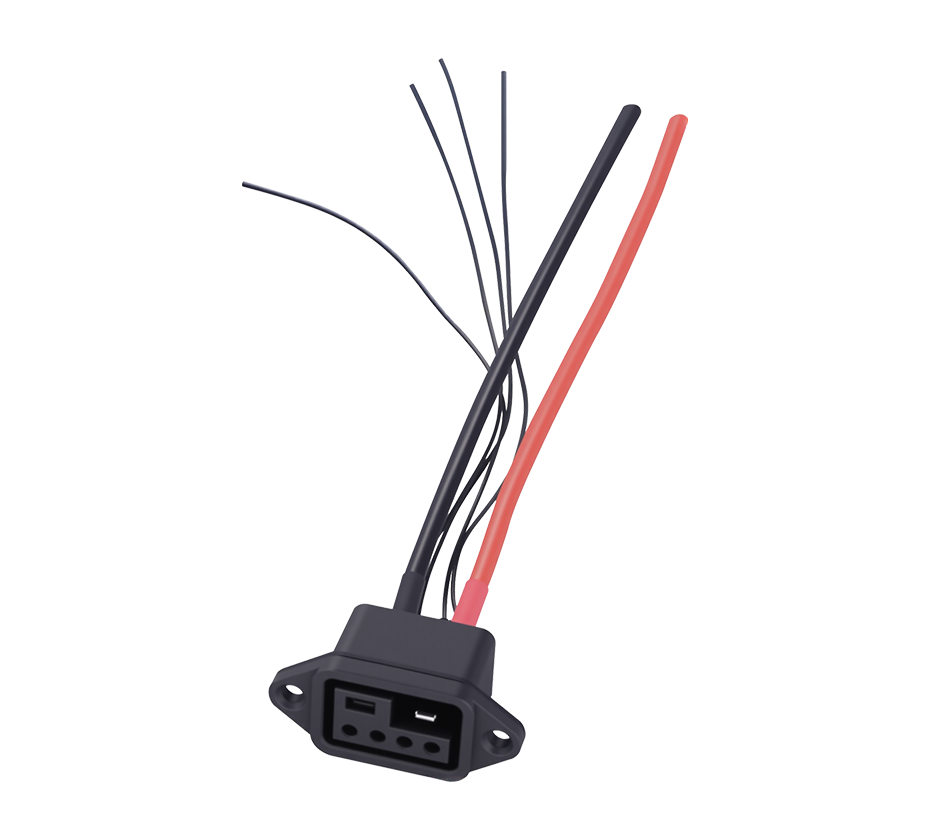
Applications in AGV and AMR Systems
Opportunity Charging for AGV Fleets
The most common application for 400A AGV power plugs is opportunity charging, where AGVs connect to charging stations during idle periods—between tasks, during shift changes, or whenever the vehicle is not actively working. Opportunity charging maximizes vehicle uptime by eliminating the need for extended overnight charging, but it requires connectors that can reliably handle frequent mating cycles and high charging currents.
The 400A rating is well-suited to opportunity charging because it enables rapid replenishment of battery capacity during brief charging windows. A 400A charging current can deliver significant energy in 15-30 minutes, enough to sustain the AGV through the next work period.
Automated Docking and Blind-Mate Systems
AGV charging stations often employ automated docking systems where the vehicle navigates to a charging position and engages the connector without human intervention. These systems rely on blind-mate connectors that can accommodate the positional tolerances inherent in robotic navigation and docking.
The Sunkean BSC series of floating blind-mate connectors, rated for 400A, exemplifies this application. These connectors feature:
Floating mounting that accommodates ±2mm misalignment in X and Y axes
Modular construction allowing flexible configuration of power and signal contacts
Probe-proof power contacts (IP2XB) for safety
Optional temperature sensors for real-time thermal monitoring
Fast Charging and High-Throughput Operations
In high-throughput distribution centers where AGV availability is critical, fast-charging systems may utilize the full 400A capacity of the connector to minimize charging time. These systems require not only high-current connectors but also robust thermal management to handle the heat generated during rapid charging. The connector's ability to maintain low contact resistance under continuous high-current load is essential for safe fast-charging operations.
Battery Swapping Systems
While less common than opportunity charging for AGVs, battery swapping systems also utilize 400A power plugs for connecting removed batteries to charging infrastructure. The robust design and high mating cycle life of AGV-grade connectors make them suitable for battery swap operations, where connectors may be mated and unmated multiple times per day per battery.
Comparative Analysis: 400A AGV Plugs vs. Standard Forklift Connectors
Understanding the distinctions between 400A AGV power plugs and traditional forklift charging connectors helps clarify the appropriate application for each technology.
Current Capacity
The 400A rating of AGV power plugs exceeds the 160A-320A range typical of standard forklift connectors . This higher capacity reflects the larger battery systems and faster charging requirements of AGV platforms, which often operate continuously and require rapid replenishment during brief idle periods.
Mating Cycle Life
AGV power plugs are designed for significantly higher mating cycle life than manual forklift connectors. While a quality forklift connector might be rated for 10,000 cycles, AGV connectors often target 12,000 cycles or more, with some designs offering even higher ratings . This extended life reflects the more frequent charging cycles typical of AGV operations.
Environmental Protection
AGV power plugs typically achieve higher IP ratings (IP67/IP69K) than standard forklift connectors (IP23), providing superior protection against dust, moisture, and washdown procedures . This enhanced sealing is necessary because AGV connectors may operate in environments where regular inspection and cleaning are impractical.
Mating Mechanism
The most fundamental difference lies in the mating mechanism. Standard forklift connectors are designed for manual operation, with features that facilitate human connection and disconnection. AGV power plugs, by contrast, are optimized for automated or semi-automated mating, with low insertion forces, self-alignment features, and blind-mate capability .
Selection Criteria for 400A AGV Power Plugs
Electrical Requirements
Current rating: Ensure the connector is rated for the continuous current required by the application. For 400A charging, select a connector with a 400A or higher continuous rating, considering derating factors for high ambient temperatures.
Voltage rating: Match the connector's voltage rating to the AGV battery system voltage. For 48V systems, a 60V or 100V rating provides adequate margin. Higher-voltage systems require appropriately rated connectors .
Contact resistance: Low contact resistance is essential for minimizing heat generation and maximizing charging efficiency. Silver-plated copper contacts with multi-point contact geometry are preferred .
Mechanical and Environmental Requirements
Mating cycle life: Select a connector rated for the expected number of mating cycles over the AGV's service life. For high-frequency opportunity charging, 10,000+ cycles is recommended.
Ingress protection: Match the IP rating to the operating environment. IP67 is standard for AGV connectors, while IP69K may be required for washdown environments .
Operating temperature range: Ensure the connector's temperature rating encompasses the expected ambient conditions and the self-heating from 400A operation. A range of -40°C to +125°C covers most warehouse environments .
Vibration resistance: AGV connectors must withstand continuous vibration from vehicle movement and docking operations. Robust locking mechanisms and vibration-resistant contact designs are essential .
Automated Mating Considerations
Blind-mate capability: For fully automated charging, select a connector with floating or self-aligning features that accommodate docking tolerances.
Insertion force: Lower insertion forces reduce the mechanical demands on docking systems. Lever-lock mechanisms can significantly reduce insertion effort .
Alignment features: Guide pins, chamfered edges, and other alignment features facilitate proper engagement during blind-mate docking.
Locking mechanism: The locking system must secure the connection against vibration while allowing reliable release when the AGV departs.
Installation and System Integration
Cable Sizing and Routing
Proper cable sizing is critical for 400A applications. The cable cross-section must be sufficient to carry the full charging current without excessive voltage drop or overheating. Typical cable sizes for 400A charging range from 50 mm² to 95 mm², depending on cable length and allowable temperature rise .
Cable routing must consider the movement patterns of the AGV and the mechanical stresses on the cable during docking and undocking. Strain relief features built into the connector housing help protect cable terminations from fatigue and damage .
Charging Station Design
The charging station must provide proper alignment and positioning for the AGV docking process. Key considerations include:
Docking tolerance: The station should be designed to accommodate the positional accuracy of the AGV navigation system
Connector mounting: The receptacle should be mounted securely with appropriate alignment features
Cable management: Charging cables should be routed to avoid interference with AGV movement and to prevent strain on the connector
Environmental protection: The charging station should provide appropriate shelter or sealing to protect the connector when not in use
System Integration
Integrating 400A AGV power plugs into a fleet charging system involves coordination between the connector, charging equipment, battery management system, and fleet management software. Considerations include:
Communication protocols: Some AGV connectors include signal contacts for data communication between the charger and battery management system
Safety interlocks: The charging system should include interlocks that prevent charging unless the connector is properly mated
Temperature monitoring: Optional temperature sensors in the connector can provide early warning of thermal issues
Maintenance scheduling: The fleet management system should track connector mating cycles and schedule maintenance accordingly
Maintenance and Service Life Optimization
Automated Inspection Capabilities
The automated nature of AGV charging presents both challenges and opportunities for maintenance. While regular visual inspection may be impractical, the charging system itself can incorporate diagnostic capabilities:
Contact resistance monitoring: The charging system can measure contact resistance during charging and alert maintenance if values exceed thresholds
Temperature monitoring: Integrated sensors can detect abnormal heating that may indicate contact degradation
Mating cycle counting: The system can track the number of mating cycles and schedule preventive maintenance
Cleaning and Contact Care
Despite the sealed design of AGV power plugs, periodic cleaning and contact care can extend service life:
Contact cleaning: Use appropriate contact cleaners to remove oxidation and contaminants from contact surfaces
Lubrication: Apply manufacturer-approved contact lubricants where specified to reduce wear and maintain low resistance
Seal inspection: Check gaskets and seals for wear or compression set and replace as needed
Replacement Criteria
Indicators that a 400A AGV power plug requires replacement include:
Excessive heating during charging
Visible contact erosion or pitting
Housing damage compromising sealing or insulation
Locking mechanism failure
Mating cycle life exceeded (typically 10,000+ cycles)
The Future of AGV Power Connectors
Higher Current Ratings
As AGV battery capacities increase and fast-charging requirements intensify, the demand for higher-current connectors will grow. While 400A represents the current high end of standard AGV connectors, future systems may require 500A, 600A, or higher ratings. Liquid-cooled connectors, already used in high-power EV charging, may find application in AGV systems where air cooling is insufficient .
Integrated Intelligence
The next generation of AGV power plugs will likely incorporate greater intelligence, with integrated sensors for temperature, current, voltage, and mating cycle counting. This data can feed into predictive maintenance systems, enabling proactive replacement before failures occur.
Standardization Efforts
As the AGV industry matures, standardization of connector interfaces may emerge, similar to the DIN standards that govern forklift charging connectors. Standardization would improve interoperability between different AGV brands and charging systems, reducing costs and simplifying fleet management.
Wireless Charging Alternatives
While inductive and capacitive wireless charging technologies are under development for AGV applications, conductive charging through physical connectors remains the dominant approach due to its higher efficiency, lower cost, and established reliability. The 400A power plug will likely remain the standard for high-power AGV charging for the foreseeable future.
The 400A AGV power plug represents a specialized solution for the unique demands of automated guided vehicle charging. Its design reflects the convergence of high-current power transfer technology with the requirements of automated docking, frequent mating cycles, and harsh industrial environments. As warehouse automation continues to expand and AGV fleets grow in size and capability, the role of reliable, high-performance power connectors becomes ever more critical.
The 400A rating provides the current capacity necessary for rapid opportunity charging, enabling AGVs to maintain high utilization rates and support continuous operations. The design features that distinguish AGV power plugs from standard forklift connectors—blind-mate capability, low insertion force, high mating cycle life, and superior environmental protection—are essential for the automated charging workflows that define modern AGV operations.
Whether specifying connectors for a new AGV deployment or upgrading an existing charging infrastructure, understanding the technical specifications, application requirements, and selection criteria for 400A power plugs is essential for building a reliable, efficient, and future-proof charging system. As the technology continues to evolve, the 400A AGV power plug will remain a cornerstone of automated material handling, enabling the electrified, autonomous warehouses of tomorrow.
 Yang.taya@aitmpower.com
Tel: 15382891313
Phone: 0769-88878951
Fax: 0769-88878955
Wechat: 15382891313


 CN
 CN
 Home >


