
 2026-10-14
 3
In modern photovoltaic (PV) power generation systems, the combiner box serves as the core convergence hub of solar string circuits, undertaking the key functions of collecting, protecting, and transmitting DC power generated by solar modules. PV combiner box connectors, as the pivotal electrical connection components between PV strings and combiner boxes, directly determine the operational stability, safety, and power generation efficiency of the entire PV DC system. With the rapid expansion of utility-scale solar power plants, commercial distributed PV systems, and offshore photovoltaic projects, the performance requirements for combiner box connectors have been continuously upgraded, driving the iteration of connector technology from low voltage to high voltage, ordinary protection to industrial-grade weather resistance, and simple conduction to intelligent safety protection. This article comprehensively elaborates on the structural composition, working principles, core technical parameters, performance characteristics, installation specifications, fault maintenance, and industrial application value of PV combiner box connectors, providing systematic technical support for PV system design, engineering construction, and equipment operation and maintenance.
PV combiner box connectors are professional DC electrical connectors specially designed for the internal and external wiring of photovoltaic combiner boxes. Different from ordinary industrial connectors and household electrical connectors, they are developed targeting the special operating environment of PV systems and the characteristics of DC power transmission. PV systems usually operate in outdoor open-air environments, facing extreme conditions such as high temperature, low temperature, strong ultraviolet radiation, rain erosion, sand and dust impact, and mechanical vibration for a long time. Meanwhile, the DC circuit of PV arrays has the characteristics of long-term live operation, easy generation of arc faults, and unstable current and voltage under variable light conditions. Therefore, combiner box connectors must have excellent environmental adaptability, electrical safety, mechanical stability, and anti-aging performance to avoid common faults such as poor contact, line ignition, insulation breakdown, and connector falling off, which may lead to system power generation reduction or even safety accidents.
From the perspective of structural composition, a complete PV combiner box connector adopts a male-female paired docking structure, mainly including conductive contact components, insulating shell, locking and fastening mechanism, sealing protection structure, and cable crimping part. The conductive contact core is the core functional component of the connector, generally made of high-purity copper with tin-plating or silver-plating treatment. High-purity copper ensures low resistivity and high conductivity, reducing power loss during DC transmission; tin-plating and silver-plating processes can effectively prevent metal oxidation and corrosion, maintain long-term stable conductive performance, and avoid contact resistance increase caused by oxidation. The insulating shell is made of high-performance engineering plastics such as PPO, PBT, and PA66 with flame retardant additives. These materials have excellent high-temperature resistance, low-temperature toughness, insulation performance, and UV resistance, and can maintain stable physical and chemical properties in the temperature range of -40°C to +90°C, which fully meets the long-term outdoor operation requirements of PV systems.
The locking and fastening mechanism is a key structural design to ensure the reliable connection of combiner box connectors. Most high-quality combiner box connectors adopt a foolproof snap locking structure, which can realize quick plug-in and firm docking by manual operation without professional tools. After docking, the internal snap structure is completely locked, which can effectively resist the pulling force generated by cable gravity, wind vibration, and construction touch, preventing accidental disconnection. At the same time, the connector is designed with a special unlocking structure, which requires professional unlocking tools to disassemble, avoiding accidental falling off caused by external force interference in the operating state. The sealing protection structure includes internal rubber sealing rings and external integrated sealing design, which can reach IP67 or IP68 protection level, completely isolating rainwater, dust, moisture, and corrosive gas from entering the connector interior, preventing insulation reduction and short-circuit faults caused by environmental erosion.
The working principle of PV combiner box connectors is based on precise electrical contact and closed-loop circuit conduction. In the PV system circuit, each solar string is composed of multiple series-connected PV modules, and the DC power generated by each string is transmitted to the combiner box through PV special cables. The male and female connectors installed at the cable end and the combiner box interface are precisely docked, so that the internal conductive contact cores are closely fitted to form a stable conductive channel. Multiple string circuits are converged inside the combiner box through connectors, and after passing through overcurrent protection fuses, surge protection devices, and circuit isolation switches, the current is uniformly output to the inverter, realizing the conversion from DC power to AC power. In this process, the connector always maintains low contact resistance and stable conductive performance, ensuring that the current loss of each string circuit is consistent, avoiding the problem of string current mismatch caused by excessive local resistance, and maximizing the overall power generation efficiency of the PV array.
Core technical parameters are the key indicators to measure the performance of PV combiner box connectors, mainly including rated voltage, rated current, contact resistance, insulation resistance, withstand voltage level, protection grade, temperature resistance range, mechanical life, and flame retardant grade. In terms of rated voltage, traditional small and medium-sized distributed PV systems mostly use 1000V DC connectors, while large-scale ground power stations and new high-efficiency PV systems have gradually popularized high-voltage 1500V DC connectors, which effectively reduce system line loss and improve power transmission efficiency. The rated current of connectors is matched according to the short-circuit current of PV modules and strings, with common specifications of 15A, 20A, 30A, 45A, 60A, etc. In actual selection, the rated current of the connector needs to be 1.25 times or more of the maximum short-circuit current of the string to ensure safe operation under extreme working conditions.
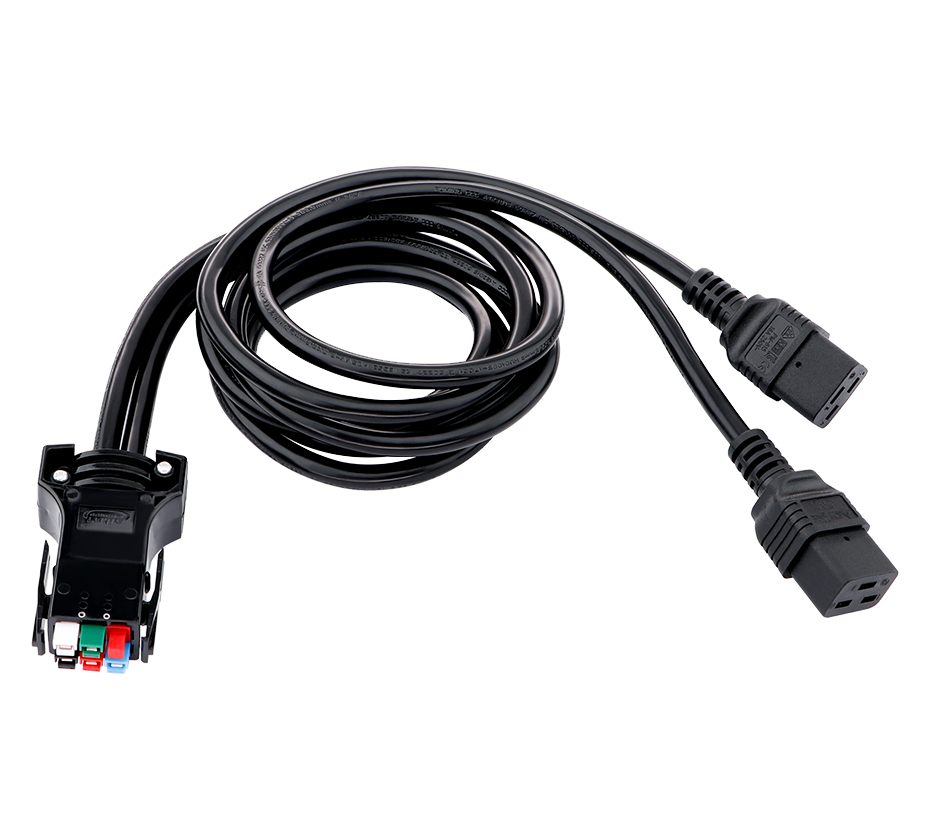
Contact resistance and insulation resistance are critical electrical performance indicators of connectors. The contact resistance of qualified combiner box connectors is required to be less than 5mΩ. Excessively high contact resistance will cause heat accumulation at the connection point, accelerate component aging, and even trigger arc faults and fire hazards. The insulation resistance needs to be greater than 1000MΩ, which ensures that there is no leakage current between the conductive core and the insulating shell, and avoids electric leakage and electric shock risks in humid environments. The withstand voltage performance requires that the connector can withstand 3kV~6kV DC high-voltage impact for a certain period of time without breakdown, adapting to the instantaneous overvoltage impact caused by lightning surge and grid fluctuation in PV systems.
In terms of environmental adaptability parameters, formal PV combiner box connectors must pass strict UV aging test, thermal cycling test, damp heat test, and salt spray test. The operating temperature range covers -40°C to +90°C, which can adapt to the extreme high temperature of desert power stations and extreme low temperature of alpine power stations. The mechanical plug-in life is more than 500 times, meeting the maintenance and replacement needs of system components during the 25-year service life of PV power stations. The flame retardant grade reaches UL94-5VA, which has excellent self-extinguishing performance, can effectively prevent the spread of flame when local circuit ignition occurs, and improve the overall safety level of the system.
PV combiner box connectors have a complete classification system, which can be divided into string input connectors and bus output connectors according to functional applications. String input connectors are used for the connection between each PV string cable and the combiner box input terminal, with small current specification and compact structure, suitable for multi-channel parallel access; bus output connectors are used for the total power output of the combiner box, bearing the sum current of all strings, with large current specification and higher structural stability, ensuring stable output of total power. According to structural forms, they can be divided into straight-through connectors, T-branch connectors, and Y-branch connectors. T-type and Y-type branch connectors are widely used in string parallel convergence scenarios, which can realize the convergence of multiple circuits in a limited space, simplify the wiring structure of the combiner box, and reduce engineering costs.
In terms of application scenarios, PV combiner box connectors cover all types of photovoltaic power generation systems. In residential distributed PV systems, small-specification 4-string and 6-string combiner box connectors are adopted, with compact structure and convenient installation, adapting to the limited installation space of rooftop PV; in commercial and industrial distributed PV systems, 8-string to 12-string medium-sized combiner box connectors are mostly used, with higher current carrying capacity and better environmental adaptability, meeting the stable operation needs of medium and large-scale power generation arrays; in utility-scale ground power stations, desert photovoltaic bases, and offshore photovoltaic projects, 16-string to 24-string high-power combiner box connectors are widely equipped, and most of them adopt 1500V high-voltage specifications, which significantly reduce the number of combiner boxes and cables, reduce system line loss, and improve the overall power generation efficiency and economic benefits of the power station.
Installation and construction specifications are crucial to the service performance and service life of combiner box connectors. Before installation, construction personnel need to select matching connectors according to the system voltage level, string current parameters, and cable specifications, and check the appearance integrity, sealing performance, and plug-in flexibility of the connectors to eliminate defective products. During the wiring process, the cable stripping length must strictly match the crimping range of the connector conductive core, avoiding excessive stripping leading to exposed copper wire and short-circuit risk, or insufficient stripping leading to poor crimping and virtual connection. The crimping operation needs to use special PV connector crimping pliers to ensure that the crimping is firm and the contact is tight, without loose strands and broken strands.
When the male and female connectors are docked, they need to be aligned and inserted flatly until a clear "click" sound is heard, indicating that the internal locking mechanism is completely locked. After docking, pull the cable slightly to check whether the connection is firm and avoid virtual docking. At the same time, the positive and negative poles of the connectors must be strictly distinguished to prevent reverse connection faults, which may cause fuse burnout and module damage. For outdoor installation, the connector docking position should avoid long-term direct water accumulation, and the cable should be fixed with a certain bending radius to prevent excessive bending and pulling from damaging the internal sealing structure and conductive core. After the installation of all connectors is completed, insulation testing and continuity testing must be carried out to ensure that each circuit is unobstructed and the insulation performance meets the standard.
Daily operation and maintenance and fault diagnosis are important links to ensure the long-term stable operation of combiner box connectors. During the daily operation of the PV system, operation and maintenance personnel need to regularly inspect the connectors, focusing on checking whether there are aging, cracking, and deformation of the insulating shell, whether the sealing ring is aged and invalid, whether the connector is loose and displaced, and whether there are dust accumulation and water vapor infiltration inside. For connectors operating in high-temperature and high-humidity environments, the inspection cycle should be shortened appropriately. Thermal imaging detection can be used to check the temperature of the connector connection point. If local high temperature is found, it indicates that the contact resistance is too large, and the connector needs to be replaced in time to avoid further fault escalation.
Common faults of PV combiner box connectors include poor contact, connector aging and failure, insulation performance decline, locking mechanism failure, and water and dust ingress. Poor contact is mostly caused by unqualified crimping construction, long-term vibration loosening, or oxidation of conductive cores, which will lead to increased line loss and reduced string power generation, and in severe cases, cause arc faults. Connector aging failure is mainly due to long-term exposure to ultraviolet radiation and high-temperature aging, resulting in shell brittleness, sealing failure, and reduced protection performance. Insulation performance decline is mostly caused by humid environment, dust accumulation, and corrosive gas erosion, which may trigger leakage current and short-circuit faults. For faulty connectors, maintenance personnel should replace them in a timely manner, and strictly follow the installation specifications for re-wiring and docking to ensure the consistency of circuit performance.
With the continuous upgrading of PV system technology and the improvement of industry safety standards, PV combiner box connectors are developing towards high voltage, high current, intelligence, miniaturization, and high safety. The traditional 1000V low-voltage connectors are gradually replaced by 1500V high-voltage connectors, which become the mainstream configuration of new PV power stations. At the same time, intelligent combiner box connectors with temperature monitoring and fault alarm functions have emerged. By built-in temperature sensors, the real-time temperature of the connection point can be monitored, and over-temperature faults can be alarmed remotely, realizing early warning and active maintenance of connector faults. In addition, the new generation of connectors adopts more environment-friendly and high-performance insulating materials, with stronger weather resistance and longer service life, which can fully match the 25-year full-life cycle operation requirements of PV power stations.
In terms of industrial value, high-quality PV combiner box connectors are the basic guarantee for the safe and efficient operation of PV systems. As the key connection node of the DC convergence link, its performance directly affects the power generation efficiency, operation safety, and maintenance cost of the entire power station. Standardized selection and standardized installation of connectors can effectively reduce system line loss, reduce the failure rate of DC circuits, extend the service life of PV equipment, and improve the economic benefits of power station operation. With the global vigorous development of new energy photovoltaic industry, the market demand for high-performance PV combiner box connectors continues to grow, and the technical iteration and quality upgrading of connectors also promote the standardized and high-quality development of the entire photovoltaic engineering industry.
 Yang.taya@aitmpower.com
Tel: 15382891313
Phone: 0769-88878951
Fax: 0769-88878955
Wechat: 15382891313


 CN
 CN
 Home >