
 2026-10-14
 1
Anderson Power Products (APP) connectors have long been recognized as the industry benchmark for high-current DC power connection solutions, widely adopted in industrial equipment, new energy vehicles, solar photovoltaic systems, battery energy storage devices, electric forklifts, and portable power equipment worldwide. The core advantages of original Anderson power connectors lie in their genderless docking design, ultra-low contact resistance, excellent mechanical durability, high temperature resistance, and reliable hot-swap performance, making them irreplaceable in high-current stable power supply scenarios for decades. However, in practical engineering applications, original Anderson connectors face prominent limitations including high procurement costs, long delivery cycles, insufficient localized supply capacity, and restrictions on customized modification. In addition, with the rapid expansion of the high-current power connection market and the continuous upgrading of connector manufacturing technology, a large number of high-performance, cost-effective, and highly compatible substitute products have emerged in the market, which can fully or partially replace original Anderson power connectors to meet the diverse needs of different application scenarios. This article comprehensively analyzes the technical characteristics, performance matching degree, application adaptability, advantages and limitations of mainstream Anderson power connector substitutes, and systematically sorts out the selection standards and application precautions of alternative products, providing detailed technical reference for engineering design, equipment maintenance, and batch procurement.
To understand the substitution value of alternative products, it is first necessary to clarify the core technical parameters and design characteristics of original Anderson power connectors. The classic Anderson SB series and SBS series connectors cover current specifications from 50A to 500A, with a unified rated voltage of 600V AC/DC, which meets the voltage requirements of most industrial and new energy power systems. The original connector adopts a one-piece high-strength nylon plastic housing, which has excellent insulation performance, flame retardancy, and anti-aging ability, with a working temperature range of -20°C to 105°C, adapting to extreme working environments such as high temperature, low temperature, and outdoor exposure. The internal contact terminals are made of high-purity copper alloy with silver plating treatment, which effectively reduces contact resistance and avoids heat generation and power loss during high-current operation. In terms of mechanical performance, original Anderson connectors support up to 10,000 no-load mating cycles and 250 hot-swap mating cycles under 120V load conditions, with stable docking force and anti-vibration and anti-loosening design, ensuring long-term stable operation in vibrating equipment such as engineering machinery and electric vehicles. In addition, the color coding and mechanical keying design of original Anderson connectors can effectively prevent wrong docking of different voltage specifications, improving the safety of power system operation. These core performance indicators constitute the basic benchmark for screening substitute products, and all qualified alternative connectors must meet or approach these key parameters in terms of electrical performance, mechanical life, environmental adaptability, and safety standards.
Mainstream substitute products of Anderson power connectors in the market can be divided into three categories according to performance matching degree: full-compatibility high-end substitutes, cost-effective standard substitutes, and scenario-specific customized substitutes. High-end full-compatibility substitutes are manufactured in strict accordance with original Anderson dimensional standards and technical parameters, with completely consistent appearance size, docking structure, wire matching specification, and installation mode, realizing 100% interchangeability with original products. This type of substitute products adopts imported high-purity copper terminals and high-grade flame-retardant engineering plastics, passing UL, CE, RoHS and other international safety certifications, with electrical conductivity, high temperature resistance, and mechanical life basically consistent with original Anderson connectors. Its core advantage is that it avoids the high brand premium of original products while maintaining full performance consistency, and supports rapid customized production of special colors, wire gauges, and structural improvements, which is suitable for high-standard industrial equipment, new energy power stations, and medical power equipment scenarios that require strict performance consistency. Typical products in this category include SE series high-current connectors, SBS universal compatible connectors, and Powerpole equivalent connectors, which have been widely verified in industrial supporting markets in recent years.
Cost-effective standard substitutes are the most widely used alternative products in the civilian and general industrial markets, focusing on meeting basic power connection needs while controlling procurement costs. This type of substitute products retains the core genderless docking structure and high-current conduction design of Anderson connectors, with consistent rated voltage and current parameters, and slightly adjusted dimensional tolerance and mechanical life indicators on the premise of not affecting use safety. The housing adopts high-quality flame-retardant nylon material, and the terminals are made of tin-plated copper alloy, which has good corrosion resistance and electrical conductivity, meeting the daily operation needs of ordinary industrial equipment, electric vehicles, charging equipment, and photovoltaic power distribution systems. Compared with original Anderson connectors, standard substitutes have lower requirements for extreme environmental resistance and mechanical cycle life, with a working temperature range of -15°C to 95°C and a mating cycle life of more than 5,000 times, which is completely sufficient for most conventional application scenarios. The biggest advantage of standard substitutes is their extremely high cost performance and sufficient spot supply, which can effectively reduce the overall equipment manufacturing cost and shorten the procurement cycle, making them the mainstream choice for batch civilian equipment production and daily maintenance and replacement.
Scenario-specific customized substitutes are optimized and upgraded for the pain points of original Anderson connectors in specific application scenarios. Original Anderson connectors have fixed structural design and cannot adapt to some special installation environments, such as narrow space installation, high-frequency vibration working conditions, outdoor waterproof and dustproof scenarios, and low-temperature extreme environments. Customized substitute products carry out targeted structural optimization and performance upgrading for these scenarios: for example, waterproof and dustproof modified substitutes upgrade the shell sealing structure to reach IP54-IP67 protection level, making up for the original IP20 protection level’s insufficient adaptability to outdoor and humid environments; anti-vibration customized substitutes add internal anti-loosening buckles and reinforced fixing structures, improving the connection stability in high-vibration scenarios such as construction machinery and agricultural equipment; low-temperature resistant customized substitutes adopt low-temperature modified plastic shells and special alloy terminals, which can work stably in -40°C low-temperature environments, suitable for polar engineering, cold-region new energy equipment and other scenarios. In addition, there are multi-in-one combined substitute connectors, which can realize multi-channel power integration connection on the basis of single Anderson connector structure, meeting the integrated power supply needs of complex equipment.
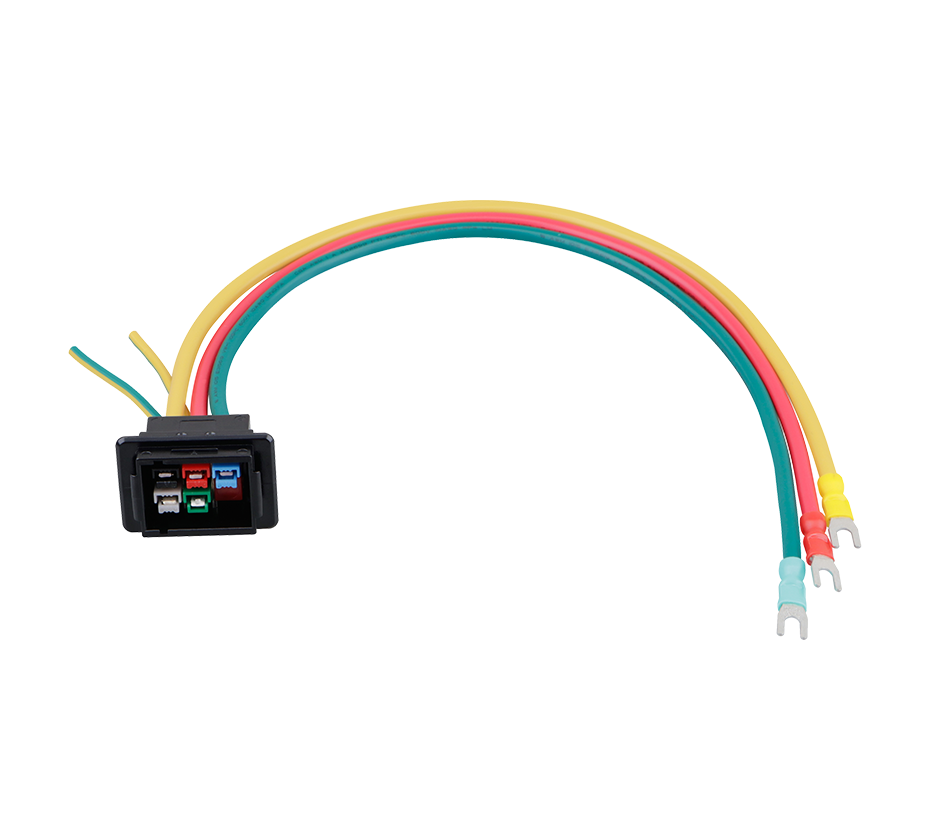
In terms of electrical performance comparison, qualified Anderson power connector substitutes can fully meet the high-current conduction requirements of original products. All mainstream alternative products support 600V AC/DC rated voltage, covering wire gauges from 16AWG to 6AWG (1.3mm² to 13.3mm²), consistent with the wire matching range of original SB and SBS series connectors. The contact resistance of high-end substitutes is less than 0.5mΩ, which is basically the same as that of original products, avoiding current heating and voltage drop during long-term high-load operation. The contact resistance of standard substitutes is controlled within 1mΩ, which has no impact on the power supply efficiency of conventional equipment. In terms of overcurrent capacity, all alternative products have passed strict high-current load testing, and can maintain stable conduction without overheating or deformation during long-term full-load operation. In terms of safety performance, mainstream substitute products have passed UL94 V-0 flame retardant grade testing, with excellent fire resistance, and will not burn or spread open flame in case of circuit short circuit, ensuring the safety of power system operation. The color keying design of substitute products is completely consistent with original Anderson connectors, realizing voltage classification and anti-wrong-docking functions, effectively avoiding equipment damage and safety accidents caused by wrong connection.
In terms of mechanical performance and service life, high-end substitute products are close to the original level, with no-load mating cycles reaching 8,000-10,000 times and hot-swap service life reaching 200-250 times, fully meeting the long-term use needs of high-frequency docking equipment. Standard substitute products have a mating life of 5,000-6,000 times, which is suitable for equipment with low docking frequency and long-term fixed connection. All substitute products retain the genderless core design of Anderson connectors, eliminating the distinction between male and female heads, which greatly improves the convenience of installation, maintenance and wiring. The docking force is moderate, with automatic adsorption and locking functions after docking, which is not easy to loosen under normal vibration conditions, and the disassembly operation is simple and labor-saving, without the need for professional tools. In terms of structural compatibility, full-compatibility substitutes have completely consistent installation hole spacing, overall size, and wiring mode with original Anderson connectors, realizing plug-and-play replacement without modifying equipment structure and wiring harness, which is very convenient for equipment maintenance and old product replacement and upgrading.
In terms of application scenario adaptation, Anderson power connector substitutes cover all mainstream application fields of original products. In the field of new energy vehicles and electric transportation, substitute connectors are widely used in electric forklifts, electric pallet trucks, electric motorcycles, and new energy vehicle battery pack connection and charging systems, with stable performance and strong vibration resistance, adapting to the complex working conditions of vehicle operation. In the field of photovoltaic energy storage and power distribution, substitute connectors are used for solar panel array connection, energy storage battery pack docking, and outdoor power distribution box wiring, with good weather resistance and anti-aging ability, adapting to long-term outdoor exposure operation. In the field of industrial equipment, they are applied to industrial robots, welding equipment, high-power power supplies, and automation equipment, meeting the high-current stable power supply needs of industrial production. In the civilian field, they are widely used in portable power stations, charging piles, engineering lighting, and communication base station power supply systems, with high cost performance and stable quality, suitable for large-scale batch application.
It is worth noting that there are also low-quality inferior substitute products in the market, which have problems such as unqualified material selection, unstable electrical performance, and short service life, and are prone to overheating, poor contact, and shell cracking during use, bringing potential safety hazards. Therefore, in the selection of Anderson power connector substitutes, it is necessary to strictly follow the performance matching principle, select regular manufacturers’ products with complete certification and sufficient market verification, and avoid blindly pursuing low prices and ignoring product quality. For high-precision, high-reliability application scenarios such as medical equipment, aerospace supporting, and high-end industrial control equipment, it is recommended to choose high-end full-compatibility substitutes with performance consistent with original products; for conventional civilian equipment and general industrial scenarios, cost-effective standard substitutes can be selected to balance performance and cost; for special extreme environments and customized needs, scenario-specific customized substitutes can be targeted selected.
In summary, Anderson power connector substitutes have formed a complete product system with rich specifications, complete performance grades, and wide scenario coverage. With the continuous progress of connector manufacturing technology, the performance gap between high-quality substitute products and original Anderson connectors is gradually narrowing, and they have obvious advantages in cost, supply cycle, and customized service. Under the background of increasingly fierce market competition and cost control upgrading in the manufacturing industry, high-quality Anderson power connector substitutes have become the best alternative to original products, which can not only meet the strict performance requirements of high-current power connection, but also effectively reduce enterprise procurement costs and improve supply chain stability, with broad market application prospects and practical engineering value.
 Yang.taya@aitmpower.com
Tel: 15382891313
Phone: 0769-88878951
Fax: 0769-88878955
Wechat: 15382891313


 CN
 CN
 Home >