
 2026-10-14
 3
PV extension cable connectors are professional supporting connection components specially used for the extension and wiring adjustment of photovoltaic system cables. Different from conventional PV installation connectors which focus on the fixed docking and assembly of system equipment, PV extension cable connectors are mainly oriented to the cable length compensation, distance adjustment, and flexible wiring requirements in PV system construction. In the actual layout of photovoltaic power stations, due to the different installation positions of PV modules, combiner boxes, inverters, and other equipment, as well as the limitations of on-site terrain, building structure, and wiring paths, the original matching cables often cannot meet the wiring distance requirements. At this time, PV extension cable connectors are required to realize the safe extension of PV special cables, so as to complete the circuit connection of the whole system. As an important supplementary connection component of PV systems, they have the same high-standard environmental adaptability and electrical safety as installation connectors, and have unique advantages in wiring flexibility, length adjustability, and on-site adaptability.
The core application value of PV extension cable connectors is to solve the problem of insufficient cable length and unreasonable wiring path in PV system construction, realizing flexible and adjustable circuit layout. In large-scale ground photovoltaic power stations, PV modules are arranged in large-area arrays, and the distance between module strings and combiner boxes varies greatly due to terrain fluctuations and array spacing differences. Fixed-length supporting cables cannot adapt to variable distance wiring, and random cable docking with ordinary connectors will bring great safety hazards. In distributed rooftop PV systems, affected by building roof structure, wall occlusion, and installation obstacle distribution, the wiring path of PV cables is complex and tortuous, and it is often necessary to extend and turn cables through extension connectors to avoid obstacles and optimize wiring routes. In addition, in the maintenance and renovation of old PV power stations, PV extension cable connectors can also be used to extend and transform aging and short cables, avoiding the need to replace the whole cable, reducing maintenance costs, and improving construction efficiency.
In terms of structural design, PV extension cable connectors adopt an integrated male and female matching extension structure, which is composed of a pair of male plug and female socket matched with PV special cables, forming a complete cable extension assembly. The overall structure is compact and lightweight, which is convenient for on-site bending, wiring, and fixation. Similar to installation connectors, the internal core of PV extension cable connectors is made of high-purity tinned copper conductive materials, with low contact resistance and excellent electrical conductivity, ensuring no power loss during cable extension transmission. The outer insulating protective shell is made of high-strength UV-resistant flame-retardant plastic, which can resist long-term outdoor sunlight irradiation, rainwater erosion, and wind and sand impact, and will not age, crack, or deform during long-term outdoor operation.
The sealing and protection design of PV extension cable connectors is more targeted at cable extension scenarios. The whole machine adopts multi-layer sealing protection technology, with built-in high-elasticity silicone rubber sealing rings at the butt joint and cable outlet. The double-layer sealing design at the butt joint ensures that the joint is completely sealed after docking, preventing rainwater, dew, and dust from entering the interior; the sealing structure at the cable outlet can closely fit with the outer skin of PV cables of different specifications, avoiding gaps caused by cable shaking and bending, and effectively preventing water and dust from invading the joint. The overall protection grade reaches IP67, which fully meets the outdoor long-term use standards of photovoltaic systems. At the same time, the connector is equipped with a reinforced anti-pull structure, which can resist the tension generated by cable gravity, wind force, and artificial traction, avoiding joint loosening and wire breakage caused by cable pulling, and improving the mechanical stability of the extended circuit.
In terms of product specification classification, PV extension cable connectors are mainly divided according to cable matching specification, voltage and current grade, and structural flexibility. According to the matching cable cross-section, the common specifications are 2.5mm², 4mm², 6mm², and 10mm², which are completely matched with the mainstream PV special DC cables on the market, meeting the extension needs of different power circuits. Among them, 4mm² and 6mm² extension connectors are the most widely used, suitable for the conventional string circuit extension of household distributed PV and industrial and commercial small and medium-sized PV systems; 10mm² high-specification extension connectors are mostly used for high-current main circuit extension of large-scale ground power stations. According to the voltage grade, it is divided into 600V and 1500V DC, which is consistent with the voltage standard of modern PV systems, ensuring the matching safety of high-voltage circuits.
According to the structural flexibility, PV extension cable connectors can be divided into rigid straight type and flexible bending type. The rigid straight extension connector has a stable structure and strong compression resistance, suitable for open and straight wiring paths, and is not easy to deform under external pressure; the flexible bending extension connector adopts a soft transition structure at the cable connection end, which can be bent at multiple angles, suitable for narrow spaces, wall corners, and obstacle-surrounded wiring scenarios, with strong on-site adaptability. In addition, according to the functional difference, there are ordinary single-channel extension connectors and multi-channel integrated extension connectors. Single-channel products are used for single cable extension, with flexible use; multi-channel integrated products can realize simultaneous extension of multiple groups of positive and negative cables, which is convenient for centralized wiring and management of PV string circuits.
The technical performance standards of PV extension cable connectors are strictly in line with the international photovoltaic industry specifications, and all formal products need to pass TUV, CE, UL and other authoritative certifications to ensure electrical safety and environmental adaptability. In terms of electrical performance, the contact resistance is strictly controlled below 0.5mΩ, which avoids the heat generation and power loss of the joint caused by excessive resistance during long-term power transmission; the insulation resistance is greater than 1000MΩ, which has excellent insulation isolation performance and effectively prevents electric leakage and short-circuit faults. In terms of environmental performance, it can withstand -40℃ low temperature freezing and +85℃ high temperature baking, and the material performance remains stable after thousands of times of high and low temperature alternating tests. The UV resistance test shows that the shell will not age and embrittle after long-term ultraviolet irradiation, which ensures the long-term outdoor service life of the product.
The standardized installation and use specifications of PV extension cable connectors are the key to ensure the safe operation of extended circuits. Before installation, it is necessary to select the connector model matching the cable specification and system voltage and current grade, and avoid the use of mismatched products to cause safety hazards. During installation, first strip the insulating skin of the cable end according to the standard size, ensure that the stripped copper wire is complete and uniform, and no broken wire or burrs appear. Then use a special crimping tool to crimp the cable and the connector conductive core tightly. After crimping, check the firmness of the connection to ensure that there is no virtual connection or loose wire. Then align the male and female connectors for docking, press tightly until the self-locking buckle is locked in place, and pull the cable slightly to confirm that the joint is firm and not loose.
It is worth noting that PV extension cable connectors are not suitable for unlimited series extension. In the system wiring design, the number of extension joints should be minimized as much as possible, because each extension joint will produce a certain contact resistance. Excessive extension joints will increase the overall line loss of the system, reduce the power generation efficiency, and also increase the probability of circuit faults. In conventional PV system design, the number of cable extension joints in a single string circuit should be controlled within 2 groups, and the extension positions should be arranged in open and easy-to-maintain areas, avoiding hidden wiring in closed walls, underground burial, and other inconvenient maintenance positions. After the extension construction is completed, the joint should be fixed and protected to avoid long-term exposure to strong wind and sun or friction and extrusion with sharp objects.
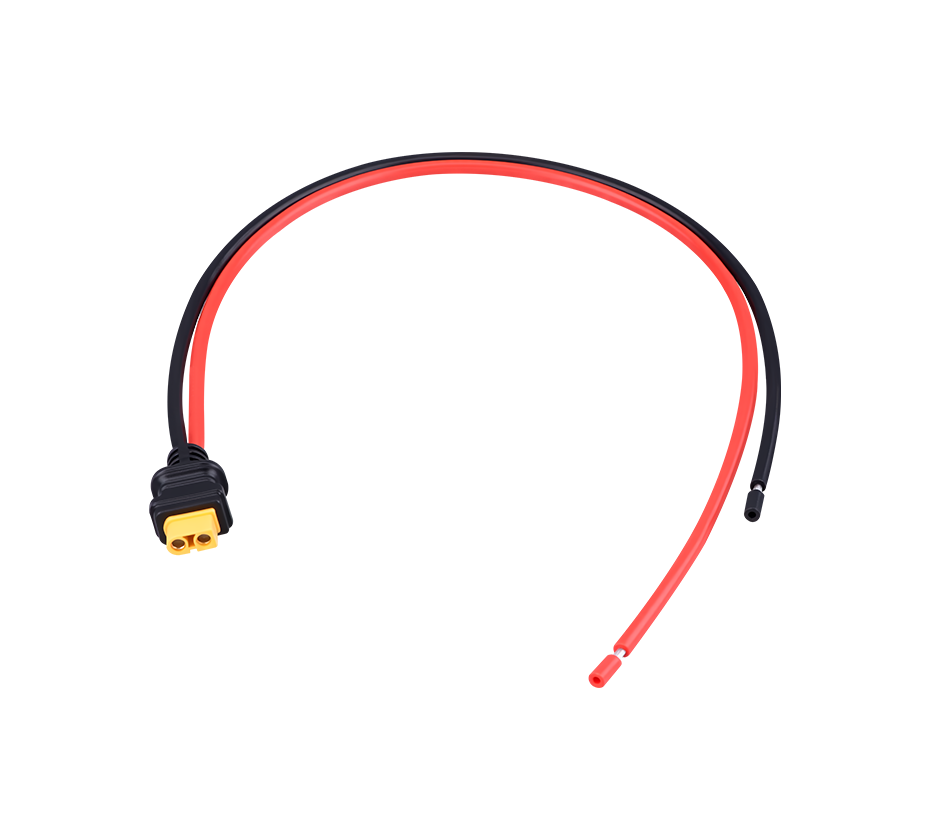
The application scenarios of PV extension cable connectors cover all types of photovoltaic power generation systems, with strong practicability and universality. In household rooftop distributed PV systems, due to the irregular roof structure and scattered installation positions of modules, it is often necessary to use extension connectors to adjust the cable length, realize the optimized wiring of modules to inverters, and avoid cable tension or redundant winding. In industrial and commercial rooftop PV projects, the building area is large, the PV array layout is wide, and the distance between the module area and the centralized inverter room is long, so a large number of high-specification extension cable connectors are required to complete long-distance cable connection.
In large-scale ground photovoltaic power stations, affected by terrain undulation, mountain slope, and vegetation occlusion, the wiring path of PV strings is complex, and extension connectors are used to adjust the cable length, adapt to terrain changes, and avoid cable breakage caused by terrain settlement and displacement. In addition, in portable photovoltaic systems such as outdoor mobile power supply and vehicle-mounted photovoltaic power generation, PV extension cable connectors can realize free extension and retraction of cables, which is convenient for users to adjust the wiring distance according to the use environment, improving the flexibility and portability of the equipment. In the maintenance and upgrading of old PV power stations, extension connectors can be used for cable docking and extension transformation, which simplifies the construction process, shortens the construction cycle, and reduces the transformation cost.
Daily operation, maintenance and fault handling of PV extension cable connectors are crucial to system stability. In the long-term outdoor operation process, the main faults of extension connectors include joint water ingress and oxidation, sealing ring aging and failure, shell cracking and damage, and increased contact resistance. Regular inspection is required in daily operation and maintenance: visually check whether the connector shell is cracked, aged, deformed, and whether there is water vapor and dirt inside the joint; use a thermal imager to detect the temperature of the joint position, and find out the overheating fault caused by poor contact in time; regularly test the insulation performance and contact resistance of the connector to ensure that the electrical performance meets the standard.
For faulty extension connectors, they must be replaced in a timely and standardized manner, and it is forbidden to use tape winding, temporary docking and other irregular maintenance methods for temporary processing, so as to avoid secondary faults and safety accidents. In winter low-temperature and rainy seasons, the inspection frequency of connectors should be increased to prevent sealing failure caused by low-temperature aging of sealing rings and water ingress and freezing damage of joints; in summer high-temperature and strong ultraviolet seasons, focus on checking the aging and embrittlement of the connector shell to avoid shell cracking and insulation failure.
With the continuous improvement of photovoltaic system refinement construction standards, PV extension cable connectors are also constantly updated and iterated in technology and performance. The new generation of extension connectors adopts integrated injection molding technology, which makes the shell structure more integrated and durable, with stronger compression resistance and anti-aging ability; the optimized conductive core structure further reduces contact resistance and line power loss, improving system power generation efficiency; the quick-plug self-locking structure simplifies the installation process, realizing tool-free rapid docking, greatly improving the efficiency of on-site wiring construction. At the same time, the intelligent anti-arc and over-temperature protection extension connectors have been gradually applied, which can automatically disconnect the circuit in case of joint overheating and arcing faults, effectively improving the safety level of system operation.
In conclusion, PV extension cable connectors are an indispensable flexible supporting component in photovoltaic system construction. They make up for the length limitation of fixed PV cables, solve the wiring difficulties caused by complex on-site environments, and realize flexible, efficient and safe cable layout of PV systems. Although they are auxiliary connecting components, their performance quality and installation quality directly affect the overall power generation efficiency and operational safety of PV power stations. Selecting high-quality standard PV extension cable connectors, standardizing installation and construction processes, and doing a good job in daily operation and maintenance are important guarantees to optimize the wiring structure of photovoltaic systems, reduce system loss, and extend the service life of power station equipment.
 Yang.taya@aitmpower.com
Tel: 15382891313
Phone: 0769-88878951
Fax: 0769-88878955
Wechat: 15382891313


 CN
 CN
 Home >


