
 2026-10-14
 4
1. Overview
Medical electronic equipment is developing rapidly in the direction of high precision, high sensitivity, low power consumption, and high-frequency signal transmission. From high-precision vital sign monitoring equipment and high-definition medical imaging systems to minimally invasive surgical electronic devices and wearable medical sensing terminals, all medical precision electronic devices rely on stable and efficient electrical signal transmission and power supply systems. As the core electrical connection component of medical equipment, the contact resistance of medical connectors is a key technical indicator that determines the stability of signal transmission, the accuracy of data collection, and the safety of equipment operation. Low contact resistance medical connectors refer to specialized medical connecting components with extremely low stable contact resistance value, small resistance fluctuation, and excellent electrical conductivity, which can effectively reduce signal attenuation, heat generation, and power loss in the circuit connection process, and avoid detection data distortion and equipment operation failure caused by excessive contact resistance.
In clinical medical scenarios, even tiny contact resistance changes may lead to serious medical consequences. For high-precision medical devices such as electrocardiographs, electroencephalographs, and blood oxygen monitors, excessive contact resistance will cause weak biological signal attenuation, resulting in inaccurate detection data and affecting doctors' judgment of the patient's condition. For high-power medical equipment such as surgical electrosurgical instruments and medical imaging equipment, high contact resistance will cause circuit heat generation, increased power consumption, and even local overheating failure of connectors, bringing hidden dangers to equipment operation safety and patient treatment safety. Therefore, low contact resistance has become a mandatory core performance indicator for high-end medical connectors. This article systematically expounds on the working principle of medical connector contact resistance, key influencing factors, core design technology, performance testing standards, medical application value, and future development direction, providing comprehensive technical support for the research, development, selection, and application of low contact resistance medical connectors.
2. Working Principle and Core Definition of Connector Contact Resistance
Contact resistance is the inherent resistance generated when two conductive contacts of a connector are in physical contact and form a conductive loop. It is composed of two parts: constriction resistance and film resistance. Constriction resistance refers to the additional resistance formed by the shrinkage of the current conduction cross-section when current passes through the contact surface. The metal contact surface of the connector is not absolutely smooth at the microscopic level, but has a large number of tiny uneven asperities. The actual contact area is only a small part of the apparent contact area, and the current can only pass through these tiny contact points, resulting in current shrinkage and forming constriction resistance. Film resistance is the resistance formed by the oxide film, dust, oil stains, and microbial attachments on the surface of the metal contact. The metal surface is easily oxidized in the air to form a dense insulating oxide film, and the pollutants attached during use will also increase the surface impedance, forming film resistance.
The total contact resistance of the connector is the sum of constriction resistance and film resistance. For ordinary industrial connectors, the contact resistance value is usually between tens of milliohms and hundreds of milliohms, which can meet the needs of ordinary industrial circuit transmission. However, for medical precision electronic equipment, such resistance values will cause serious signal loss and data distortion. Low contact resistance medical connectors strictly control the total contact resistance below 5 milliohms, and realize long-term stable resistance value without obvious fluctuation and increase in the whole service cycle, which fully meets the low-loss transmission requirements of medical weak biological signals and high-frequency precision signals.
The core characteristics of low contact resistance medical connectors are low initial resistance, small resistance fluctuation, strong environmental stability, and long-term durability. Different from ordinary low-resistance connectors, medical low contact resistance connectors also need to balance electrical performance with medical safety, sterility, and sterilization adaptability. While ensuring ultra-low contact resistance, they must meet ISO 10993 biocompatibility standards and IEC 60601-1 medical electrical safety standards, which is the essential difference between medical low-resistance connectors and industrial low-resistance connectors.
3. Key Factors Affecting the Contact Resistance of Medical Connectors
The contact resistance of medical connectors is affected by multiple factors such as contact material, surface plating process, contact structural design, assembly precision, and service environment. Clarifying the influencing factors is the basis for realizing low contact resistance design and stable performance control of medical connectors.
First, the contact material and surface plating process are the core factors determining the basic resistance value. The conductivity of the base metal directly affects the inherent resistance of the contact. Medical connectors mostly use copper alloy with high conductivity and good mechanical toughness as the base material, which has low inherent resistance and excellent processing performance. The surface plating layer is the key to reduce film resistance and prevent oxidation. Ordinary iron and copper contacts are easy to oxidize and rust, resulting in a sharp increase in contact resistance. Low contact resistance medical connectors adopt high-precision precious metal plating processes, including gold plating, silver plating, and palladium-nickel alloy plating. Among them, hard gold plating is the most widely used in high-end medical connectors. The gold plating layer has excellent chemical stability, is not easy to oxidize and corrode in the air and medical environment, can maintain a clean conductive contact surface for a long time, and effectively reduce film resistance. The thickness and uniformity of the plating layer directly affect the stability of contact resistance. The medical-grade gold plating layer usually has a thickness of 0.76μm to 2.5μm, with uniform plating and no missing plating, ensuring long-term stable low resistance performance.
Second, the contact structural design and contact pressure determine the constriction resistance level. The size of the actual contact area between connector contacts is directly related to contact pressure and structural form. Low contact resistance medical connectors adopt elastic contact structural designs such as spring pin type, cantilever beam type, and crown spring type. The precise elastic structure can provide stable and reasonable contact pressure, make the contact surface fully fit, maximize the actual conductive contact area, reduce current shrinkage, and reduce constriction resistance. Excessively small contact pressure will lead to insufficient contact area and increased resistance; excessively large contact pressure will cause mechanical wear of contacts, affect the service life of connectors, and even cause contact deformation. Therefore, through finite element simulation and mechanical performance testing, medical low-resistance connectors optimize the contact pressure within the optimal range, realizing the balance of low resistance and high durability.
Third, processing and assembly precision affect the consistency of contact resistance. The microscopic flatness of the contact surface, the coaxiality of the plug and socket, and the assembly gap of the connector will all affect the contact fitting effect. Low contact resistance medical connectors adopt high-precision CNC machining and micromachining technology, with the contact surface flatness controlled within micrometer level, eliminating the gap caused by processing errors. The standardized assembly process ensures the accurate alignment of the plug and socket, avoids eccentric contact and local virtual contact, ensures the consistency of contact resistance of each product, and reduces the resistance difference caused by assembly errors.
Fourth, the service environment and use cycle affect the long-term stability of contact resistance. Medical connectors work in complex hospital environments, facing challenges such as repeated sterilization, medical disinfectant corrosion, temperature and humidity changes, and frequent plugging and unplugging. High-temperature sterilization will accelerate the aging of the contact surface plating layer, disinfectant corrosion will cause local damage to the plating layer, and frequent plugging and unplugging will cause mechanical wear of the contact surface. These factors will lead to the increase of contact resistance and resistance fluctuation. Low contact resistance medical connectors optimize materials and processes for medical environmental characteristics, improving the environmental adaptability and wear resistance of contacts, ensuring that the resistance value remains stable after thousands of plugging cycles and repeated sterilization.
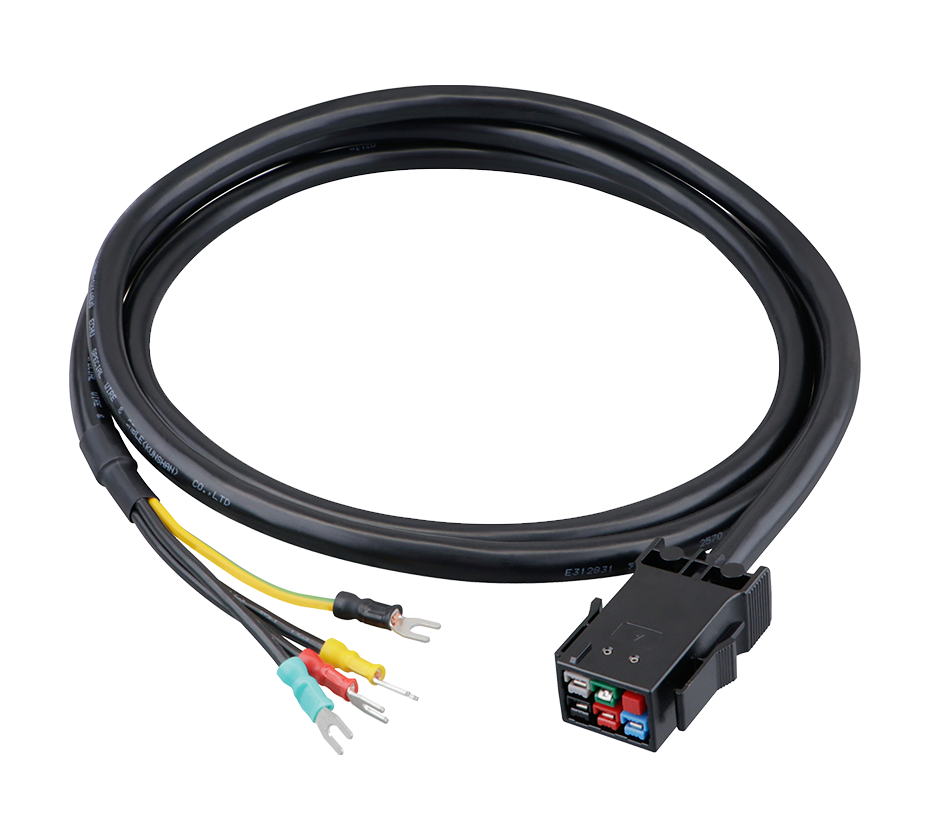
4. Core Design and Manufacturing Technology of Low Contact Resistance Medical Connectors
To realize the ultra-low and stable contact resistance performance of medical connectors, the whole process optimization design is carried out from material selection, plating process, structural design, and post-processing technology, forming a set of mature medical low-resistance connector manufacturing system.
In terms of material selection, high-conductivity oxygen-free copper alloy is used as the contact base material. Compared with ordinary brass, oxygen-free copper has higher conductivity, lower inherent resistivity, and better mechanical fatigue resistance, which can effectively reduce the basic resistance of the contact. The surface adopts a multi-layer composite plating process: the bottom layer is nickel-plated as a barrier layer, which can improve the bonding force between the base material and the surface gold layer, prevent the diffusion of base metal elements, and avoid the formation of high-resistance diffusion layer; the surface layer is hard gold plating mixed with cobalt and nickel elements, which improves the hardness and wear resistance of the gold layer, reduces the wear loss of the plating layer during frequent plugging and unplugging, and maintains long-term low contact resistance. The composite plating structure combines the high conductivity of gold and the high wear resistance of alloy materials, solving the technical problem that ordinary gold plating layers are easy to wear and lose efficacy.
In terms of structural optimization design, a high-precision elastic contact system is adopted. The crown spring contact structure commonly used in high-end medical connectors is composed of multiple elastic metal reeds arranged in a circular array. When the plug is inserted, the reeds form multi-point uniform contact with the male contact, which greatly increases the actual conductive contact area, effectively reduces constriction resistance, and has excellent anti-vibration and anti-loosening performance. Compared with the traditional single-point contact structure, the multi-point contact structure has lower contact resistance, smaller resistance fluctuation, and stronger stability. At the same time, the connector is designed with a dust-proof and anti-pollution structure, which can prevent dust, droplets, and microbial pollutants from adhering to the contact surface in the medical environment, avoid the formation of high-resistance film layers, and maintain long-term low-resistance conduction performance.
In terms of processing technology, ultra-precision micromachining and mirror surface finishing technology are adopted to process the contact surface. The contact surface after mirror finishing has ultra-high flatness and smoothness, no microscopic burrs and uneven defects, which maximizes the effective contact area and reduces the contact gap. The vacuum plating process is used to ensure the uniformity and compactness of the plating layer, avoid pinholes and defects in the plating layer, and improve the oxidation resistance and corrosion resistance of the contact. After processing, each connector is subjected to high and low temperature aging treatment and plugging fatigue test to screen out products with unstable resistance, ensuring the consistency and reliability of batch products.
In terms of post-processing protection, medical-grade inert protective oil film is coated on the contact surface. The protective oil film is non-toxic and sterile, compliant with medical biocompatibility standards, and will not affect electrical conductivity. It can isolate air and medical corrosive media, prevent contact surface oxidation and corrosion, and further stabilize contact resistance. After repeated sterilization, the protective film will not fail, ensuring the long-term stable performance of the connector.
5. Performance Testing Standards and Testing Methods
The contact resistance performance of medical low contact resistance connectors must pass strict standardized testing to ensure that it meets medical application requirements. The main testing standards include IEC 60512 connector electrical performance testing standard, IEC 60601-1 medical electrical equipment safety standard, and ISO 10993 medical device biocompatibility standard. The core testing items include initial contact resistance testing, resistance stability testing after plugging fatigue, resistance change testing after sterilization, environmental adaptability resistance testing, and low-frequency weak signal transmission performance testing.
Initial contact resistance testing adopts a high-precision micro-ohm tester to detect the resistance value of each contact point of the connector. The test current adopts low-frequency small current to avoid current thermal effect affecting the test accuracy. Medical low contact resistance connectors require that the initial contact resistance of all contact points is less than 5mΩ, and the resistance difference between different contact points is less than 1mΩ, ensuring excellent consistency.
Plugging fatigue resistance stability testing simulates the actual use of the connector, conducting repeated plugging and unplugging tests for 5,000 to 10,000 times. After the fatigue test, the contact resistance increase rate is required to be less than 10%, no sharp resistance increase and open circuit phenomenon, ensuring that the connector can maintain stable low-resistance performance during long-term repeated use.
Sterilization resistance change testing is a unique test item for medical connectors. The connector is subjected to 100 times of high-temperature autoclave sterilization and 50 times of gamma ray sterilization respectively, and the contact resistance is detected after sterilization. It is required that the resistance value has no obvious fluctuation and increase, and the plating layer has no peeling and corrosion, adapting to the repeated sterilization environment of medical equipment.
Environmental adaptability testing includes high and low temperature cycle testing, humidity heat aging testing, and medical disinfectant corrosion testing. After extreme environmental simulation testing, the contact resistance of the connector remains within the qualified range, ensuring stable operation in complex hospital environments. In addition, weak signal transmission testing is carried out for medical biological signal scenarios to verify that the connector has no signal attenuation and distortion when transmitting microvolt-level weak biological signals, meeting the precision detection requirements of medical equipment.
6. Core Medical Application Scenarios and Value
Low contact resistance medical connectors are mainly used in high-precision medical electronic equipment and weak signal detection systems, and their stable low-resistance performance is the key guarantee for the accuracy of medical detection and the safety of equipment operation.
In biological signal monitoring equipment, electrocardiographs, electroencephalographs, electromyographs, and multi-parameter vital sign monitors need to collect microvolt-level weak biological electrical signals from the human body. These signals have extremely low amplitude and are easily interfered and attenuated. Ordinary connectors with high contact resistance will cause serious signal loss, resulting in blurred waveform and inaccurate data of monitoring results. Low contact resistance medical connectors realize lossless transmission of weak biological signals, ensure the complete and accurate collection of human physiological signal data, provide reliable diagnostic basis for doctors, and avoid misdiagnosis and missed diagnosis caused by signal distortion.
In medical imaging equipment, high-end equipment such as magnetic resonance imaging (MRI), computed tomography (CT), and ultrasound diagnostic instruments rely on high-frequency signal transmission and precise circuit control. High contact resistance will cause high-frequency signal attenuation, phase shift, and noise interference, reduce the imaging clarity and resolution, and affect the detection effect of tiny lesions. At the same time, high resistance will cause circuit heat generation, affect the stability of equipment internal circuit components, and reduce the service life of equipment. Low contact resistance connectors ensure stable high-frequency signal transmission, improve the imaging quality of medical equipment, and reduce equipment failure rate.
In surgical electronic equipment, electrosurgical instruments, surgical robot control systems, and minimally invasive surgical monitoring equipment have high requirements for circuit stability and signal real-time performance. Low contact resistance can reduce circuit power loss and heat generation, ensure the stable output of equipment power and real-time transmission of control signals, avoid surgical operation errors and equipment failure caused by signal delay and power instability, and improve the safety and accuracy of surgical operations.
In wearable medical devices and home intelligent medical equipment, portable blood pressure monitors, blood glucose monitors, and wearable heart rate monitors pursue low power consumption and high precision. Low contact resistance connectors can reduce the power loss of the equipment circuit, extend the battery life of portable equipment, and at the same time ensure the long-term stable detection accuracy of household medical equipment, improving the popularization effect of home medical care and telemedicine.
In addition, in implantable medical devices and invasive monitoring equipment, ultra-low contact resistance connectors can avoid local heat generation of the circuit, prevent thermal damage to human tissues, and ensure the safety of long-term invasive monitoring and treatment equipment.
7. Industry Technical Bottlenecks and Optimization Directions
At present, low contact resistance medical connector technology has achieved mature application in conventional medical equipment, but there are still technical bottlenecks in ultra-miniaturized high-density connectors and long-term implantable medical connectors. First, with the miniaturization of medical equipment, the pin spacing of high-density connectors is continuously reduced, the contact size is smaller, and the contact area is further reduced, which brings great challenges to the maintenance of ultra-low contact resistance. It is difficult for traditional plating processes and structural designs to balance miniaturization and low-resistance stability.
Second, the long-term stability of contact resistance of implantable medical connectors is insufficient. Implantable devices need to work stably in the human body environment for several years or even more than ten years. The human body's body fluid corrosion, tissue extrusion, and long-term physiological activity will cause slow wear and corrosion of connector contacts, leading to the gradual increase of contact resistance and affecting the long-term operation of implantable equipment.
Third, the cost of high-performance low contact resistance medical connectors is high. The precious metal plating process and high-precision processing technology lead to high product costs, which limits the popularization and application of high-end low-resistance connectors in grassroots medical institutions and low-end medical equipment.
Aiming at the above technical bottlenecks, the current industry optimization directions mainly include three aspects: new conductive material research and development, micro-nano processing technology innovation, and composite protective technology upgrading. The development of new nano-conductive coating materials can realize ultra-thin and high-conductivity surface coating, reduce the cost of precious metal plating, and improve the wear resistance and corrosion resistance of contacts. The micro-nano precision processing technology optimizes the microscopic contact structure, improves the effective contact area of ultra-small contacts, and realizes stable low contact resistance under miniaturized size. The biocompatible composite protective technology improves the long-term corrosion resistance of contacts in human body fluid and medical environment, and extends the service life of implantable low-resistance connectors.
8. Future Development Trends
With the rapid development of precision medicine, intelligent medicine, and minimally invasive medical technology, low contact resistance medical connectors will develop in the direction of ultra-low resistance, long life, miniaturization, intelligence, and low cost. In terms of electrical performance, the contact resistance index will be further reduced to below 1mΩ, realizing ultra-lossless transmission of medical weak signals and high-frequency signals, adapting to the higher precision detection requirements of future medical equipment.
In terms of structural design, ultra-miniaturized high-density multi-pin connectors will become the mainstream, realizing high-precision low-resistance connection in ultra-small space, meeting the design requirements of portable, wearable, and implantable intelligent medical equipment. The integrated multifunctional low-resistance connectors will integrate signal transmission, power supply, and state monitoring functions to further optimize the internal structure of medical equipment.
In terms of material technology, new composite conductive materials and green plating processes will replace traditional precious metal plating processes, which can not only maintain ultra-low contact resistance performance, but also reduce production costs and environmental pollution, realizing the popularization of high-performance low-resistance medical connectors. The self-repairing conductive coating technology will be applied to medical connectors, which can automatically repair the micro-wear and corrosion of the contact surface, maintain long-term stable low resistance performance, and greatly extend the service life of connectors.
In terms of intelligent performance, low contact resistance medical connectors will be combined with sensing and monitoring technology to realize real-time online monitoring of contact resistance, temperature, and connection status. When the contact resistance increases abnormally or the connection is loose, the system will automatically alarm and record data, realizing predictive maintenance of medical equipment and avoiding medical safety accidents caused by connector performance failure.
Low contact resistance is the core electrical performance index of high-end medical connectors, which directly determines the signal transmission accuracy, operation stability, and safety of precision medical equipment. Through the optimization of high-conductivity materials, precious metal composite plating process, high-precision elastic contact structure, and ultra-fine processing technology, low contact resistance medical connectors effectively solve the problems of signal attenuation, data distortion, and equipment heat generation in medical circuit connection, and provide a solid technical guarantee for high-precision medical detection, safe surgical operation, and stable operation of intelligent medical equipment. At present, the industry is still facing technical challenges such as miniaturization performance balance and long-term stability of implantable connectors. In the future, with the continuous innovation of new materials and new processes, low contact resistance medical connectors will achieve comprehensive performance breakthroughs, better adapt to the development needs of modern precision medicine and intelligent medical industry, and continuously promote the improvement of global medical diagnosis and treatment level.
 Yang.taya@aitmpower.com
Tel: 15382891313
Phone: 0769-88878951
Fax: 0769-88878955
Wechat: 15382891313


 CN
 CN
 Home >


