
 2026-10-14
 4
Automated Guided Vehicles (AGVs) are the core intelligent handling equipment in modern intelligent factories, automated warehouses and flexible production lines, realizing automatic material handling, intelligent sorting and unmanned transportation. Different from traditional fixed industrial equipment, AGVs are in a continuous moving state for a long time, facing complex working conditions such as frequent start-stop, bumpy driving, mechanical vibration and impact friction all day. As the key connection component of AGV power supply, signal transmission and data interaction, the high-vibration AGV connector is specially designed for extreme vibration and dynamic working environments, solving the problems of loose connection, signal interruption, power failure and equipment shutdown caused by long-term vibration of traditional connectors. High-vibration resistant AGV connectors have the core characteristics of anti-loosening, anti-fatigue, stable conduction and strong environmental adaptability, and are widely used in intelligent manufacturing, unmanned warehousing, logistics automation and other fields. This paper conducts a comprehensive and in-depth analysis of the structural design, anti-vibration technical principle, core performance parameters, product classification, application advantages and future development trends of high-vibration AGV connectors, providing professional technical reference for industrial intelligent equipment selection and application.
1. Industry Background and Core Application Requirements of High-Vibration AGV Connectors
With the comprehensive popularization of industrial intelligence and unmanned production, AGV/AMR mobile robots have achieved large-scale application in various industrial scenarios. Traditional industrial connectors are designed for fixed equipment static connection scenarios, and are difficult to adapt to the dynamic vibration environment of AGVs. In the actual operation process, AGVs will generate continuous high-frequency vibration due to ground bumps, start-stop acceleration and deceleration, and mechanical operation resonance. Long-term vibration will lead to loose terminal docking, increased contact resistance, intermittent signal interruption, and even complete disconnection of power supply, resulting in AGV equipment failure, production line shutdown, and serious impact on the stability and efficiency of intelligent production.
In addition, modern AGV equipment is developing towards multi-functional integration, carrying a large number of sensors, LiDAR, visual recognition systems, communication modules and automatic charging devices. The equipment has complex wiring and numerous connection points, which puts forward higher requirements for connector stability, compactness, vibration resistance and anti-fatigue performance. Ordinary connectors are prone to metal fatigue, contact wear and structural loosening under long-term high-frequency vibration, which cannot meet the 24-hour continuous and stable operation requirements of AGV intelligent equipment.
Based on the above industry pain points, high-vibration AGV connectors have emerged as customized industrial connectors for mobile intelligent equipment. They take anti-vibration and anti-loosening as the core design indicators, and optimize the mechanical structure, contact system and locking mechanism in an all-round way, which can maintain stable electrical connection and signal transmission under long-term high-frequency vibration and impact working conditions, and become the key guarantee for the stable operation of AGV unmanned systems.
2. Core Anti-Vibration Technical Principle and Structural Design
The excellent high-vibration resistance of AGV dedicated connectors comes from systematic structural optimization and technical innovation. Different from the simple locking design of traditional connectors, high-vibration AGV connectors adopt multi-dimensional anti-loosening and anti-vibration design from contact conduction, mechanical locking and structural shock absorption, realizing zero loosening and zero interruption of connection under extreme vibration conditions.
2.1 High-Precision Elastic Contact System
The contact system is the core of anti-vibration conduction stability. High-vibration AGV connectors adopt high-precision elastic pin-hole contact structure and multi-point contact design. Different from the single-point rigid contact of traditional connectors, the built-in elastic reed structure can provide continuous and stable contact pressure. When the equipment vibrates and slightly displaces, the elastic contact piece can automatically compensate the gap to ensure that the contact core is always closely fitted, avoiding poor contact caused by vibration displacement.
The contact is made of high-strength copper alloy with gold-plated or silver-plated surface treatment, which has excellent wear resistance, oxidation resistance and electrical conductivity. After professional vibration fatigue tests, the contact resistance fluctuation is controlled within 0.5mΩ under continuous vibration of 10-2000Hz and 0.35mm amplitude for 1000 hours, realizing ultra-stable low-resistance conduction. Even after 50,000 times of vibration cycle tests, there is no contact failure or resistance drift, which fully meets the long-term dynamic operation needs of AGVs.
2.2 Multi-Layer Mechanical Anti-Loosening Locking Mechanism
In view of the loosening problem of connectors caused by long-term vibration, high-vibration AGV connectors adopt a composite locking structure of mechanical buckle + thread locking + anti-loosening gasket. The primary buckle locking realizes rapid docking and fixing, the secondary thread locking prevents the buckle from bouncing loose under vibration, and the built-in elastic anti-loosening gasket absorbs vibration energy and eliminates the gap between docking surfaces. The three-layer anti-loosening design completely solves the common failure problems of loose docking and terminal separation of traditional connectors in vibration environment, and the overall loosening rate is zero in long-term vibration tests.
At the same time, the connector is equipped with a foolproof positioning structure, which can realize accurate positioning docking with a displacement error within ±0.5mm. It avoids connection deviation caused by vibration and impact, ensures the consistency of each docking state, and further improves the stability of dynamic connection.
2.3 Integrated Shock Absorption and Buffer Structure
The shell of high-vibration AGV connector adopts integrated shock absorption and buffer design, and the internal gap is filled with high-elasticity buffer materials. The high-strength engineering plastic shell has good toughness and impact resistance, which can absorb and buffer the vibration and impact force generated by equipment operation, reduce the vibration transmission amplitude of internal contacts, and protect the precision conductive structure from vibration fatigue damage. The overall structural rigidity and flexibility are balanced, which can resist both high-frequency micro-vibration and low-frequency strong impact, and adapt to complex dynamic working conditions of AGVs.
2.4 Sealed and Anti-Fatigue Structural Design
AGVs work in industrial environments for a long time, and vibration is often accompanied by dust, humidity and oil pollution. High-vibration AGV connectors adopt multi-channel sealing structure to reach IP67 high-level protection, which can completely isolate external dust, water vapor and oil stains. The special anti-fatigue sealing materials can maintain stable elasticity after long-term vibration and friction, avoid sealing failure caused by material fatigue, and ensure the long-term reliability of environmental protection performance. The overall structure is optimized for anti-fatigue, and no structural cracking or deformation occurs after millions of times of vibration cycles, with ultra-long service life.
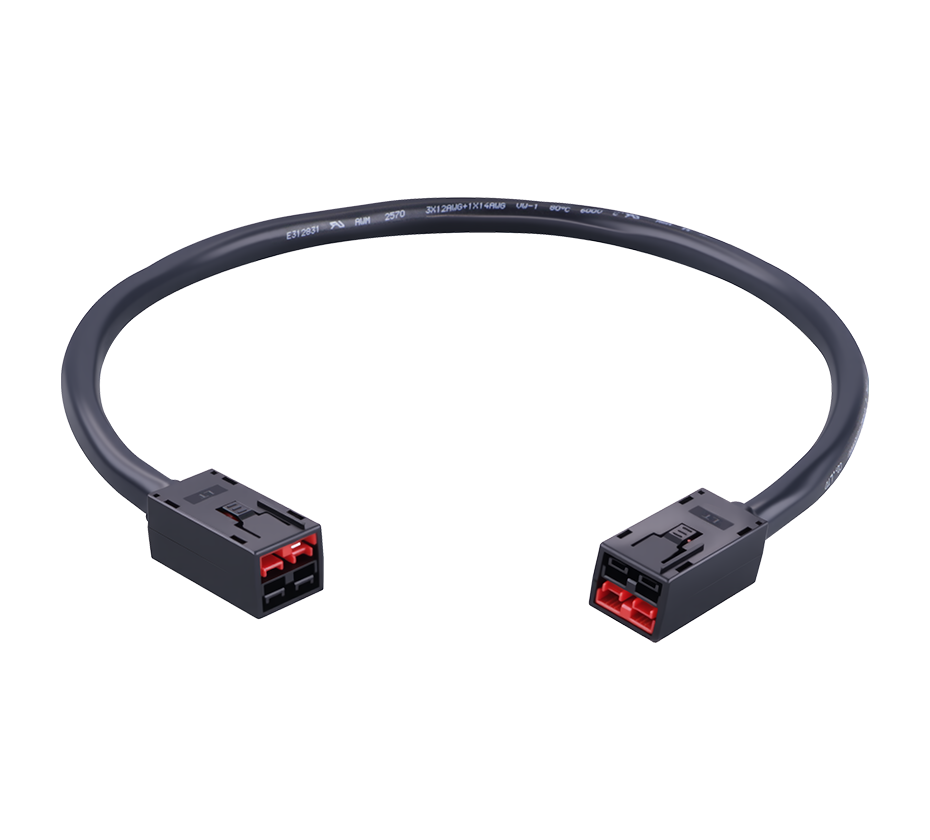
3. Main Product Classification and Complete Technical Parameters
According to functional positioning, current carrying capacity and application scenarios, high-vibration AGV connectors are mainly divided into high-power power connectors, low-voltage signal connectors and integrated power-signal hybrid connectors, covering all connection needs of AGV power supply, sensor signal, data communication and automatic charging.
3.1 High-Power Vibration-Resistant Power Connectors
This type of connector is mainly used for AGV battery power supply and automatic charging system, undertaking high-current power transmission. The mainstream specifications include 50A, 100A, 175A and 350A, with a rated voltage of 600V DC and an operating temperature range of -40℃ to +125℃. It adopts 2-core to 8-core power contact design, with high-current conduction capacity and ultra-strong vibration resistance. It can withstand continuous high-frequency vibration during AGV driving and automatic docking charging, ensuring stable power output without interruption. The crimping terminal structure is firm and reliable, with no wire loosening or virtual connection under long-term vibration, and is the core power connection component of heavy-load AGVs.
3.2 High-Precision Vibration-Resistant Signal Connectors
Special for AGV sensor signal transmission, visual system data interaction and control circuit connection, including M8, M12, D-Sub and other mainstream models. The rated current is 1.5A-2A, the rated voltage is 60V AC/DC, and the insulation resistance is more than 500MΩ. The multi-pin precision contact design ensures high-speed and stable transmission of weak current signals and data. Under high-frequency vibration conditions, the signal transmission is free of delay, loss and interference, ensuring the accurate operation of AGV navigation, positioning and obstacle avoidance systems. It has the characteristics of small size, compact structure and strong anti-interference ability, and is suitable for internal precise signal connection of AGVs.
3.3 Power-Signal Integrated Hybrid Connectors
Integrating power conduction and signal transmission functions, it is a new generation of integrated connectors specially optimized for AGV miniaturization and lightweight development. It adopts a mixed layout of high-current power pins and small-current signal pins, which can realize power supply and data interaction through a single connector, simplify AGV internal wiring, save equipment space, and reduce the failure rate of wiring harnesses. The product has passed 100,000 times of plugging and unplugging tests and long-term vibration fatigue tests, with stable overall performance, and is widely used in medium and small lightweight AGVs and intelligent mobile robots.
4. Key Performance Advantages in Industrial Vibration Environments
4.1 Ultra-Stable Dynamic Conduction Performance
The biggest advantage of high-vibration AGV connectors is the stable electrical performance in dynamic vibration state. Traditional connectors are prone to contact bounce and resistance mutation under vibration, resulting in signal jitter and power fluctuation. High-vibration AGV connectors rely on elastic contact compensation and multi-layer anti-loosening structure, which can keep the contact resistance stable for a long time in continuous vibration environment, without signal interruption and power fluctuation, ensuring the real-time and accuracy of AGV navigation data, control signals and power supply, and avoiding equipment stalling and positioning deviation caused by connection failure.
4.2 Extreme Vibration and Impact Resistance
Professional high-vibration AGV connectors have passed strict industrial vibration tests: continuous composite vibration test of 10-2000Hz frequency and 0.35mm amplitude for 1000 hours, with no loosening, no damage and no contact failure of the whole machine. It can resist random impact and vibration generated by AGV crossing obstacles, emergency stop and start, and uneven ground driving. Compared with ordinary connectors, its anti-vibration fatigue performance is more than 5 times higher, which fully adapts to the 24-hour uninterrupted dynamic operation mode of intelligent equipment.
4.3 Excellent Environmental Stability and Durability
AGV working environments are mostly industrial workshops and warehouses, with dust, humidity, oil pollution and electromagnetic interference. High-vibration AGV connectors adopt high-grade flame-retardant and corrosion-resistant shell materials, with IP67 dustproof and waterproof grade, which can resist industrial environmental pollution and climate change. The gold-plated and silver-plated contacts have strong oxidation resistance and corrosion resistance, avoiding contact failure caused by environmental corrosion. The overall service life reaches more than 100,000 plugging and unplugging cycles, which can accompany the whole life cycle of AGV equipment, greatly reducing equipment maintenance and replacement costs.
4.4 Strong Electromagnetic Anti-Interference Ability
There are a large number of electrical equipment and electromagnetic signals in industrial intelligent workshops, which are easy to interfere with AGV signal transmission. High-vibration AGV signal connectors adopt shielded structural design, which can effectively isolate external electromagnetic interference, ensure the anti-interference stability of weak current signals and high-speed data transmission, avoid AGV navigation failure and operation error caused by signal interference, and improve the operation accuracy and reliability of intelligent equipment.
5. Typical Industrial Application Scenarios and Practical Value
5.1 Intelligent Warehouse Unmanned Handling
In automated three-dimensional warehouses, a large number of AGV handling robots undertake the tasks of goods storage, sorting and outbound. AGVs drive back and forth on complex warehouse tracks for a long time, facing continuous vibration and frequent start-stop working conditions. High-vibration AGV connectors ensure stable power supply and signal transmission of equipment, avoid equipment shutdown and goods handling errors caused by vibration connection failure, and ensure the efficient and stable operation of unmanned warehouse logistics systems.
5.2 Intelligent Manufacturing Flexible Production Line
In automobile manufacturing, electronic product assembly, precision parts processing and other flexible production lines, AGVs are responsible for the automatic transportation of production materials and semi-finished products. The production line environment has complex mechanical vibration, electromagnetic interference and industrial dust. High-vibration resistant connectors adapt to the harsh production site environment, maintain long-term stable operation of AGV equipment, realize seamless connection of production links, and improve the automation level and production efficiency of the production line.
5.3 Automatic Charging Docking System
Modern AGVs realize unmanned automatic charging through docking stations. The automatic docking process will produce contact impact and vibration, and the charging process needs stable high-current power transmission. High-vibration AGV charging connectors have excellent impact resistance and vibration stability, which can ensure accurate docking and stable charging in repeated automatic docking processes, avoid charging interruption caused by vibration deviation, and realize fully unmanned charging operation of AGVs.
5.4 Special Industrial Environment Operation
In cold storage low-temperature environment, chemical corrosion workshop, port humid environment and other special scenarios, AGV equipment faces more severe environmental tests. High-vibration AGV connectors have ultra-wide temperature resistance, corrosion resistance and moisture resistance, and can maintain stable structural and electrical performance in low temperature, high humidity and corrosive environments, ensuring the normal operation of intelligent handling equipment in special industrial scenarios.
6. Product Selection Standards and Installation Application Specifications
6.1 Scientific Selection Principles
The selection of high-vibration AGV connectors needs to comprehensively consider equipment power demand, signal transmission requirements, vibration intensity, environmental conditions and service life indicators. For AGV power supply and charging links, high-current vibration-resistant power connectors matching the equipment rated current and voltage should be selected; for sensor and data transmission links, high-precision shielded signal connectors need to be configured according to signal types and transmission rates; for limited space equipment, integrated hybrid connectors should be prioritized to optimize wiring layout. At the same time, the protection grade and temperature resistance grade of the connector should be matched according to the actual working environment to ensure full-scene adaptation.
6.2 Standard Installation and Fixation
The installation of high-vibration AGV connectors must adopt professional anti-vibration fixation methods. The connector fixing bracket needs to be firm and reliable, and reinforced with anti-loosening gaskets to avoid bracket loosening caused by vibration. The wiring harness needs to reserve a reasonable margin to prevent wire pulling and terminal loosening caused by equipment movement and vibration. After docking, the locking structure must be completely locked, and the docking state and anti-loosening effect need to be checked one by one. It is forbidden to use unqualified connectors and irregular wiring installation methods to avoid hidden dangers of equipment operation.
6.3 Daily Inspection and Maintenance
Daily maintenance of connectors focuses on anti-vibration state detection and environmental protection inspection. Regularly check the connector locking state, eliminate loose docking hidden dangers; clean the surface dust and oil stains to keep the sealing structure intact; detect the contact resistance and signal transmission stability, and replace aging and failed connectors in time. Regularly inspect the wiring harness fixation state to avoid wire fatigue and fracture caused by long-term vibration, and ensure the long-term stable operation of the connector system.
7. Industry Development Trends and Technological Innovation Directions
With the rapid iteration of AGV/AMR intelligent mobile robot technology and the continuous upgrading of industrial intelligent manufacturing standards, high-vibration AGV connectors are developing towards integration, intelligence, miniaturization and high reliability. At present, the industry is gradually eliminating traditional ordinary connectors with poor vibration resistance, and high-performance customized anti-vibration connectors have become the mainstream of market selection.
In terms of technological innovation, the future high-vibration AGV connectors will integrate intelligent monitoring chips to realize real-time monitoring of connector vibration state, contact temperature, resistance change and docking state, and upload data to the industrial Internet platform to realize predictive maintenance and fault early warning. In terms of material innovation, new high-elasticity anti-fatigue composite materials will be adopted to further improve vibration resistance, corrosion resistance and service life. In terms of structural design, ultra-miniaturized integrated design will be realized to adapt to the lightweight and miniaturization development trend of new intelligent robots. In addition, with the popularization of high-speed data transmission and intelligent wireless docking technology, AGV connectors will realize the integration of high-current power supply, high-speed signal transmission and intelligent automatic docking, and further improve the unmanned and intelligent level of industrial mobile equipment.
As the key basic connection component of intelligent mobile equipment, high-vibration AGV connectors undertake the important tasks of power transmission and signal interaction. Its anti-vibration stability and environmental adaptability directly determine the operation reliability of AGV intelligent handling systems. In the future, with the continuous development of industrial intelligence and unmanned logistics, high-performance high-vibration AGV connectors will be widely used in more industrial scenarios, providing solid technical support for the efficient and stable operation of modern intelligent manufacturing and unmanned logistics systems.
 Yang.taya@aitmpower.com
Tel: 15382891313
Phone: 0769-88878951
Fax: 0769-88878955
Wechat: 15382891313


 CN
 CN
 Home >


