
 2026-10-14
 2
In the modern logistics and manufacturing industry, electric forklifts have become indispensable core handling equipment due to their environmental protection, low noise, high efficiency and low operating cost advantages. As the key electrical connection component responsible for energy transmission between forklift batteries and charging equipment, the forklift charging port connector directly determines the charging safety, efficiency, service life and operational stability of electric forklifts. With the rapid upgrading of new energy industrial equipment and the continuous improvement of industrial charging standards, traditional low-power and low-safety connectors can no longer adapt to the high-frequency, high-current and high-intensity working scenarios of modern electric forklifts. Professional forklift charging port connectors have evolved into a systematic industrial component integrating high-current conduction, safety protection, environmental adaptability and standardized docking, and are widely used in warehouse logistics, factory handling, port transportation and other fields. This article comprehensively expounds the structural principle, core technical parameters, key performance characteristics, mainstream types, application scenarios, installation and maintenance specifications, industry pain points and technological development trends of forklift charging port connectors, with a full in-depth analysis of their industrial application value.
1. Basic Overview and Working Principle of Forklift Charging Port Connector
The forklift charging port connector is a special industrial power connector designed for DC fast charging scenarios of electric forklift batteries. It is mainly composed of a male plug, female socket, conductive contact core, insulating shell, locking structure, sealing protection device and auxiliary signal terminals. Different from ordinary civilian power connectors, it is specially optimized for high-current instantaneous conduction, frequent plugging and unplugging, industrial harsh environment resistance and anti-misplug safety design, realizing stable electrical connection between forklift lithium batteries/lead-acid batteries and professional charging piles.
The core working principle of the connector is to rely on high-precision conductive contacts to form a low-resistance current transmission path. When the male and female terminals are completely docked and locked, the internal contacts are closely fitted to ensure continuous and stable transmission of high-current DC power. The built-in auxiliary contact structure can realize priority connection and disconnection of signal circuits, that is, the signal terminal is connected first and then the power terminal during docking, and the power terminal is disconnected first and then the signal terminal during separation. This structural design can effectively trigger the battery management system (BMS) and charger control program, avoid arcing and sparking caused by live plugging and unplugging, and fundamentally eliminate potential safety hazards such as short circuits and battery burnout.
In addition, the standardized keying and color-coded design of the forklift charging port connector is an important safety guarantee mechanism. Different voltage and current level connectors adopt exclusive key position structures and color identification schemes, which can physically prevent misplugging of high and low voltage equipment, avoid equipment damage and safety accidents caused by wrong docking, and greatly improve the safety and standardization of on-site charging operations.
2. Core Structural Composition and Functional Advantages
The excellent performance of the forklift charging port connector benefits from its scientific and modular structural design. Each component is optimized for industrial working conditions, and the functional advantages of high conductivity, high safety and high durability are realized through the cooperation of multiple structures.
2.1 Conductive Contact System
The conductive contact is the core functional part of the connector, which directly determines the current carrying capacity and conduction stability. High-quality forklift charging connectors adopt high-purity copper base materials with silver-plated surface treatment. Silver plating has extremely low contact resistance and excellent electrical conductivity, which can effectively reduce heat generation during high-current transmission and avoid energy loss and component aging caused by excessive temperature rise. The mainstream contact specifications are adapted to wire gauges of 50-95mm² (1/0-4/0 AWG) for power contacts and 2.5-4mm² (12-14 AWG) for auxiliary signal contacts, meeting the high-current charging demand of 50A to 350A forklift batteries.
At the same time, the contact adopts pin-hole contact technology. The slight wiping action generated during plugging and unplugging can automatically clean the oxide layer and dust on the contact surface, ensuring long-term stable low-resistance contact. Even after tens of thousands of plugging and unplugging cycles, the contact resistance can still be maintained within a safe range, avoiding poor contact caused by contact oxidation and wear.
2.2 Insulating Shell and Protective Structure
The connector shell is made of high-performance PA-GF30 glass fiber reinforced nylon or flame-retardant PC material, which has excellent mechanical strength, impact resistance and flame retardant performance, reaching UL94-V0 flame retardant grade. This material can resist high temperature aging, mechanical collision and chemical corrosion in industrial environments, and will not deform, crack or burn under extreme working conditions. The overall shell is designed with integrated molding, which improves the structural compactness and avoids loose assembly gaps.
In terms of environmental protection, the professional charging port connector is equipped with integrated sealing rings and waterproof structures, reaching IP55 to IP67 protection levels. It can effectively block industrial dust, humid air, splashing water and oil stains from entering the internal conductive parts, prevent insulation failure, short circuit and corrosion damage, and adapt to complex working environments such as outdoor open-air operation, wet workshops and dusty warehouses.
2.3 Locking and Anti-misplug Mechanism
In view of the frequent movement and vibration of forklifts during operation, the connector is equipped with a reliable mechanical locking structure. After docking, the locking buckle can firmly fix the male and female terminals to prevent loose connection and power failure caused by vibration and traction. The one-button unlocking design is adopted, which is convenient for manual operation and does not affect the efficiency of quick plugging and unplugging.
The anti-misplug keying design is another core safety feature. Different specification connectors are equipped with unique key slot positions, which makes it physically impossible to insert connectors with mismatched voltage and current parameters. Combined with unified color coding (red for high voltage, gray for high current, black for conventional models), it helps operators quickly identify equipment specifications and eliminate misoperation risks.
2.4 Auxiliary Signal Terminal Design
Modern high-end forklift charging port connectors are equipped with independent auxiliary signal terminals, which are matched with the vehicle BMS and intelligent charger system. These terminals can transmit real-time data such as battery voltage, remaining power, temperature and charging status, realizing intelligent charging management functions such as constant current and constant voltage charging, overcharge protection, over-temperature protection and automatic power-off after full charging. The signal terminal priority docking mechanism ensures that the system completes signal handshake before power conduction, effectively suppressing arc discharge during plugging and unplugging, and improving the overall safety of the charging system.
3. Mainstream Product Types and Technical Parameter Specifications
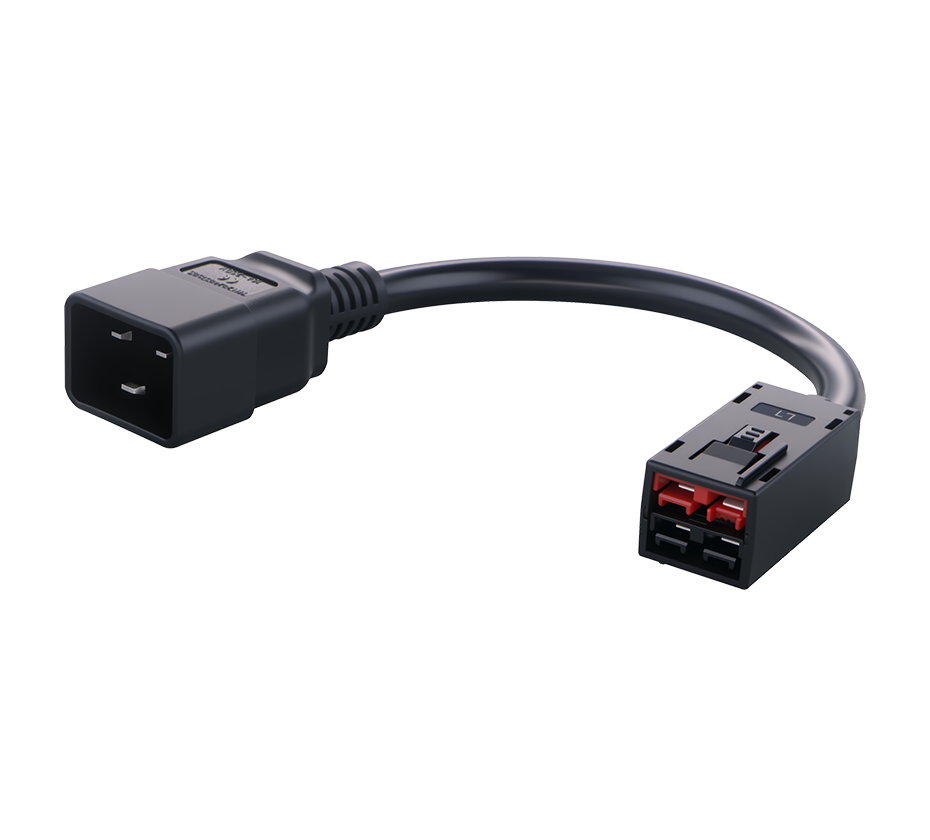
Forklift charging port connectors have formed a standardized product system according to current rating, voltage level, structural form and application scenarios. The mainstream products in the market are divided into Anderson series, REMA series and SMH industrial series, covering low, medium and high current segments, and fully adapting to the charging needs of 12V, 24V, 48V, 80V and other common voltage forklift batteries.
3.1 REMA Series Heavy-Duty Connectors
REMA series connectors are the most widely used heavy-duty charging connectors in the forklift industry, compliant with DIN VDE 0623-589 industrial standards. The mainstream models include 175A, 320A and 350A, with a rated voltage of 150V DC and a maximum adaptive voltage of 600V DC. This series of connectors adopts a 2-pin power main body + multi-pin auxiliary signal design, with super strong current carrying capacity and structural stability. The silver-plated copper contacts ensure low-resistance and high-efficiency conduction, and the glass fiber reinforced shell can withstand long-term high-load operation. It is mainly used for high-power heavy-duty forklifts, container forklifts and large storage handling equipment, and is the preferred connector for industrial high-current fast charging scenarios.
3.2 SMH Series Standard Industrial Connectors
SMH series connectors include SY50, SY175, SY350 and other models, which are color-coded and keyed in full accordance with industrial standards. The product has a compact structure, light weight and convenient plugging and unplugging, and is suitable for medium and small electric forklifts, pallet trucks and stackers. The rated current covers 50A-350A, the rated voltage is up to 600V DC, and the shell adopts flame-retardant PC material with IP65 dustproof and waterproof performance. The standardized modular design realizes universal compatibility of equipment, which is convenient for enterprise equipment maintenance and parts replacement, and has high cost performance.
3.3 Anderson Genderless Connectors
Anderson series connectors adopt a genderless symmetrical design, which eliminates the distinction between male and female terminals, realizing arbitrary docking and quick connection. The mainstream models are SB50, SB175, SB350, with a compact overall structure and good vibration resistance. The tinned copper contacts and silicone waterproof jacket ensure stable operation in complex environments. This type of connector is mostly used for light electric forklifts, small handling robots and mobile charging equipment, and is favored by small and medium-sized logistics enterprises for its flexible use and low maintenance cost.
4. Core Performance Characteristics and Industrial Adaptability
4.1 High-Current Stable Conduction Performance
Industrial forklifts have high charging power requirements, and high-current charging can greatly shorten the charging cycle and improve equipment operation efficiency. Professional forklift charging port connectors can continuously carry high current without obvious heat generation. The optimized contact structure reduces contact resistance to the minimum, effectively avoiding thermal runaway, contact ablation and wire aging caused by high-current load. Under rated working conditions, the temperature rise of the connector is controlled within 30℃, which far meets industrial safety standards and ensures long-term stable operation of the charging system.
4.2 Excellent Environmental Adaptability
Forklifts work in complex industrial environments all year round, facing multiple harsh factors such as dust, humidity, oil pollution, high and low temperature alternation. The special material and structural design of the charging port connector enable it to adapt to the working temperature range of -40℃ to +125℃. The high-strength insulating shell resists ultraviolet aging and chemical corrosion, and the multi-layer sealing structure prevents the intrusion of dust and water vapor. Whether it is high-temperature workshop operation, low-temperature cold storage handling or humid outdoor work, the connector can maintain stable electrical performance and structural integrity, and will not have insulation failure, contact failure and other faults due to environmental changes.
4.3 Long Service Life and High Durability
Forklift charging operations are frequent, and the connector needs to bear a large number of plugging and unplugging actions every day. High-quality industrial-grade charging port connectors have a service life of more than 10,000 plugging and unplugging cycles. The wear-resistant treatment of contact surfaces and high-toughness shell materials ensure that the connector will not loose or fail after long-term repeated use. Compared with ordinary civilian connectors with only thousands of plugging and unplugging life, industrial special connectors greatly reduce the frequency of replacement and maintenance, and reduce the overall operating cost of enterprise equipment.
4.4 Comprehensive Safety Protection Performance
Safety is the core indicator of forklift charging connectors. In addition to anti-misplug and anti-arc design, the product also integrates multiple protection mechanisms such as over-current protection, over-voltage protection, short-circuit resistance and flame retardant. The UL94-V0 flame retardant shell can self-extinguish in case of open fire, avoiding the spread of fire. The isolated contact structure prevents electric leakage and electric shock accidents, and the locking structure avoids power failure and equipment shutdown caused by accidental disconnection. The multi-dimensional safety protection system fully meets the safety specifications of industrial electrical equipment and ensures the safety of personnel and equipment during charging operations.
5. Wide Application Scenarios and Industrial Value
5.1 Logistics Warehouse Handling Scenarios
In modern intelligent warehousing centers, a large number of electric forklifts, pallet trucks and stackers work continuously for 24 hours, requiring frequent quick charging. High-performance charging port connectors support high-current fast charging, which can complete battery replenishment in a short time, ensure the continuous operation of handling equipment, and greatly improve warehouse operation efficiency. The dustproof and waterproof performance of the connectors adapts to the frequent personnel and equipment movement in the warehouse and the complex ground environment, reducing equipment failure rate.
5.2 Manufacturing Factory Workshop Scenarios
In automobile manufacturing, mechanical processing, electronic assembly and other factories, electric forklifts are responsible for the transportation of raw materials, semi-finished products and finished products. The workshop environment has oil pollution, metal dust and mechanical vibration all year round. The corrosion resistance and vibration resistance of professional charging connectors can effectively cope with industrial pollution and mechanical shaking, ensure stable charging connection, and avoid production interruption caused by connector failure.
5.3 Port and Freight Yard Scenarios
Port terminals and freight yards have large equipment operation volume and harsh outdoor working environments, with strong sunlight, rain erosion and temperature alternation all year round. Heavy-duty REMA series high-current connectors are widely used in large container forklifts and port handling equipment. Their super environmental adaptability and high-load conduction performance meet the long-term high-intensity operation needs of port equipment, and improve the reliability and durability of outdoor charging systems.
5.4 Cold Storage and Special Environment Scenarios
Low-temperature cold storage, chemical workshops and other special scenarios have extremely high requirements for equipment low-temperature resistance and corrosion resistance. Professional forklift charging port connectors can maintain stable mechanical and electrical performance in low-temperature environments, without brittle cracking of the shell and poor contact of terminals, and can resist the corrosion of chemical volatile gases, meeting the charging needs of handling equipment in special industrial environments.
6. Installation, Maintenance and Common Fault Solutions
6.1 Standard Installation Specifications
The installation of forklift charging port connectors must comply with industrial electrical installation standards. Before installation, the wire diameter must be matched with the connector current level to avoid overheating of wires caused by insufficient current carrying capacity. The crimping of wires and contacts needs professional crimping tools to ensure tight and fitting connection and avoid virtual connection and heating. The connector installation position should be reserved with a safe operating space, avoiding extrusion and friction with equipment components. After installation, the sealing performance and locking function need to be tested to ensure waterproof and anti-loosening effects.
6.2 Daily Maintenance Management
Daily maintenance is the key to extend the service life of connectors. Enterprises need to regularly clean the connector surface dust, oil stains and sundries, keep the contact surface clean and dry, and prevent oxide layer accumulation. Regularly check the locking structure and sealing ring integrity, replace aging and damaged sealing parts in time. Check the contact temperature rise during charging operation, if there is abnormal heating, stop the machine for inspection immediately. For long-term idle equipment, the charging port needs to be covered with a dust cover to avoid dust and moisture intrusion.
6.3 Common Faults and Solutions
Common faults of forklift charging port connectors include poor contact and heating, difficult plugging and unplugging, water and dust ingress failure, and locking failure. Poor contact heating is mostly caused by contact oxidation, loose crimping or foreign matter jamming, which can be solved by cleaning the contact surface and re-crimping the wires. Difficult plugging and unplugging is usually due to shell deformation or key slot jamming, which requires trimming the shell and cleaning foreign matters. Water and dust ingress is caused by aging and damage of sealing rings, which needs to replace the sealing accessories in time. Locking failure is caused by fatigue and deformation of locking buckles, and the connector assembly needs to be replaced when necessary.
7. Industry Development Pain Points and Technological Innovation Trends
With the rapid development of new energy forklifts and intelligent logistics equipment, the forklift charging port connector industry is facing iterative upgrading. At present, the industry still has pain points such as uneven product quality of low-end connectors, single function of traditional products, and insufficient adaptation to intelligent charging systems. A large number of low-quality civilian modified connectors are used in small and medium-sized enterprises, which are prone to heating, short circuit and damage, bringing potential safety hazards to industrial production.
In the future, forklift charging port connectors will develop in the direction of high intelligence, higher safety, miniaturization and integration. On the one hand, the integration of intelligent monitoring modules will be realized, which can real-time monitor connector temperature, current, voltage and contact resistance data, and upload the data to the industrial Internet platform to realize early warning of faults and predictive maintenance. On the other hand, the new generation of connectors will adopt more high-performance composite materials, further improve environmental adaptability and service life, and support higher current fast charging and wireless charging docking adaptation. In addition, standardized and modular design will be further popularized to realize universal interchange of industry products and reduce enterprise operation and maintenance costs.
In conclusion, the forklift charging port connector is a key basic component of electric forklift energy supply system, and its performance directly affects the safety, efficiency and stability of industrial logistics operation. With the continuous upgrading of industrial intelligent manufacturing and new energy equipment, high-performance, intelligent and safe forklift charging connectors will play a more important role in the field of industrial logistics and become an indispensable core support for the development of modern intelligent logistics industry.
 Yang.taya@aitmpower.com
Tel: 15382891313
Phone: 0769-88878951
Fax: 0769-88878955
Wechat: 15382891313


 CN
 CN
 Home >