
 2026-10-14
 3
With the explosive growth of cloud computing, big data processing, artificial intelligence computing, and digital economy construction, modern data centers are evolving toward high power density, large-scale clustering, and ultra-high reliability. Traditional low-current power connection components can no longer meet the power supply demands of high-load server clusters, modular power distribution units (PDUs), cooling distribution units (CDUs), and backup power systems in new-generation data centers. Data center high-current plugs, as the core interface components of the data center power distribution link, undertake the key tasks of current transmission, power switching, and safe power supply isolation. Their performance, stability, and safety directly determine the operational reliability, energy efficiency, and service life of the entire data center infrastructure. In the context of the continuous increase in single-rack power density—from the traditional 5-10kW per rack to 30kW, 60kW, and even 120kW+ for AI computing racks—high-current plugs have become indispensable basic components for building high-performance and high-reliability data center power systems. This article comprehensively analyzes the technical connotation, international standards, product classification, core performance indicators, application scenarios, selection criteria, and future development trends of data center high-current plugs, providing a systematic technical reference for data center infrastructure construction and operation maintenance.
First of all, it is essential to clarify the definition and technical positioning of data center high-current plugs. Different from ordinary civilian power plugs and low-current industrial plugs, data center high-current plugs are professional power connection devices designed for continuous high-load operation, 24/7 uninterrupted power supply, and harsh industrial deployment environments of data centers. They are mainly used for medium and high-power power distribution links in data centers, including UPS input and output terminals, generator backup power interfaces, cabinet-level PDU main input ports, regional power distribution cabinet interfaces, and temporary power maintenance interfaces. In terms of current rating, high-current plugs for data centers are generally defined as plug products with a rated current of 16A and above, covering 32A, 63A, 125A, 200A, and even 800A ultra-high current specifications, which fully comply with IEC 60309 series international standards, the core standard system for industrial and data center high-current power connections . Unlike consumer-grade plugs that focus on basic power connection, data center high-current plugs take continuous load resistance, low thermal generation, high safety, strong environmental adaptability, and modular maintainability as the core design goals, adapting to the unique operational characteristics of data centers that require zero downtime and ultra-low failure rate.
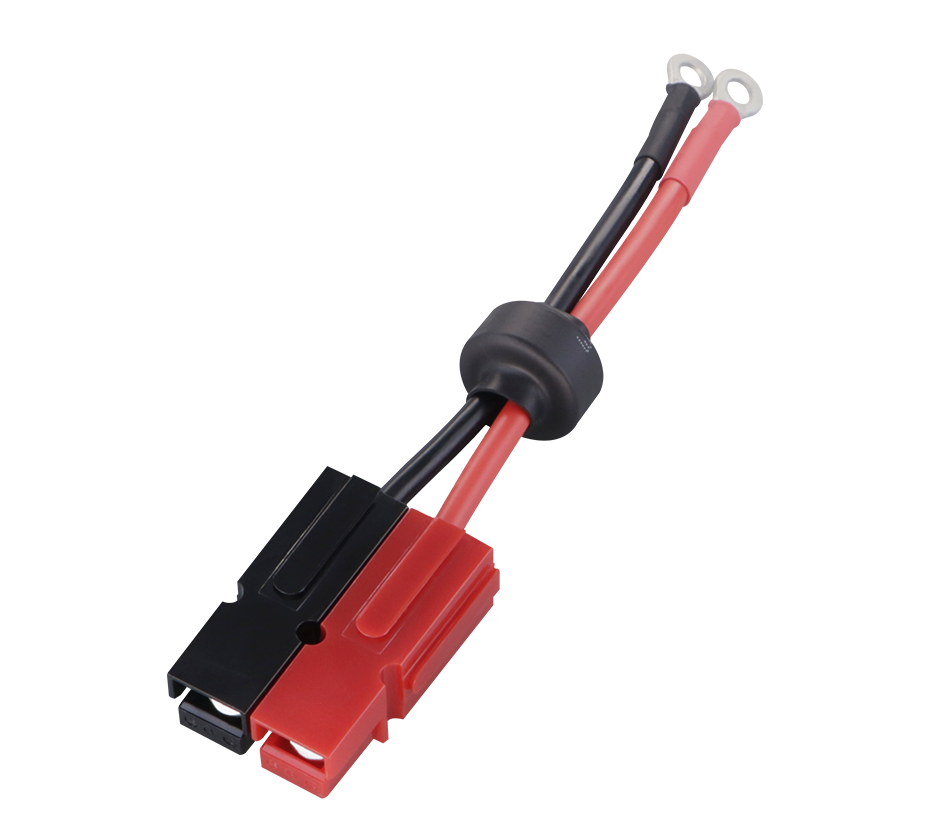
The international standard system is the core basis for the design, production, and application of data center high-current plugs. The IEC 60309 standard series, formulated and updated by the International Electrotechnical Commission, is the universal global standard for data center and industrial high-current plugs, consisting of two core parts: IEC 60309-1:2021 and IEC 60309-2:2021. IEC 60309-1:2021 stipulates the general safety requirements, structural design specifications, electrical performance parameters, and environmental adaptability standards for industrial plugs, fixed sockets, and electrical equipment inlets, with a maximum applicable voltage of 1000V and a maximum supported current of 800A, covering almost all high-current power connection scenarios of data centers . IEC 60309-2:2021 focuses on the dimensional compatibility and interchangeability of pin-and-sleeve structural accessories, standardizing the size, spacing, and assembly structure of plugs below 125A, ensuring that products from different manufacturers can achieve universal interchangeability, which is crucial for the standardized construction and later maintenance of data centers . In addition, North American data centers adopt NEMA standard high-current plug specifications, while European and most Asian data centers take IEC 60309 and CEE standards as the mainstream, forming a global standardized application system for high-current plugs. In addition to basic electrical standards, data center high-current plugs also need to meet IP protection level standards, flame retardant standards, and anti-aging standards, ensuring stable operation in high-density cabinet environments with high temperature, high humidity, and long-term continuous power-on conditions.
In terms of product classification, data center high-current plugs can be divided into multiple dimensions such as current specification, pole number, protection level, and application scenario, forming a complete product system. According to the rated current, the mainstream specifications used in data centers include 16A, 32A, 63A, and 125A, while 200A and above ultra-high current products are mainly used for main power distribution links of large-scale data center clusters . The 16A high-current plugs are mostly used for light-load auxiliary power scenarios in data centers, including equipment maintenance power, small auxiliary equipment power supply, and cabinet lighting power distribution, with low load power and frequent plugging and unplugging operations. The 32A specification is the most widely used universal model in medium and small data centers, suitable for medium-power PDU input interfaces, small CDU service panels, and commissioning box power interfaces, balancing current load capacity and product volume . The 63A high-current plugs are oriented to high-power cabinet power distribution and regional centralized power supply scenarios, supporting large-scale PDU and CDU cabinet main power input, load bank equipment power supply, and regional power distribution zone power switching, which is the core specification of current mainstream medium and large data center cabinet power distribution . The 125A and above ultra-high current plugs are applied to the main power connection of data center UPS systems, generator backup power access, and high-power modular power distribution equipment, undertaking the overall power transmission of the data center functional area.
According to the pole number configuration, data center high-current plugs are divided into 2P, 3P, 3P+E, 4P, and 5P types, adapting to different AC power supply systems. The 2P and 3P plugs are used for single-phase and three-phase pure power transmission scenarios respectively, while the 3P+E and 5P plugs with grounding poles are the mainstream choices for data center core equipment, which can realize reliable grounding protection, effectively prevent equipment leakage and electrostatic damage, and improve the safety of power supply systems . In terms of protection level, industrial-grade high-current plugs for data centers are mainly IP44 and IP67. IP44 products can prevent splashing water and solid particle intrusion, suitable for indoor cabinet internal power connection scenarios; IP67 high-protection plugs have dust-proof and short-term waterproof capabilities, suitable for outdoor power distribution interfaces, temporary power maintenance interfaces, and semi-open equipment areas of data centers, adapting to complex environmental conditions .
The core performance indicators of data center high-current plugs determine their operational stability in high-load scenarios, mainly including electrical performance, structural performance, environmental adaptability, and safety performance. In terms of electrical performance, low contact resistance is the primary core indicator. High-quality high-current plugs adopt high-purity copper conductors and silver alloy plating processes, which can effectively reduce contact resistance, avoid excessive heat generation during long-term high-current transmission, and reduce power loss. Long-term continuous current carrying capacity is another key indicator. Unlike ordinary plugs that can only bear intermittent current, data center high-current plugs need to maintain stable current transmission for 24 hours without overheating, and the temperature rise of the contact surface is strictly controlled within 30K to ensure no aging or melting of insulating materials . In addition, the products need to have strong anti-overload and anti-surge capabilities, which can withstand instantaneous current impact caused by equipment startup and power grid fluctuation, avoiding interface burnout and power supply interruption.
In terms of structural performance, modular design and locking structure are essential features of data center high-current plugs. The modular assembly structure is convenient for on-site installation, disassembly, and maintenance of data centers, reducing the time cost of equipment replacement and fault maintenance. The built-in anti-loosening locking mechanism can effectively avoid plug loosening and poor contact caused by equipment vibration, cabinet cooling fan vibration, and long-term thermal expansion and contraction, ensuring the stability of power connection . The mechanical plugging life of high-end products can reach more than 10,000 times, meeting the long-term service life requirements of data center infrastructure (more than 10 years). In terms of environmental adaptability, data center high-current plugs need to adapt to a wide temperature range of -25℃ to +85℃, resisting high-temperature aging in closed cabinets and low-temperature damage in outdoor equipment areas. The insulating shell is made of high-strength flame-retardant nylon and engineering plastic materials, which has excellent anti-aging, anti-corrosion, and flame-retardant properties, meeting UL94 V-0 flame retardant level, and will not spread fire in case of short circuit failure, ensuring the safety of cabinet equipment clusters .
The application scenarios of data center high-current plugs cover the entire power distribution chain of data centers, from front-end power input to terminal equipment power supply, forming a full-link application system. The first scenario is the main power input of power distribution equipment, including PDU and CDU main input interfaces of server cabinets. With the continuous improvement of server power consumption, a single AI server cabinet can reach 60-120kW power load, and traditional low-current C13/C14 plugs can no longer meet the demand. High-current plugs such as 32A and 63A are widely used for PDU main power access to support high-density power distribution of single cabinets . The second scenario is backup power system connection, including UPS equipment input and output interfaces and diesel generator access interfaces. As the core guarantee for data center uninterrupted power supply, UPS and generator systems require high-current plugs with ultra-high stability to realize fast power switching and continuous power transmission, avoiding data center downtime caused by grid power failure .
The third scenario is regional power distribution and temporary power maintenance. In large-scale data center parks, high-current plugs are used for power switching between regional power distribution cabinets and functional areas, as well as temporary power supply for equipment commissioning, maintenance, and fault repair. The high-protection IP67 plugs can adapt to complex on-site environments, ensuring safe and reliable temporary power consumption . The fourth scenario is modular data center power connection. Modular prefabricated data centers have become the mainstream construction mode in recent years. High-current plugs realize fast plug-in power connection between modular cabinet units and power distribution systems, realizing rapid deployment and flexible expansion of data center infrastructure, greatly shortening the construction cycle of data centers.
In the actual selection and deployment of data center high-current plugs, there are strict standardized principles to follow to avoid performance mismatch and potential safety hazards. First, the current and voltage specifications must be matched with the equipment load. The rated current of the plug must be 1.2-1.5 times the maximum working current of the equipment, reserving sufficient current margin to avoid long-term overload operation. Second, the protection level should be selected according to the deployment environment: indoor cabinet internal deployment adopts IP44 products, and outdoor and semi-open areas adopt IP67 high-protection products . Third, priority should be given to products that comply with international IEC standards and have authoritative certifications such as CE and UL, ensuring product interchangeability and quality reliability. Fourth, the structural design should consider the heat dissipation space of the cabinet. High-current plugs with integrated heat dissipation structures are preferred to reduce the temperature rise of the interface in high-load operation .
In terms of industry development trends, driven by the high-power density construction of AI data centers, data center high-current plugs are evolving toward higher current density, miniaturization, intelligentization, and green energy saving. First, high current density integration has become the core development direction. Under the premise of unchanged product volume, the product current carrying capacity is continuously improved through conductor material optimization and structural innovation, adapting to the ultra-high power load of 300kW+ single rack in future AI data centers . Second, intelligent monitoring functions are gradually integrated. New-generation high-current plugs are equipped with built-in temperature, current, and voltage monitoring modules, which can realize real-time monitoring of interface operating status, upload data to the data center management platform, and realize early warning of overheating, overload, and poor contact faults, improving the intelligent operation and maintenance level of data centers.
Third, green and low-carbon design is further popularized. Manufacturers adopt high-efficiency low-resistance conductor materials and optimized structural designs to reduce contact loss and heat generation, effectively improving the energy utilization rate of data center power systems and reducing the PUE (Power Usage Effectiveness) value of data centers, which is in line with the global energy-saving and emission-reduction requirements of data center industries . Fourth, modular and quick-install design is continuously upgraded, realizing tool-free quick plugging and installation, reducing on-site construction and maintenance costs, and adapting to the rapid expansion and flexible deployment needs of modern large-scale data centers. In addition, with the popularization of 800V high-voltage DC power supply architecture in data centers, high-current plugs are also developing toward high-voltage DC compatibility, realizing the iterative upgrade of AC-DC universal connection performance .
In summary, data center high-current plugs are the key basic components supporting the safe and efficient operation of modern data center power systems. With the continuous upgrading of data center power density and computing capacity, the technical requirements for high-current plugs in terms of current carrying capacity, safety, stability, and intelligence are constantly improving. The standardized design, high-reliability performance, and scalable application characteristics of high-current plugs lay a solid foundation for the large-scale construction and high-efficiency operation of cloud data centers and AI computing centers. In the future, with the continuous innovation of material technology and structural design, high-current plugs will further adapt to the ultra-high power density and intelligent operation and maintenance needs of next-generation data centers, and become an important support for the digital infrastructure industry iteration.
 Yang.taya@aitmpower.com
Tel: 15382891313
Phone: 0769-88878951
Fax: 0769-88878955
Wechat: 15382891313


 CN
 CN
 Home >