
 2026-10-14
 2
Patient monitors are core life support and vital sign monitoring equipment in modern clinical medicine, widely used in hospital wards, intensive care units (ICU), emergency departments, operating rooms, and pre-hospital emergency rescue scenarios. They are responsible for real-time collection, display, storage, and transmission of key patient vital sign data including electrocardiogram (ECG), blood pressure, blood oxygen saturation (SpO2), respiratory rate, body temperature, and heart rate, providing accurate and continuous data support for doctors' diagnosis, treatment decision-making, and patient condition monitoring . As portable and mobile medical electronic equipment, patient monitors rely on built-in rechargeable batteries and external power supply systems to realize uninterrupted operation, and battery connectors are the key bridge connecting batteries and monitor hosts, undertaking the core functions of power transmission, circuit protection, and safe charging and discharging. Unlike ordinary consumer electronic battery connectors, battery connectors for patient monitors need to meet ultra-high safety, stability, durability, and medical standard compliance requirements, because their performance directly determines the continuous working ability and operational safety of monitors, and even affects the life safety of critically ill patients. This article conducts a comprehensive and in-depth discussion on the functional value, core performance standards, structural design characteristics, classification and application, technical advantages, industry application pain points, and future development trends of patient monitor battery connectors, systematically expounding the important role of such components in ensuring the stable operation of patient monitoring equipment and clinical medical safety.
The core functional value of battery connectors for patient monitors is reflected in three key dimensions: reliable power transmission, safe circuit protection, and stable equipment operation. First, in terms of power transmission, patient monitors need to maintain 24-hour uninterrupted monitoring in clinical scenarios, especially for critically ill patients in ICU and emergency rescue patients. Any power interruption will lead to the interruption of vital sign data monitoring, resulting in missing key disease change data and even delaying rescue and treatment opportunities . High-quality battery connectors can achieve low-resistance and high-stability power transmission, ensuring that the battery can continuously and stably supply power to the monitor host, avoiding voltage drop, current fluctuation, and power supply interruption caused by poor contact, and realizing seamless switching between external mains power supply and built-in battery power supply .
Second, in terms of circuit safety protection, patient monitors belong to Class II medical electrical equipment, and electrical safety is the primary design indicator. Battery connectors integrate over-current protection, over-voltage protection, short-circuit protection, and anti-reverse connection functions, which can effectively avoid battery damage, equipment burnout, and even electric shock accidents caused by abnormal current and voltage during charging and discharging processes . In the process of clinical mobile monitoring and equipment handling, accidental collision and pulling may cause circuit abnormalities, and the protection mechanism of battery connectors can quickly cut off the circuit in case of faults, locking the risk within the component level and ensuring the safety of equipment, medical staff, and patients.
Third, in terms of equipment operation stability, patient monitors are frequently moved, adjusted, and cleaned in clinical work scenarios, and the internal battery and connector system need to withstand long-term vibration, extrusion, and temperature and humidity changes . Professional medical-grade battery connectors adopt anti-loose and anti-vibration structural design, which can maintain stable contact state during long-term mobile use, avoid power failure and equipment shutdown caused by loose connectors, ensure the continuous and stable operation of monitors, and provide complete and continuous vital sign data for clinical nursing and diagnosis .
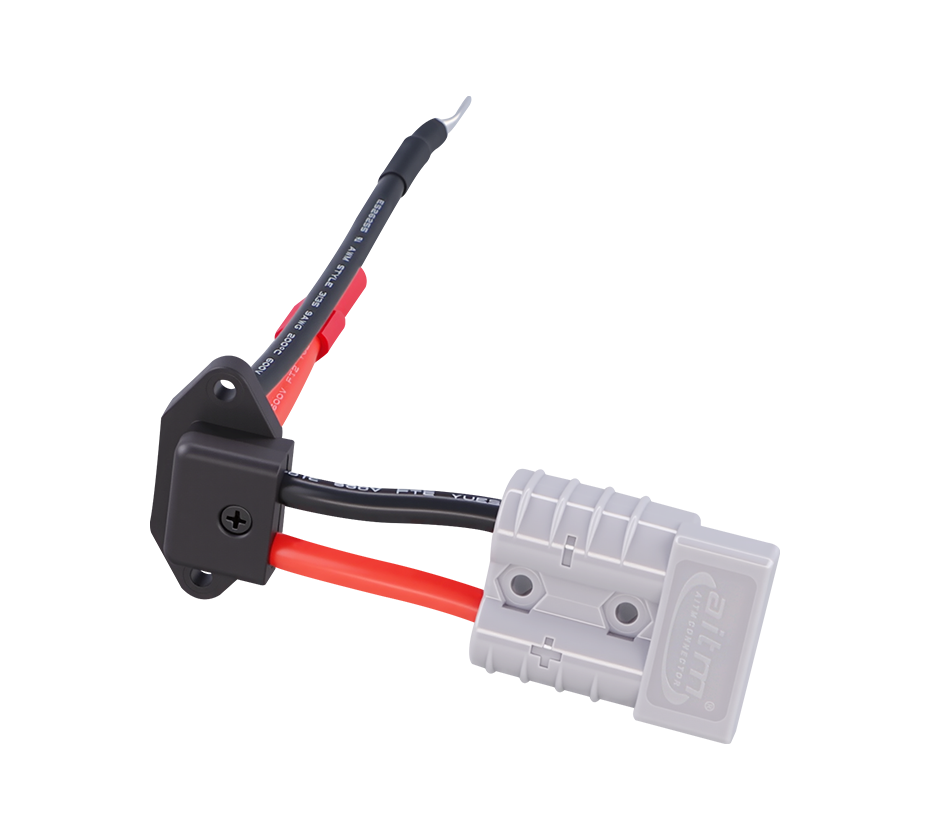
Battery connectors for patient monitors have extremely strict core performance requirements, covering electrical performance, mechanical performance, environmental adaptability, safety compliance, and biocompatibility, forming a unique medical-grade performance system different from consumer electronic connectors. In terms of electrical performance, low contact resistance is the most basic indicator. The contact resistance of medical monitor battery connectors is strictly controlled below 10mΩ, which minimizes power loss and heat generation during power transmission, avoids equipment overheating failure caused by excessive heat accumulation, and ensures high-efficiency power supply . At the same time, the connectors have excellent current carrying capacity, which can meet the high-current instantaneous power demand of the monitor during high-intensity data processing and sensor multi-channel simultaneous acquisition, ensuring stable current output without fluctuation.
In terms of charging and discharging stability, the connectors support intelligent charging and discharging matching, which can adapt to the lithium battery power supply system commonly used in patient monitors, realize stable constant current and constant voltage charging, avoid over-charging and over-discharging of the battery, effectively extend the battery service life, and reduce the equipment maintenance cost . In terms of insulation performance, the connectors adopt high-strength medical-grade insulating materials, with ultra-high insulation resistance, which completely isolates the power circuit from the equipment shell and signal circuit, avoids signal interference caused by power circuit leakage, ensures the accuracy of vital sign monitoring data, and eliminates electric shock safety hazards .
In terms of mechanical performance, patient monitor battery connectors need to have excellent plugging durability and anti-vibration and anti-loose capabilities. Clinical monitors need regular battery replacement and equipment maintenance, so the connectors are required to support more than 1,000 stable plugging cycles, and the contact performance and structural stability will not decay after long-term repeated plugging . In view of the frequent movement and vibration of medical equipment, the connectors adopt elastic contact structure and locking and anti-loose design, which can resist vibration and impact in daily use, avoid contact separation and power failure caused by equipment shaking, and ensure the reliability of power connection in mobile monitoring scenarios such as ward rounds and emergency rescue .
Environmental adaptability is a key performance indicator adapted to clinical medical scenarios. Hospital environments have complex temperature and humidity changes, and equipment surfaces need frequent cleaning and disinfection with alcohol, disinfectant, and other chemical reagents. Medical-grade battery connectors adopt corrosion-resistant and aging-resistant materials, which can resist the corrosion of various medical disinfectants and humid environments, and will not have performance degradation, shell aging, and contact oxidation . The working temperature range can cover -20°C to +60°C, adapting to the temperature changes of ward indoor environment, outdoor emergency environment, and medical equipment operation heat generation, maintaining stable performance in all clinical scenarios . At the same time, the fully sealed structural design can prevent dust, liquid, and moisture from entering the connector interior, avoiding circuit short circuit and contact failure caused by environmental pollution, and improving the environmental adaptability and service life of the product .
Safety compliance and biocompatibility are the essential attributes of medical monitor battery connectors. All products must comply with IEC 60601-1 medical electrical equipment safety standards and ISO 13485 medical device quality management system certification . The materials are strictly selected to meet ISO 10993 biocompatibility standards, with non-toxic, odorless, non-sensitization, and non-cytotoxic characteristics. Even if the equipment shell is accidentally damaged and the connector is exposed, it will not cause harm to patients and medical staff . In addition, the connectors have flame-retardant and high-temperature resistant characteristics, which can resist local high temperature generated by circuit faults, avoid combustion and smoke generation, reduce the risk of equipment fire, and improve the overall safety level of medical equipment .
According to structural form, connection mode, and functional characteristics, battery connectors for patient monitors are mainly divided into three types: board-to-battery connectors, wire-to-battery connectors, and push-pull quick-release battery connectors, which are applied to different types and structural designs of patient monitors. Board-to-battery connectors are mainly used in integrated fixed patient monitors, with a compact vertical or horizontal plug-in structure, directly welded and fixed on the equipment main control board, and connected with the battery contact shrapnel . This type of connector has a simple structure, stable connection, small occupied space, and low power loss, which is suitable for bedside fixed monitors with low battery replacement frequency, realizing long-term stable power supply connection.
Wire-to-battery connectors are composed of connector terminals and connecting wires, with flexible wiring characteristics, which can adapt to the internal space layout of various portable and handheld patient monitors . The flexible wire design can avoid structural extrusion and wire breakage caused by equipment vibration and deformation, and is widely used in portable vital sign monitors, emergency handheld monitors, and wearable monitoring equipment. It can realize flexible layout of internal circuits, optimize equipment space utilization, and improve the structural flexibility of miniaturized monitoring equipment.
Push-pull quick-release battery connectors are specially designed for mobile monitors that need frequent battery replacement, adopting self-locking quick-plug structure, which can realize one-handed quick disassembly and assembly of batteries without tools . In emergency rescue and mobile ward monitoring scenarios, medical staff can quickly replace the battery through the quick-release connector, realizing uninterrupted power supply of the monitor, avoiding monitoring interruption caused by battery power exhaustion, and greatly improving the efficiency of clinical emergency treatment and mobile monitoring. This type of connector has anti-drop and anti-loose locking function, which will not be disconnected accidentally during equipment movement and vibration, balancing the convenience of operation and the reliability of connection .
In addition, according to functional differentiation, battery connectors for patient monitors can also be divided into ordinary power supply connectors and intelligent detection battery connectors. The intelligent detection type integrates temperature detection, power detection, and fault feedback functions, which can real-time monitor the battery temperature, remaining power, and charging and discharging state, feed back the data to the monitor host system, and realize intelligent protection functions such as over-temperature power-off, low-power reminder, and fault alarm . This intelligent connector is widely used in high-end multi-functional patient monitors, improving the intelligent management level of equipment power supply system and the safety of equipment operation.
Battery connectors for patient monitors have extremely high practical application value in clinical medical scenarios, and their performance stability directly affects the monitoring effect of patient vital signs and the safety of clinical diagnosis and treatment. In ICU intensive care scenarios, critically ill patients need 24-hour continuous vital sign monitoring, and the monitor must maintain uninterrupted operation . High-stability battery connectors ensure seamless switching between mains power and battery power supply. When the ward power is suddenly cut off, the battery can instantly take over the power supply, avoiding monitoring interruption, ensuring that doctors can continuously obtain patient vital sign change data, and providing reliable data support for critical illness rescue and condition evaluation.
In emergency pre-hospital rescue and outdoor medical scenarios, patient monitors are in a mobile working state for a long time, and equipment vibration, collision, and temperature and humidity changes are frequent . The anti-vibration, anti-corrosion, and high-stability characteristics of medical-grade battery connectors ensure that the equipment can work stably in harsh mobile environments, avoid equipment shutdown and monitoring failure caused by connector faults, and ensure the smooth progress of outdoor rescue and mobile medical work. In daily ward monitoring work, frequent equipment movement, cleaning, and disinfection will not affect the connection performance of the connectors, reducing the failure rate of monitoring equipment, reducing the maintenance cost of hospital equipment, and improving the efficiency of clinical nursing work .
In terms of equipment service life and economic benefits, high-quality medical battery connectors have long mechanical life and stable electrical performance, which can match the whole life cycle of patient monitors, avoid frequent replacement of connectors caused by performance attenuation, and reduce the equipment operation and maintenance cost of medical institutions . At the same time, the efficient power transmission performance of the connectors reduces power loss and battery energy consumption, extends the battery endurance time of portable monitors, reduces the frequency of battery charging and replacement, and improves the convenience of clinical use. In addition, the perfect safety protection function of the connectors can effectively avoid equipment damage and safety accidents caused by power circuit faults, reducing the economic loss and medical safety risks caused by equipment faults .
At present, with the continuous upgrading of patient monitor technology towards miniaturization, portability, intelligence, and long endurance, the industry also faces some technical pain points and challenges in the application of battery connectors. First, the miniaturization of equipment puts forward higher requirements for connector integration. Portable and wearable monitors are becoming smaller and lighter, requiring battery connectors to be more compact in size, while maintaining high current carrying capacity and safety protection performance, which brings great challenges to structural design and precision manufacturing . Second, the contradiction between long endurance demand and connector power loss is prominent. Modern monitors have more and more powerful functions, more sensor channels, and higher data processing power, resulting in increasing equipment power consumption. It is necessary to further reduce the contact resistance and power loss of connectors to improve battery energy utilization and extend equipment endurance time .
Third, the intelligent monitoring function puts forward new requirements for connector multi-functional integration. High-end intelligent monitors need to realize real-time monitoring of battery status, fault self-diagnosis, and intelligent power management, requiring battery connectors to integrate more detection and sensing functions, realizing the integration of power transmission and signal detection, which increases the complexity of connector design and production . Fourth, the harsh clinical environment puts forward higher requirements for connector durability. Long-term repeated disinfection, vibration, and temperature and humidity changes easily cause aging and performance attenuation of ordinary connectors, and how to further improve the environmental resistance and service life of products is an important direction for industry technical optimization .
Looking forward to the future development of battery connectors for patient monitors, driven by intelligent medical treatment, portable medical treatment, and green medical development trends, the products will show four major development directions: miniaturized high integration, intelligent multi-function, low energy consumption and long life, and green safety and environmental protection. In terms of miniaturized integration, with the breakthrough of precision micro-processing technology and new composite materials, battery connectors will realize smaller size and higher current density, meet the ultra-thin and miniaturized design needs of wearable and portable monitors, and optimize the internal space structure of equipment .
In terms of intelligent multi-function, future battery connectors will further integrate battery temperature detection, power monitoring, fault early warning, and data transmission functions, realize real-time interaction between battery status and monitor host system, support intelligent power management, automatic fault alarm, and adaptive charging and discharging regulation, greatly improving the intelligent operation level and safety redundancy of monitoring equipment . In terms of low energy consumption and long life, through the optimization of contact material formula and structural design, the contact resistance of connectors will be further reduced, power transmission efficiency will be improved, and battery energy loss will be minimized. At the same time, the anti-aging and anti-fatigue performance of products will be enhanced, the number of plugging cycles and service life will be extended, and the long-term stable operation of equipment will be guaranteed .
In terms of green safety and environmental protection, future products will adopt fully degradable low-carbon environmental protection materials on the premise of meeting medical safety standards, reduce medical plastic waste, and meet the sustainable development requirements of the medical industry. At the same time, the flame-retardant, anti-corrosion, and biocompatibility of materials will be further optimized to achieve higher-level clinical safety protection . In addition, with the popularization of remote patient monitoring and home medical monitoring equipment, battery connectors will develop towards universal standardization and personalized customization, forming standardized product systems suitable for different types of monitoring equipment, while supporting customized design for special home medical and mobile medical scenarios, to meet the diversified development needs of the global patient monitoring equipment industry .
In conclusion, battery connectors for patient monitors are small but vital core components in modern medical monitoring equipment. Their excellent electrical safety, mechanical stability, environmental adaptability, and medical compliance performance are the key guarantees for the continuous, stable, and safe operation of patient monitors. With the continuous innovation and upgrading of medical monitoring technology, the performance requirements for battery connectors will continue to improve. The continuous technological iteration and product optimization of the industry will further empower the high-quality development of patient monitoring equipment, provide more reliable technical support for clinical vital sign monitoring, emergency rescue, and remote medical treatment, and play an indispensable role in improving the level of global medical care and ensuring patient life safety.
 Yang.taya@aitmpower.com
Tel: 15382891313
Phone: 0769-88878951
Fax: 0769-88878955
Wechat: 15382891313


 CN
 CN
 Home >