
 2026-10-14
 3
The rollout of 5G wireless communication technology has revolutionized global telecommunications infrastructure, bringing unprecedented breakthroughs in high-speed data transmission, ultra-low latency, massive device connectivity, and reliable network coverage. Unlike 4G and previous generation communication systems that adopt separate signal transmission and power supply architectures, 5G networks impose stricter requirements on miniaturization, integration, high efficiency, and stability of terminal and base station hardware components. As a core integrated interconnection component in the 5G industrial chain, 5G Signal + Power Combination Connectors, also known as 5G hybrid signal-power connectors, have completely changed the traditional discrete connection mode of independent signal connectors and power connectors. By integrating high-frequency signal transmission channels and high-current power supply terminals into a single compact connector unit, these connectors solve the pain points of bulky installation, complex wiring, poor stability, and high signal interference in traditional connection schemes, becoming an indispensable core component for 5G base stations, remote radio heads (RRH), micro-pico base stations, antenna modules, and intelligent communication terminal equipment.
The essential design logic of 5G Signal + Power Combination Connectors originates from the unique technical requirements of 5G communication scenarios. 5G networks adopt two mainstream frequency bands: sub-6GHz low and medium frequency bands and millimeter-wave high frequency bands. The sub-6GHz frequency band undertakes the main coverage and capacity bearing of 5G networks, while the millimeter-wave frequency band provides ultra-high bandwidth and ultra-fast transmission speed for high-density hotspot scenarios. Both frequency bands put forward extremely high standards for the signal integrity, high-frequency stability, and anti-interference ability of connectors. At the same time, 5G base stations and radio frequency equipment have higher power consumption than 4G equipment. The distributed deployment of micro base stations and integrated antenna equipment requires on-site power supply while realizing high-speed signal transmission, which forces the communication industry to upgrade from separate signal and power connections to integrated hybrid connections. 5G Signal + Power Combination Connectors perfectly adapt to this industry transformation trend, realizing the dual functions of high-speed signal transmission and stable power supply through integrated structural design, and greatly optimizing the overall performance and installation efficiency of 5G communication equipment.
In terms of structural design, 5G Signal + Power Combination Connectors adopt a modular hybrid contact structure, which is scientifically divided into independent signal contact areas and power contact areas inside the insulator, completely isolating high-frequency signal transmission and high-current power transmission to avoid mutual interference. The signal contacts are designed with high-precision radio frequency (RF) terminals, usually adopting 50-ohm impedance matching design, which is the universal impedance standard for 5G wireless communication RF systems, ensuring no signal reflection, low insertion loss, and high return loss during high-frequency signal transmission. These signal contacts support transmission frequencies up to 15GHz and above, fully covering the full frequency range of 5G sub-6GHz and mainstream millimeter-wave frequency bands, and can stably bear high-speed data transmission rates of 10Gbit/s and higher. The power contact area adopts thickened conductive terminals and large-current contact structures, with power contacts rated for 20A to 40A high-current transmission, meeting the continuous power supply demand of 5G high-power radio frequency modules and intelligent antenna arrays.
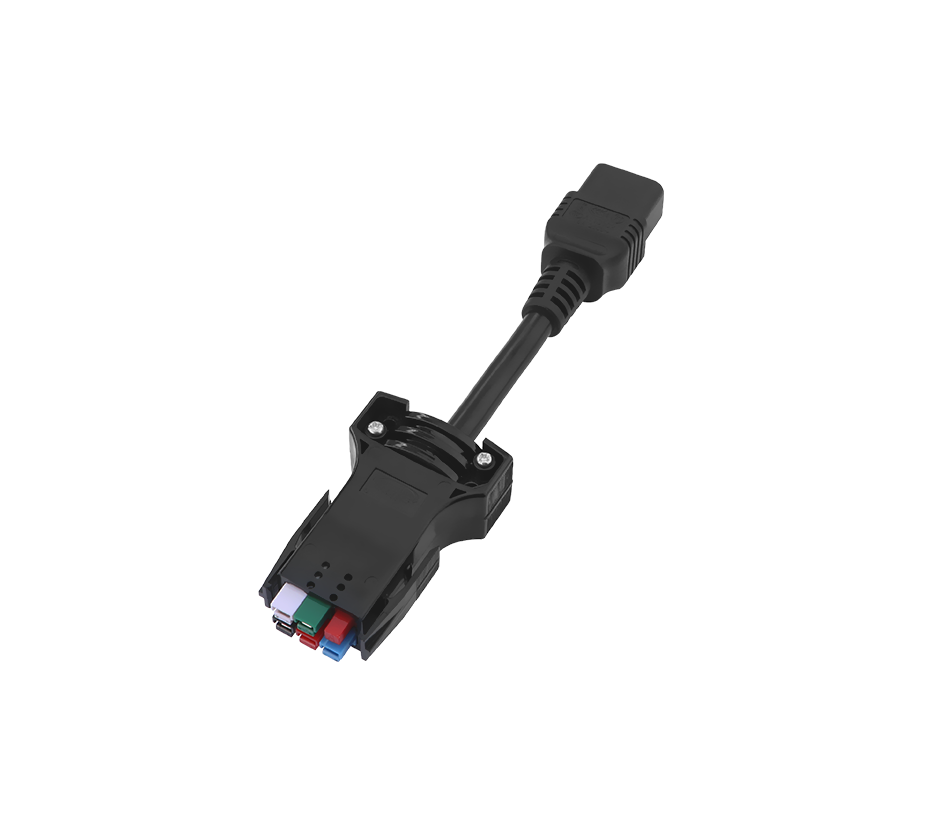
The insulator of 5G Signal + Power Combination Connectors is made of high-performance thermoplastic polyester material that meets UL 94V-0 flame retardant grade, which has excellent high-temperature resistance, low-temperature toughness, chemical corrosion resistance, and insulation performance. This material can maintain stable structural size and insulation performance in the operating temperature range of -30°C to +55°C, and can adapt to harsh outdoor working environments such as high temperature, low temperature, humidity, and dust in 5G base station deployment scenarios. In addition, the overall structure of the connector adopts a compact miniaturized design, with a ultra-fine pitch of 0.35mm for partial high-density models, which greatly saves the PCB board layout space of communication equipment and provides more design margin for the miniaturization and integration of 5G terminal equipment. Most products are equipped with metal shielding shells, which effectively suppress electromagnetic interference (EMI) and electromagnetic susceptibility (EMS) problems in high-frequency transmission, ensuring ultra-high signal integrity in complex electromagnetic environments.
In terms of functional classification, 5G Signal + Power Combination Connectors can be divided into multiple configuration specifications according to application scenarios and contact combinations, covering mainstream industry application needs. The classic configurations include 2 RF signal contacts + 1 power contact, 4 RF signal contacts + 2 power contacts, and multi-channel signal hybrid power configurations. Among them, the 2RF+1Power configuration is widely used in 5G mobile terminal antenna modules and small micro base stations, which can meet the signal transceiving and power supply needs of single-channel and dual-channel antenna systems; the 4RF+2Power high-density configuration is applied in high-power macro base stations and beamforming antenna arrays, supporting multi-channel parallel signal transmission and stable high-power power supply. In addition, according to the installation method, it can be divided into vertical welding, right-angle welding, plug-in locking, and push-pull self-locking types. The push-pull locking structure is particularly suitable for narrow-space installation scenarios of 5G equipment, realizing fast plugging and unplugging, while ensuring reliable connection and preventing loose contact caused by equipment vibration and environmental vibration.
The core performance advantages of 5G Signal + Power Combination Connectors are fully reflected in three dimensions: performance improvement, cost optimization, and space saving. In terms of performance, the integrated isolation design completely avoids the crosstalk interference between high-current power transmission and high-frequency signal transmission in traditional separate wiring, effectively reducing signal attenuation and bit error rate. The professional impedance matching design and metal shielding structure ensure low PIM (Passive Intermodulation) performance, which is a key technical index of 5G communication connectors. Low PIM performance can eliminate signal distortion and frequency interference in multi-signal parallel transmission, ensuring the stability and accuracy of 5G network data transmission. In terms of cost, the integrated design reduces the number of connectors, wiring harnesses, and fixing accessories required for equipment, simplifies the production and assembly process of communication equipment, and significantly reduces material costs and labor assembly costs for equipment manufacturers. In terms of space, a single hybrid connector replaces multiple independent signal and power connectors, greatly compresses the internal interconnection space of equipment, and promotes the lightweight and miniaturization upgrade of 5G communication equipment, which is particularly important for densely deployed urban 5G micro base stations and vehicle-mounted 5G communication equipment.
In practical application scenarios, 5G Signal + Power Combination Connectors cover the entire 5G communication industry chain, including operator network infrastructure, industrial Internet communication equipment, intelligent transportation vehicle-mounted communication, and consumer electronic terminal equipment. In the field of 5G base station infrastructure, these connectors are used for the internal connection of remote radio heads and antenna feeders, realizing integrated signal transmission and power supply between base station main control modules and radio frequency antenna modules, solving the problem of complex wiring of traditional feeder systems. In the field of industrial 5G communication, they are applied to industrial 5G gateways, intelligent sensor communication modules, and automated production line communication equipment, adapting to high-frequency data transmission and stable power supply requirements in industrial complex electromagnetic and harsh environmental conditions. In the field of intelligent transportation, vehicle-mounted 5G communication modules and automatic driving sensing equipment rely on high-stability hybrid connectors to realize real-time transmission of high-speed vehicle networking signals and continuous power supply, ensuring the reliability of vehicle-mounted communication systems. In consumer electronics such as 5G smartphones, tablet computers, and wearable devices, miniaturized hybrid connectors realize the integration of antenna signal transmission and equipment internal power distribution, helping terminal equipment achieve thinner and more integrated design.
With the continuous iteration of 5G technology and the large-scale commercial application of 5G-A and 6G pre-research technologies, the technical upgrading direction of 5G Signal + Power Combination Connectors is becoming increasingly clear. In the future, such connectors will develop towards higher frequency, higher current, higher density, stronger environmental adaptability, and intelligent monitoring. In terms of high-frequency performance, the product will support higher frequency bands above 20GHz to adapt to the ultra-high bandwidth transmission needs of 5G-A and future 6G networks; in terms of power performance, it will further improve the current carrying capacity to meet the power supply needs of high-power integrated communication equipment; in terms of structural design, it will adopt higher-density pin arrangement to realize more multi-channel signal and power integrated transmission; in terms of intelligence, it will integrate temperature monitoring, current detection, and connection state sensing functions, realizing real-time monitoring of connector operating state and providing data support for intelligent operation and maintenance of 5G networks. In addition, with the rapid development of green communication technology, low-power loss, low-carbon environmental protection, and recyclable new materials will be widely used in the production of hybrid connectors, reducing the energy consumption and environmental pollution of communication equipment operation.
In summary, 5G Signal + Power Combination Connectors, as a new generation of integrated interconnection components tailored for 5G communication systems, break through the technical limitations of traditional discrete connection schemes. Through integrated structural design, professional high-frequency signal processing technology, and reliable high-current power supply performance, they solve multiple industry pain points in 5G equipment connection, and provide core hardware support for the high-performance, miniaturized, and low-cost development of 5G communication equipment. With the continuous deepening of 5G network construction and the expansion of 5G industry application scenarios, the market demand for 5G Signal + Power Combination Connectors will continue to grow, and the product technology will continue to iterate and upgrade, becoming an important cornerstone supporting the sustainable development of the global 5G communication industry.
 Yang.taya@aitmpower.com
Tel: 15382891313
Phone: 0769-88878951
Fax: 0769-88878955
Wechat: 15382891313


 CN
 CN
 Home >