
 2026-10-14
 3
The rapid global deployment of 5G communication networks has revolutionized wireless transmission technology, bringing ultra-low latency, ultra-high bandwidth, and massive device connectivity capabilities to modern communication systems. As the core hardware component of 5G base station infrastructure, 5G base station quick-connect connectors undertake the critical tasks of signal transmission, equipment interconnection, and stable power supply between base station internal modules, antenna systems, and remote radio units (RRU). Unlike traditional communication connectors that rely on complicated screw locking tools and professional installation processes, 5G base station quick-connect connectors adopt innovative quick-locking structural design, realizing tool-free plugging and unplugging, rapid positioning and stable locking, which perfectly adapts to the large-scale, high-density and high-efficiency construction requirements of 5G base stations. With the continuous expansion of 5G macro base stations, micro base stations and distributed antenna systems, quick-connect connectors have become an indispensable core component of 5G communication infrastructure, and their performance, reliability and installation efficiency directly determine the construction progress, operation stability and later maintenance cost of the entire 5G network.
5G communication technology puts forward more stringent technical requirements for connectors compared with 4G and previous generation communication technologies. First of all, 5G networks adopt high-frequency signal transmission, covering sub-6GHz and millimeter-wave frequency bands, which requires connectors to have extremely low signal loss, low passive intermodulation (PIM) and high shielding performance to avoid signal distortion and interference during high-speed transmission. Secondly, 5G base stations are deployed in a wide range of scenarios, including urban high-rise roofs, street lamp poles, suburban open areas and mountainous remote areas, most of which are exposed to outdoor harsh environments for a long time, so quick-connect connectors must have excellent waterproof, dustproof, corrosion-resistant and high and low temperature resistance. In addition, 5G network construction has the characteristics of large quantity and short cycle. The traditional connector installation mode with complex operation and long construction period can no longer meet the market demand. The quick-connect design greatly simplifies the construction process, reduces the technical threshold of construction personnel, and improves the overall efficiency of network construction. At the same time, in the later operation and maintenance stage, the quick plugging and unplugging feature can realize rapid equipment replacement and fault troubleshooting, effectively reducing network downtime and maintenance cost.
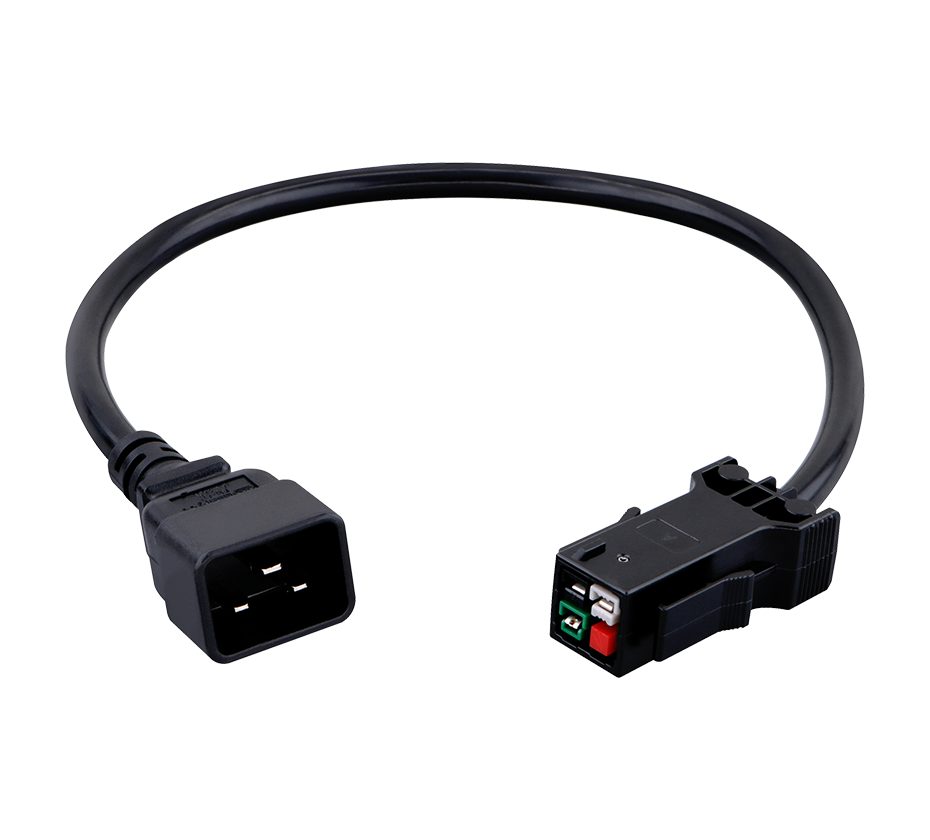
In terms of structural design, 5G base station quick-connect connectors mainly adopt quick-lock mechanisms such as snap-in locking, rotary quick locking and push-pull self-locking, abandoning the traditional multi-turn screw fixing structure. The snap-in quick-connect connector realizes one-step plugging and automatic locking through the elastic buckle structure inside the shell. The operator can complete the connection by directly inserting the male and female heads in place without rotating and screwing, and the internal buckle can form a stable mechanical limit to prevent loose connection caused by external vibration and wind force. The rotary quick-locking connector optimizes the thread structure, adopts a half-turn or quarter-turn locking design, which greatly reduces the rotating stroke compared with the traditional full thread, and can complete locking and fixing in a short time, taking into account the stability of threaded connection and the efficiency of quick connection. The push-pull self-locking quick connector realizes automatic locking and unlocking through internal mechanical linkage structure. The connection is completed by pushing the connector in place, and the unlocking can be realized by gently pulling the outer shell, which is very suitable for narrow construction spaces such as tower tops and equipment gaps, and is convenient for one-handed operation of construction personnel wearing protective gloves.
In terms of product classification, 5G base station quick-connect connectors can be divided into RF quick-connect connectors, optical fiber quick-connect connectors and power quick-connect connectors according to their functional applications, covering the three core transmission requirements of radio frequency signal, optical signal and power supply of 5G base stations. RF quick-connect connectors are mainly used for signal connection between base station main equipment, radio frequency units and antennas. Common models include 4.3-10 quick connectors, SMP quick connectors and DIN quick connectors. Among them, 4.3-10 quick connectors are the most widely used in 5G macro base stations, with a compact appearance, low PIM performance (≤-150dBc) and excellent high-frequency transmission performance, which can effectively ensure the stability of 5G high-frequency signal transmission. It adopts a tool-free hand-tightening quick locking mode, which can complete installation in seconds, and has good compatibility with mainstream 5G base station equipment of various manufacturers. SMP quick connectors are miniaturized high-frequency connectors, supporting DC-40GHz wide frequency band transmission, with small size and high integration, which are widely used in 5G micro base stations and indoor distributed systems, meeting the high-density wiring requirements of small-space equipment.
Fiber quick-connect connectors are core components of 5G FTTA (Fiber to the Antenna) architecture, mainly including ODC quick connectors, FullAXS quick connectors and modified LC quick connectors. Different from traditional fiber connectors that need professional fusion splicing and tool-assisted installation, 5G fiber quick-connect connectors realize pre-terminated production in the factory. The field construction only needs quick plugging and docking, eliminating the complex fusion process, greatly reducing the technical requirements for construction personnel, and improving the success rate and efficiency of fiber connection. ODC outdoor fiber quick connectors adopt threaded quick-locking structure and IP67 high-level waterproof design, with built-in precision guide pins, supporting blind plugging operation, which is very suitable for outdoor base station tower top wiring scenarios. FullAXS quick connectors optimize the outer protective shell on the basis of traditional LC interfaces, with strong environmental adaptability, which can resist extreme temperature changes, salt spray corrosion and dust intrusion, and maintain stable optical transmission performance in long-term outdoor working conditions.
Power quick-connect connectors are responsible for the power supply connection of 5G base station equipment, RRU and supporting auxiliary equipment. They adopt multi-core integrated quick connection design, which can realize the simultaneous transmission of strong current power and weak current signal. The product has over-current protection, insulation protection and anti-reverse plugging design, which effectively avoids safety hazards such as short circuit and electric leakage during equipment operation. The quick-locking structure ensures that the power connection is firm and reliable, and will not be loose or disconnected due to external vibration, wind load and temperature change, ensuring the continuous and stable power supply of 5G base station equipment. At the same time, the tool-free disassembly feature facilitates the rapid replacement of faulty equipment and power line maintenance, ensuring the uninterrupted operation of the base station network to the greatest extent.
In terms of material selection, 5G base station quick-connect connectors adopt high-performance engineering materials and metal conductive materials to meet the dual requirements of mechanical stability and environmental adaptability. The connector shell is mostly made of high-strength aluminum alloy, brass alloy and high-grade flame-retardant engineering plastics. The metal shell is treated with gold plating, nickel plating and passivation, which has excellent anti-corrosion, anti-oxidation and anti-interference capabilities, and can resist salt spray corrosion, rainwater erosion and ultraviolet aging in outdoor environments for a long time. The internal insulating parts are made of high-temperature resistant and flame-retardant PBT, PA66 and other materials, which can maintain stable insulating performance in the temperature range of -40℃ to +85℃, avoiding insulation aging and breakdown caused by extreme temperature changes. The conductive contact parts adopt high-precision elastic contact structure, with good electrical conductivity and mechanical fatigue resistance, which can ensure stable contact resistance after thousands of times of plugging and unplugging, and avoid signal attenuation and power fluctuation caused by poor contact.
The core performance advantages of 5G base station quick-connect connectors are mainly reflected in installation efficiency, transmission performance, environmental reliability and economic benefits. In terms of installation efficiency, the tool-free quick plugging and unplugging design reduces the installation time of a single connector from several minutes of traditional products to a few seconds, and the construction efficiency is increased by more than 80%. It avoids the dependence on professional tools and skilled construction personnel, greatly reduces the labor cost of 5G network construction, and shortens the overall construction cycle of the project. In terms of transmission performance, the optimized structural design and high-precision manufacturing process make the connector have extremely low insertion loss and return loss, excellent PIM index and electromagnetic shielding performance, which can fully meet the high-speed, low-latency and anti-interference transmission requirements of 5G sub-6GHz and millimeter-wave signals, and effectively ensure the clarity and stability of 5G network communication signals.
In terms of environmental reliability, most 5G base station quick-connect connectors reach IP67 and above waterproof and dustproof grade, which can completely prevent dust intrusion and resist rainwater splashing and short-term immersion. The products have passed professional environmental tests such as high and low temperature cycle test, salt spray test, vibration test and mechanical impact test, and can operate stably in harsh outdoor environments such as high temperature, severe cold, humidity, salt fog and strong wind for a long time, with a service life of more than 10 years. In terms of economic benefits, the quick-connect design reduces the failure rate of on-site construction, avoids signal faults and equipment damage caused by improper installation, and reduces the later operation and maintenance pressure. At the same time, the integrated modular design reduces the types of on-site construction tools and auxiliary materials, further saving the overall construction and operation cost of the network.
In practical engineering applications, 5G base station quick-connect connectors cover all mainstream 5G deployment scenarios. In macro base station scenarios, they are used for the connection of base band unit (BBU) and RRU, RRU and antenna feeder line, realizing stable transmission of radio frequency signals and power supply. In micro base station and small cell scenarios, the miniaturized quick-connect connectors adapt to the compact installation space of street lamp poles, billboards and building facades, realizing rapid deployment of dense network coverage. In indoor distributed 5G network scenarios, high-integration quick connectors meet the high-density wiring requirements of indoor equipment rooms and corridor pipelines, ensuring the stability of indoor 5G signal coverage. In addition, in emergency communication base stations and temporary communication guarantee scenarios, the quick plugging and unplugging feature of the connectors can realize rapid equipment assembly and network deployment, providing reliable technical support for emergency communication guarantee.
With the continuous development of 5G-A and 6G pre-research technology, 5G base station quick-connect connectors are also showing the development trends of miniaturization, high integration, multi-function and intelligence. Miniaturization design can further reduce the volume and weight of connectors, reduce the wind load of base station antenna poles, and improve the safety of outdoor equipment operation. High integration realizes the integrated design of optical fiber, radio frequency and power in a single connector, reducing the number of on-site wiring and connectors, simplifying the equipment structure, and reducing the failure points of the system. Multi-functional development adds intelligent monitoring functions such as temperature monitoring, power monitoring and connection state detection to the connector, which can real-time monitor the working state of the connector through the background system, realize early warning of hidden faults, and improve the intelligent operation and maintenance level of 5G base stations. In addition, green and low-carbon design has become a new development direction of connectors. Manufacturers optimize product structure and material formula, reduce material consumption and energy consumption in the production process, and improve the environmental protection and sustainability of products.
In terms of industry standards and quality control, 5G base station quick-connect connectors strictly comply with international IEC communication connector standards, domestic YD/T communication industry standards and 5G equipment manufacturing specifications. All products need to pass strict performance tests such as electrical performance test, mechanical performance test and environmental reliability test before leaving the factory to ensure that the products meet the stringent requirements of 5G network operation. At the same time, major communication equipment manufacturers and connector suppliers continue to optimize product compatibility, realizing the universal matching of quick-connect connectors of different brands and models, which facilitates the standardized construction and later replacement and maintenance of 5G networks. In the future, with the continuous deepening of 5G network commercialization and the continuous expansion of emerging application scenarios such as industrial Internet, smart city and intelligent transportation, 5G base station quick-connect connectors will further iterate and upgrade in performance and function, and become a more solid hardware foundation for the development of 5G digital economy.
 Yang.taya@aitmpower.com
Tel: 15382891313
Phone: 0769-88878951
Fax: 0769-88878955
Wechat: 15382891313


 CN
 CN
 Home >