
 2026-10-14
 3
1. Introduction to 5G Antenna Feed Connectors
With the large-scale commercial deployment of fifth-generation (5G) mobile communication technology worldwide, the wireless communication industry has ushered in a revolutionary upgrade in transmission rate, network latency, connection density, and signal coverage capability. Different from 4G LTE networks, 5G systems adopt dual-band networking modes including Sub-6GHz low-frequency band and millimeter-wave high-frequency band, and introduce core technologies such as massive Multiple Input Multiple Output (massive MIMO), ultra-dense networking, and beamforming. These technological innovations put forward higher and stricter technical requirements for the entire radio frequency (RF) transmission link of base stations, among which antenna feed connectors, as the core passive components connecting base station radio units and antenna arrays, play a decisive role in signal transmission stability, link loss control, and system long-term operation reliability.
5G antenna feed connectors are professional RF coaxial connectors specially designed for 5G base station antenna feeder systems. Their core function is to achieve low-loss transmission of high-frequency RF signals between base station radio equipment and outdoor antenna arrays, while ensuring mechanical connection stability, environmental adaptability, and electromagnetic compatibility of the entire link. In the 5G base station system, the antenna feed link undertakes the key task of transmitting downlink radiation signals and uplink received signals. The performance of connectors directly determines the signal quality of the entire communication system. Problems such as excessive signal loss, poor impedance matching, loose connection, and insufficient weather resistance caused by unqualified connectors will lead to network signal attenuation, interference increase, communication disconnection, and even long-term failure of base station equipment, seriously affecting user communication experience and network operation stability.
Compared with traditional 4G antenna feed connectors, 5G antenna feed connectors have made comprehensive breakthroughs in frequency bandwidth, impedance consistency, low-loss performance, miniaturization, and environmental durability. Traditional 4G connectors mainly adapt to frequency bands below 3GHz, while 5G connectors need to cover ultra-wide frequency ranges from DC to 6GHz (Sub-6GHz band) and even up to 40GHz millimeter-wave band, which puts higher demands on the structural design and precision manufacturing of connectors. In addition, 5G massive MIMO technology adopts multi-antenna array integration design, which makes the number of base station antenna channels increase exponentially. The connector system needs to realize miniaturized, high-density layout while ensuring independent and interference-free transmission of multiple signals, which further improves the technical threshold of 5G antenna feed connectors.
2. Core Technical Characteristics and Performance Parameters of 5G Antenna Feed Connectors
The excellent performance of 5G antenna feed connectors is based on precise structural design, high-quality material selection and strict manufacturing standards. Its core technical characteristics cover electrical performance, mechanical performance, environmental adaptability and reliability indicators, all of which are optimized for the high-frequency, high-density and high-stability operation requirements of 5G networks.
2.1 Electrical Performance Indicators
Electrical performance is the core index to measure the signal transmission capability of 5G antenna feed connectors, directly determining the signal quality and transmission efficiency of the base station link. First of all, characteristic impedance is the most basic parameter. All 5G antenna feed connectors uniformly adopt 50Ω standard impedance design, which matches the impedance of 5G base station RF cables, radio units and antenna equipment. Strict impedance consistency can avoid signal reflection and standing wave phenomenon caused by impedance discontinuity, ensuring no distortion in high-frequency signal transmission. The impedance tolerance of high-precision 5G connectors is controlled within ±1Ω, which is far stricter than that of 4G connectors.
Voltage Standing Wave Ratio (VSWR) is a key index reflecting signal matching degree. For 5G Sub-6GHz band connectors, the VSWR value of the full frequency band is required to be less than 1.3, and the high-precision millimeter-wave connector VSWR is controlled below 1.1. Excessively high VSWR will cause a large number of signal reflections, reduce effective transmission power, and generate self-interference, resulting in decreased base station coverage and increased user terminal delay. Insertion loss is another crucial electrical index, representing the signal power loss during connector transmission. 5G antenna feed connectors require extremely low insertion loss, with the full-band loss controlled below 0.5dB, and the high-frequency millimeter-wave band loss not exceeding 0.3dB, which ensures that the high-rate and large-bandwidth signals of 5G can be transmitted efficiently without attenuation distortion.
In addition, 5G connectors also have excellent electromagnetic shielding performance, with RF leakage controlled below -60dB, which can effectively isolate external electromagnetic interference and avoid crosstalk between multi-channel signals in massive MIMO systems. Meanwhile, they support high-power signal transmission, meeting the long-term stable power supply and signal transmission requirements of macro base stations and high-density carrier equipment.
2.2 Mechanical Performance Indicators
5G base stations are mostly deployed in outdoor open environments such as tower tops, building roofs and outdoor poles, so antenna feed connectors need to have excellent mechanical stability and durability. First of all, the connection structure adopts reliable threaded locking or quick-plug locking design. Common threaded structures such as SMA and N-type connectors have strong anti-loosening ability, which can resist mechanical vibration and wind impact in outdoor environments to avoid connector looseness and signal interruption. The quick-connect QMA and MQ series connectors simplify the installation process while ensuring connection firmness, suitable for high-density rapid construction of 5G base stations.
The service life of mechanical mating is an important reliability index. High-quality 5G antenna feed connectors can withstand more than 500 times of plugging and unplugging cycles without structural deformation and performance degradation, meeting the maintenance and equipment replacement needs of long-term network operation. In terms of structural size, combined with the miniaturization and integration trend of 5G antenna arrays, a variety of miniature high-density connectors such as MHF4 and U.FL have emerged. The mated height of MHF4 connectors is only 1.2mm, which greatly saves the installation space of antenna arrays and realizes high-density layout of multi-channel connectors, perfectly adapting to the compact design of 5G massive MIMO antenna modules.
2.3 Environmental Adaptability and Reliability
Outdoor 5G base stations face complex and changeable environmental conditions, including high temperature, low temperature, rainwater erosion, humidity, salt fog corrosion and ultraviolet radiation. Therefore, antenna feed connectors need to pass strict environmental reliability tests. The operating temperature range of standard 5G antenna feed connectors is -40℃ to +85℃, which can adapt to extreme temperature environments in different regions of the world. The shell and contact parts are made of high-strength copper alloy and stainless steel with anti-corrosion plating treatment, which has excellent salt spray resistance and oxidation resistance, and can maintain stable performance in coastal high-salt-fog and humid environments for a long time.
In terms of waterproof and dustproof performance, outdoor-grade 5G connectors reach IP67 and above protection level, which can effectively prevent rainwater, dust and sundries from entering the connector interior, avoid short circuit and signal leakage caused by damp and dust accumulation, and ensure stable operation of the antenna feed link in severe weather such as heavy rain, typhoon and sandstorm. In addition, the connectors have good aging resistance and ultraviolet resistance, which can resist long-term outdoor solar radiation and environmental aging, and their service life is synchronized with the 10-year+ operation cycle of 5G base station equipment.
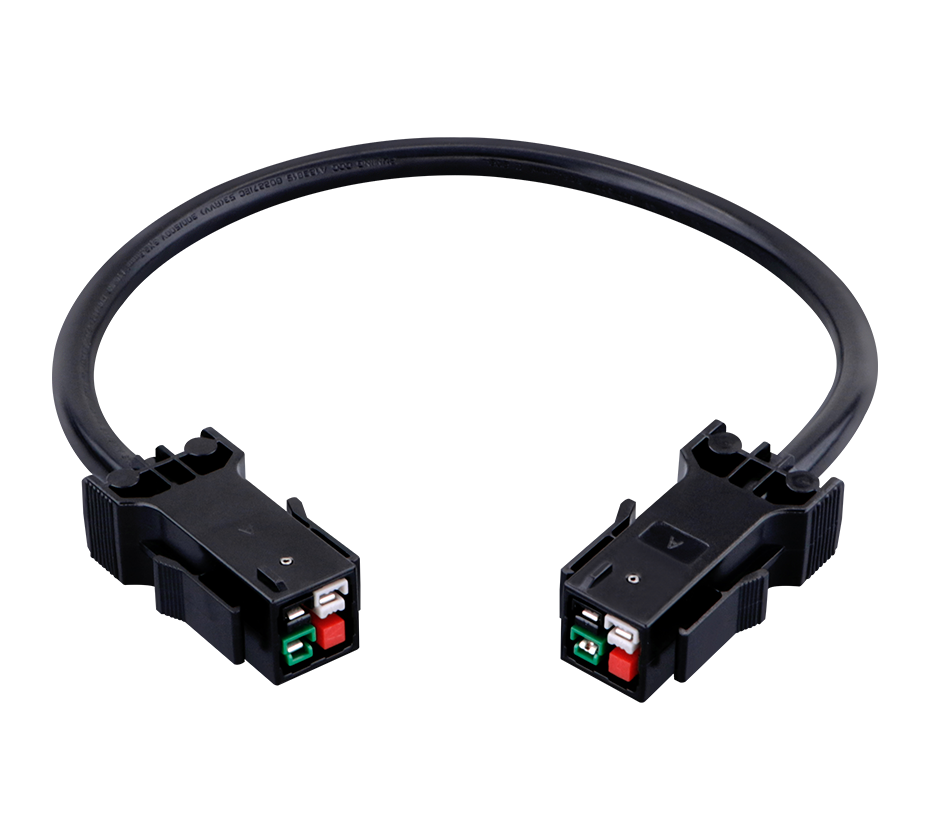
3. Common Types and Application Scenarios of 5G Antenna Feed Connectors
According to different structural forms, frequency adaptation range, size specifications and application positions, 5G antenna feed connectors can be divided into multiple mainstream types, each with unique performance advantages and targeted application scenarios, covering all links of 5G base station macro stations, micro stations, indoor distribution systems and millimeter-wave communication equipment.
3.1 N-Type Connectors
N-type connector is a classic high-power RF coaxial connector, which is widely used in 5G macro base station antenna feed systems. It has the characteristics of large power capacity, low loss, strong environmental adaptability and high connection stability. The N-type connector supports a frequency range from DC to 11GHz, fully covering all Sub-6GHz frequency bands of 5G, and can meet the high-power signal transmission requirements of outdoor macro base stations. Its threaded locking structure has excellent anti-vibration and anti-loosening performance, and the IP68 high protection level enables it to adapt to harsh outdoor tower-top working environments.
In 5G networks, N-type connectors are mainly used for the connection between base station radio remote units (RRU) and main feeder cables, as well as the butt joint of large-scale outdoor antenna arrays. Due to their high power handling capability and strong anti-interference ability, they are the preferred connectors for high-coverage and high-power 5G macro base stations, and are also compatible with the upgrade and reconstruction of original 4G base station links, realizing smooth network evolution.
3.2 SMA and RP-SMA Connectors
SMA (SubMiniature version A) connector is a compact and versatile miniature RF connector, which is one of the most widely used connectors in 5G communication systems. It supports a frequency range from DC to 6GHz, perfectly matching the 5G Sub-6GHz mainstream frequency band, with low insertion loss and excellent impedance matching performance. The SMA connector adopts threaded coupling design, with stable connection and moderate size, balancing installation convenience and transmission performance.
RP-SMA (Reverse Polarity SMA) connector is a derivative of SMA connector, with optimized internal positive and negative polarity structure to avoid wrong plugging and equipment damage. Both SMA and RP-SMA connectors are widely used in 5G micro base stations, indoor distribution systems, small-cell antenna equipment and user terminal communication modules. They are suitable for low-power and medium-signal transmission scenarios, and are also commonly used in 5G gateway equipment, CPE terminals and wireless relay equipment, with strong versatility and cost performance.
3.3 QMA/MQ Series Quick-Connect Connectors
QMA and MQ4/MQ5 quick-connect connectors are specially optimized for 5G base station infrastructure equipment. Different from traditional threaded connectors, they adopt snap-on quick-connect structure, which can realize plug-and-play rapid installation without rotating threads, greatly improving the construction efficiency of 5G base stations, especially suitable for high-density connector layout scenarios. The QMA series connectors support DC to 6GHz ultra-wide frequency band, with electrical performance consistent with N-type and SMA connectors, maintaining low VSWR and low loss characteristics.
In 5G massive MIMO antenna systems, a large number of antenna channels require dense connector arrangement. The quick-connect design of QMA/MQ connectors effectively solves the problem of difficult threading installation of traditional connectors in narrow spaces, and also facilitates later equipment maintenance and replacement. They are mainly used for the internal connection of 5G integrated antenna modules and the rapid docking of micro-base station feeder links, and have become the mainstream supporting connectors for new integrated 5G antenna equipment.
3.4 MHF4/U.FL Miniature Connectors
MHF4 and U.FL series miniature connectors are the smallest RF connectors specially designed for compact 5G equipment, developed by IPEX company. They have ultra-small size, ultra-low height and high-density integration characteristics, with a mated height of only 1.2mm and extremely small occupied space. These connectors support DC to 6GHz frequency range, standard 50Ω impedance, low insertion loss and stable signal transmission performance.
MHF4/U.FL connectors are mainly used in 5G terminal modules and ultra-compact base station equipment, including 5G M.2 cellular modules, IoT communication modules, built-in antenna connections of 5G small cells, and portable 5G communication devices. In the massive MIMO antenna array of 5G base stations, multiple MHF4 miniature connectors are used for internal signal splitting and transmission of antenna panels, realizing high-density integration of dozens of antenna channels in a limited space, which is an indispensable core connector for miniaturized and integrated 5G antenna systems.
3.5 Millimeter-Wave High-Precision Connectors
For 5G millimeter-wave communication systems (frequency band 24GHz-40GHz), traditional ordinary connectors can no longer meet the high-frequency transmission requirements. 2.92mm precision SMA connectors and K-type millimeter-wave connectors are specially developed for 5G millimeter-wave scenarios. These high-precision connectors adopt ultra-precision machining technology, with extremely strict impedance control and dimensional tolerance, realizing low-loss and low-reflection signal transmission in ultra-high frequency bands.
Millimeter-wave connectors have ultra-low VSWR (less than 1.1) and extremely low insertion loss in high-frequency bands, and can effectively suppress high-frequency signal dispersion and attenuation. They are mainly used in 5G millimeter-wave macro base stations, high-speed backhaul microwave links, ultra-high bandwidth communication equipment and 5G test and measurement instruments, supporting the ultra-high-rate transmission service requirements of 5G millimeter-wave technology.
4. Key Selection Principles and Installation Specifications of 5G Antenna Feed Connectors
4.1 Model Selection Principles
The selection of 5G antenna feed connectors needs to comprehensively consider factors such as equipment frequency band, transmission power, installation environment, space size and system integration requirements, and blind selection will lead to system performance degradation or potential safety hazards. First of all, frequency band matching is the primary principle. It is necessary to select connectors whose working frequency range completely covers the operating frequency band of the 5G base station. For Sub-6GHz ordinary base stations, SMA, N-type and QMA connectors can be selected; for millimeter-wave base stations, special high-precision millimeter-wave connectors must be matched.
Secondly, power level matching should be considered. Outdoor macro base stations with high-power signal transmission need N-type connectors with strong power handling capacity; indoor small cells and micro base stations with low-power transmission can adopt compact SMA and MHF4 connectors. In terms of environmental adaptation, outdoor tower-top and roof deployment scenarios must select connectors with IP67+ waterproof and dustproof grade and strong corrosion resistance; indoor environments can adopt conventional protection-grade connectors to control construction costs.
In addition, space and integration requirements should be combined. For high-density massive MIMO antenna arrays with narrow internal space, miniature MHF4 and quick-connect QMA connectors are preferred; for conventional feeder links with sufficient space, cost-effective N-type and SMA connectors can be selected. At the same time, the consistency of connector impedance, cable impedance and equipment interface specifications must be guaranteed to avoid signal mismatch loss.
4.2 Standardized Installation and Maintenance Specifications
The installation quality of 5G antenna feed connectors directly affects the overall performance of the antenna feed link. Standardized installation operations must be followed to avoid performance problems caused by irregular construction. Before installation, the connector interface, pins and sealing structure should be inspected comprehensively to ensure no damage, oxidation, sundries and dimensional deviation. The connector matching interface should be cleaned with professional cleaning tools to remove dust, oil stains and oxidation layers, ensuring tight and clean contact.
During installation, the butt joint should be aligned gently, and threaded connectors should be tightened with a professional torque wrench according to the standard torque value to avoid excessive tightening causing thread damage and insufficient tightening causing loose contact. Quick-connect connectors need to confirm the locking in place to ensure no virtual connection. After installation, professional VSWR and insertion loss tests must be carried out on each connector link to ensure that all electrical performance indicators meet the 5G system operation standards.
In daily maintenance, regular inspection of outdoor connectors is required, including checking for loose locking, aging of sealing rubber rings, shell corrosion and water ingress. For connectors that have been used for a long time or suffer severe weather impact, performance testing and replacement should be carried out regularly to ensure the long-term stable operation of the 5G antenna feed system. At the same time, waterproof and rust-proof treatment should be done on the connector butt joint, and waterproof adhesive tape and heat-shrinkable tubes should be used for auxiliary protection to enhance environmental adaptability.
5. Development Trends of 5G Antenna Feed Connectors
With the continuous deepening of 5G network large-scale construction and the iterative upgrade of 5G-Advanced (5.5G) technology, 5G antenna feed connectors are developing towards miniaturization, high precision, integration, intelligence and ultra-wideband. First of all, miniaturization and high density have become the mainstream development direction. With the continuous improvement of 5G base station integration and the increasing number of massive MIMO antenna channels, connectors need to achieve smaller size and higher integration density to adapt to the compact design of new antenna arrays and reduce equipment volume and installation space occupancy.
Secondly, high precision and ultra-low loss are further optimized. For 5.5G and future 6G pre-research high-frequency and ultra-wideband communication scenarios, connectors need to achieve lower insertion loss, higher impedance consistency and more stable high-frequency transmission performance, and the processing precision of connector contacts and structural parts will be further improved to meet the transmission requirements of ultra-high bandwidth and ultra-high rate signals.
In addition, integrated and intelligent design is gradually emerging. The new generation of antenna feed connectors integrates lightning protection, signal filtering and monitoring functions, realizing the integration of transmission and protection, simplifying the link structure of base station equipment and reducing construction and maintenance costs. At the same time, intelligent connectors with real-time monitoring of connection status, temperature and signal loss are gradually applied, which can realize real-time fault early warning and remote monitoring of antenna feed links, improving the intelligent operation and maintenance level of 5G networks.
In terms of environmental protection and durability, new high-strength anti-corrosion and aging-resistant materials are continuously applied to connector manufacturing, which further improves the environmental adaptability and service life of connectors, reduces the frequency of equipment replacement, and meets the green and low-carbon construction requirements of modern communication networks. In the future, with the development of millimeter-wave ultra-high frequency communication and ubiquitous IoT connection technology, 5G and subsequent generation antenna feed connectors will achieve greater breakthroughs in broadband coverage, miniaturization integration and intelligent monitoring.
 Yang.taya@aitmpower.com
Tel: 15382891313
Phone: 0769-88878951
Fax: 0769-88878955
Wechat: 15382891313


 CN
 CN
 Home >