
 2026-10-14
 2
Life support systems represent the most safety-critical application domain for electronic and fluid connectors, where a single contact failure or seal breach can have immediate and irreversible consequences for human life. Whether maintaining a patient's circulation during open-heart surgery, providing breathing air to a fighter pilot at 50,000 feet, or sustaining submariners in a closed atmosphere for months at a time, life support connectors must perform flawlessly under conditions of extreme environmental stress, mechanical vibration, and biological hazard. This article examines the connector technologies, materials, and standards that govern life support applications across medical, aerospace, defense, and emergency response domains. The discussion encompasses breathing air quick-disconnects with fail-safe locking, waterproof sealing for portable life support systems, blood-contacting and oxygen-compatible fluid connectors, and the electrical interconnect systems that monitor and control these vital functions. Particular attention is given to the regulatory frameworks and qualification testing that distinguish life support connectors from their industrial counterparts.
1. Introduction: When Failure Is Not an Option
The term "life support system" encompasses a broad spectrum of technologies united by a single defining characteristic: their failure mode is catastrophic and potentially fatal. A connector in a consumer electronic device may fail gracefully—a flickering display, a dropped call, a rebooting computer. A connector in a life support system cannot fail at all. This categorical distinction drives every aspect of life support connector design, from material selection to qualification testing to manufacturing traceability.
Life support applications span several domains. In medicine, heart-lung machines, extracorporeal membrane oxygenation (ECMO) systems, and portable universal life support systems sustain organ function during critical illness or transport. In aviation and spaceflight, breathing air systems supply oxygen to aircrew at altitude or astronauts in microgravity. In defense, submarine atmosphere control systems and diver life support equipment maintain breathable environments in the most hostile conditions. Emergency response and industrial safety add another dimension, with supplied-air respirators and escape breathing systems protecting workers in toxic or oxygen-deficient atmospheres.
Across all these applications, connectors serve two fundamental functions: fluid transmission for breathing gases, oxygen, and other life-sustaining fluids, and electrical transmission for monitoring, control, and power. This article examines both categories, with emphasis on the unique requirements that distinguish life support connectors from general-purpose medical or industrial components.
2. Breathing Air Quick-Disconnect Couplings
2.1 The Critical Interface Between Supply and Breathing
The breathing air quick-disconnect coupling is arguably the most personal of all life support connectors. Unlike an electrical connector that may be accessed only during maintenance, a breathing air coupling is manipulated by the user themselves, often under conditions of stress, limited visibility, and time pressure. A fighter pilot ejecting from an aircraft, a firefighter entering a burning building, or a diver preparing for a descent must be able to connect their breathing supply with confidence and disconnect it rapidly if circumstances require.
Stäubli, a company with over 60 years of fluid connection expertise, has developed a comprehensive breathing air program that spans supply, connection, filtration, and distribution. The AQR safety quick-release coupling represents the state of the art in this domain. Its design incorporates a safety locking key that prevents accidental disconnection, hose whip protection technology that arrests a disconnected hose before it can injure the user or damage equipment, and a unique connection technology that eliminates the risk of mis-connection between incompatible gas lines.
2.2 Standards and Compliance
Breathing air connectors must comply with a rigorous framework of European and international standards that define performance requirements for the complete breathing air circuit. EN 12021 specifies the quality of compressed breathing air, ensuring that the connector materials do not introduce contaminants into the airstream. EN 14594 defines the performance requirements for continuous-flow compressed air line breathing devices, including the flow characteristics and pressure drop across the coupling. EN 14593 addresses demand-flow systems, where the connector must maintain sealing integrity under the pressure fluctuations associated with breathing demand valves.
Compliance with these standards is not merely a regulatory formality. A breathing air coupling that introduces lubricant residues into the airstream can cause respiratory irritation or, in the case of oxygen-enriched atmospheres, create a fire hazard. A coupling with excessive pressure drop can reduce the delivered flow below the user's metabolic demand during exertion, potentially causing hypoxia. A coupling that fails to lock securely can disengage at the worst possible moment, leaving the user without breathing gas.
2.3 Materials and Sealing Technology
The materials of construction for breathing air couplings are selected for compatibility with oxygen and compressed air, resistance to environmental degradation, and adequate mechanical properties. Stäubli's AQR couplings use stainless steel for the coupling body and high-chromium steel for the plug. Stainless steel offers excellent corrosion resistance in the presence of moisture and is compatible with oxygen service, provided that cleaning protocols specified in standards such as ASTM G93 are followed to remove hydrocarbon contaminants.
The sealing elements are equally critical. Elastomeric seals, typically nitrile or fluorocarbon compounds, must maintain compression set resistance under repeated connection cycles and temperature variations. The seal design must ensure that the coupling remains leak-tight whether pressurized or depressurized, and whether connected or disconnected. In some designs, a face seal provides the primary sealing function when the coupling is disconnected, preventing the ingress of contaminants into the breathing air circuit.
2.4 The HQR Coiled Hose System
The HQR coiled hose, designed to complement the AQR coupling, illustrates the system-level thinking that characterizes life support connector design. The polyurethane construction offers excellent memory, returning to its compact coiled form after extension, and the hose complies with EN 14594 requirements for breathing air circuits. With a nominal diameter of 9 by 13 millimeters and a maximum working pressure of 10 bar, the HQR provides adequate flow for the metabolic demands of a working user while remaining flexible and lightweight. The coiled configuration minimizes the risk of tripping or entanglement, a significant safety consideration in confined spaces or during emergency egress.
3. Connectors for Portable Life Support Systems
3.1 The Portable Universal Life Support System
Portable life support systems, designed for field rescue, patient transport, and mobile intensive care, place unique demands on connector design. Unlike hospital-based systems that operate in controlled environments, portable systems must function in rain, dust, temperature extremes, and mechanical shock. The connector, as the interface between the device and the external environment, is often the most vulnerable component.
A Chinese patent for a portable universal life support system joint waterproof sealing structure addresses the specific challenge of preventing water ingress through the air suction and exhalation ports during outdoor operation in rainy conditions. The described system comprises a complete machine housing the life support system, with an air suction port and an exhalation port on the left side. A bulb-shaped through hole in the left shell exposes these ports to the external environment, and the sealing structure includes a baffle between the suction port and exhalation valve, vent sealing plugs in interference fit with the ports, and an expiratory valve sealing gasket filling the gap between the valve and the main housing.
3.2 Interference Fit Sealing: Principles and Performance
The interference fit between the vent sealing plug and the port represents a straightforward but highly effective sealing strategy. The plug, made of integrally molded silica gel, deforms slightly when inserted into the port, creating a continuous contact pressure that excludes water droplets. The use of silica gel rather than other elastomers is significant: silicone compounds maintain their elastic properties over a wide temperature range, resist compression set, and are compatible with cleaning and disinfection agents. The integral molding of the upper and lower sleeves with a connecting strip simplifies handling and prevents loss of the sealing components during emergency use.
The expiratory valve sealing gasket performs a complementary function. Comprising a circular plug ring, an arc-shaped plug strip, and a protrusion, the gasket fills the internal gap between the exhalation valve and the machine housing. This design addresses a subtle but important leakage path: while the exhalation port itself may be sealed, water can enter through the annular space between the valve body and the shell, eventually reaching internal components or the patient circuit. The gasket's conformable silicone construction allows it to accommodate manufacturing tolerances in the shell and valve while maintaining an effective barrier.
3.3 Clinical and Operational Significance
The importance of waterproof sealing in portable life support systems extends beyond simple reliability. A system that fails during transport due to water ingress may leave a critically ill patient without respiratory support, even briefly—a situation that can cause anoxic brain injury within minutes. The design philosophy underlying the sealing structure is thus one of defense in depth: the primary port seals prevent gross water entry, the baffle provides a secondary barrier, and the gasket addresses the remaining leakage path. Each element is simple and passive, requiring no maintenance or user intervention to function correctly.
4. Medical Life Support Connectors: Blood, Oxygen, and Beyond
4.1 Oxygen Service Compatibility
Oxygen, while essential for life, is a hazardous material from an engineering perspective. In the presence of hydrocarbon contaminants and an ignition source—which can be as innocuous as the heat generated by rapid pressurization—oxygen systems can ignite catastrophically. The National Safety Council and ASTM International have developed standards for oxygen system design, cleaning, and materials selection that directly impact connector specifications.
The NSN 4730-01-334-1398 tube nipple, manufactured by Carleton Life Support Systems (Cobham Mission Systems), illustrates the extreme measures applied to oxygen-compatible connectors. The nipple is fabricated from 304 stainless steel, a material with excellent corrosion resistance and compatible with oxygen service when properly cleaned. The specification includes "special cleaning for oxygen service IAW MIL-C-52211, CL D," a military standard that defines the cleaning, inspection, and packaging procedures required to achieve the cleanliness level necessary for safe oxygen system operation. The media designation "oxygen, liquid" indicates that this component is intended for liquid oxygen service, where the extremely low temperature and high density of the fluid create additional material and sealing challenges.
4.2 Electrical Connectors for Life Support Control Systems
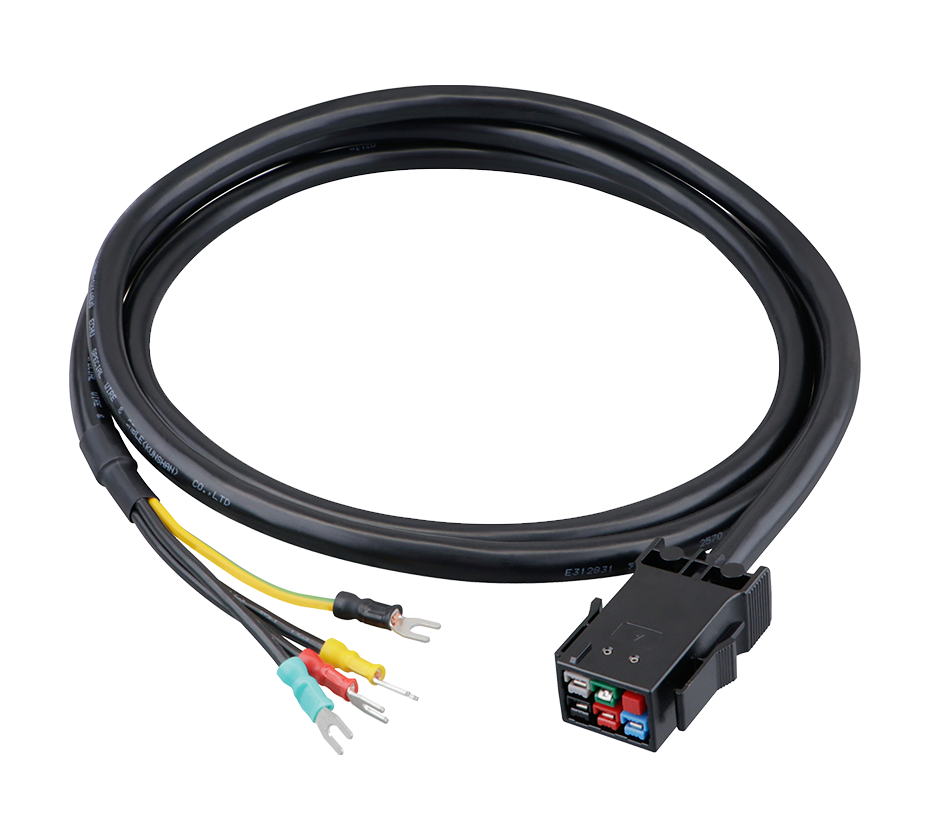
The electrical interconnect in life support systems must satisfy requirements that combine the reliability of military connectors with the biocompatibility and cleanability of medical devices. The NSN 5935-00-774-2965 electrical plug connector, also associated with Carleton Life Support Systems, embodies this convergence. Its environmental protection specification—pressure proof, heat resistant, moisture resistant, oil tight, and vibration resistant—reflects the range of conditions encountered in life support applications. The 6061 aluminum alloy shell with anodized finish provides a balance of weight, strength, and corrosion resistance. Rhodium-plated contacts offer low contact resistance and excellent wear resistance, critical for connectors that may be mated and unmated repeatedly during equipment servicing.
Carleton Life Support Technologies, now part of Cobham Mission Systems, has supplied electrical connectors such as the EJC357 receptacle to life support applications for decades. The characteristics of this component—20 nonremovable round pin contacts rated at 5.0 A, copper alloy contacts with gold and silver surface treatment, diallyl phthalate insulation conforming to MIL-M-14—represent a conservative design philosophy where proven materials and configurations are preferred over novel approaches. The use of gold over silver plating on contacts provides the low contact resistance of silver with the wear resistance and non-tarnishing characteristics of gold, a combination that has demonstrated reliability in life-critical applications over many years of service.
4.3 Cable Assemblies for Life Support Equipment
The cable assemblies that connect life support system components must maintain signal integrity under conditions of mechanical stress and environmental exposure. The F2N209-06-T special-purpose cable assembly, identified by NSN 5995-01-477-4619, terminates in connector plugs and receptacles at either end and is constructed with 28 AWG stranded conductors. The 19 strands per conductor provide flexibility and fatigue resistance, important considerations for cables routed through equipment that may be subject to vibration. The DB9M to DB9F straight-through configuration, with all nine wires connected pin-to-pin, provides a simple and reliable signal path for the monitoring and control functions typical of life support equipment.
5. Fail-Safe and Quick-Release Mechanisms
5.1 The Emergency Egress Requirement
Many life support applications involve scenarios where the user must rapidly separate themselves from the equipment. A pilot ejecting from an aircraft, a soldier abandoning a sinking vehicle, or a patient transported through a hospital corridor all share the need for connectors that release instantly and reliably under emergency conditions. The design challenge is to provide a connection that is secure during normal operation—resisting vibration, tension, and accidental impact—yet releases with a single deliberate action when required.
Glenair's lanyard-release connectors, developed to SAE-AS81703 and MIL-DTL-38999 Series III specifications, represent the aerospace standard for this capability. The connector features a spring-loaded locking sleeve that engages automatically upon insertion. A pull on the attached lanyard disengages the lock, enabling rapid, tool-less disconnection. The self-aligning features—chamfered shell noses and robust polarizing keys—ensure correct mating even in low-visibility or restricted-access conditions, such as on a launch pad umbilical or in an aircraft cockpit.
5.2 Fischer Clic-Loc Emergency Breakaway
Fischer Connectors' KSE-SSC connector brings the fail-safe breakaway concept to wearable electronic equipment, including headsets, helmets, personal role radios, and weapon systems. The patented Clic-Loc emergency breakaway system allows snatch release of the connected equipment, with pull-off forces ranging from 16 to 60 N depending on shell size. The connector seals to IP68 when mated, providing protection against dust and water immersion. The tactile keying mechanism allows safe mating under conditions of limited visibility, and keyway alternatives prevent cross-connection between incompatible circuits. Configurations range from a single coaxial way for radio antennas to 27 ways for complex control and signaling applications.
5.3 Two-Stage Breakaway in Military Vest Systems
A US patent for a military vest and quick-release buckle with electrical connectors describes a sophisticated approach to the breakaway problem. In the described system, the male and female buckle subassemblies include a printed circuit board and electrical connector that mate when the buckle is closed. When a release cable is pulled, the mechanical buckling and the electrical connection disengage simultaneously. The connector is designed to separate at 10 to 15 pounds of pull force, a threshold that is low enough to ensure breakaway during emergency egress but high enough to resist accidental disconnection during normal wear. This "two-stage breakaway" philosophy—mechanical release followed immediately by electrical disconnection—addresses a subtle failure mode in which the vest releases but hangs on the electrical cables, defeating the purpose of the quick-release system.
6. Fluid Connectors for Breathing Gas and Thermal Management
6.1 Breathing Air in Confined Environments
Submarines, spacecraft, and hyperbaric chambers present breathing air connection challenges that differ from those of open environments. In a submarine, the atmosphere is continuously recirculated and scrubbed; any contaminant introduced by a connector—lubricant, particulate, or outgassed volatile organic compound—accumulates over time and can degrade air quality. In a spacecraft, the same concern applies with the added constraint of microgravity, which affects the behavior of aerosols and particulates.
Stäubli's breathing air quick connectors for submarine applications are designed to provide "safe, clean, contamination-free connections" that maintain stable air quality in closed environments. The connectors must be resistant to the high humidity typical of submarine atmospheres and to the vibration transmitted through the hull from machinery and propulsion systems. The requirement for tool-free operation simplifies maintenance and reduces the risk of foreign object debris (FOD) introduction during servicing.
6.2 Thermal Management in Life Support Electronics
Life support systems increasingly depend on sophisticated electronics for monitoring, control, and alarm functions. These electronics generate heat that must be removed to maintain reliability, particularly in sealed enclosures where convection cooling is limited. Stäubli's thermal management quick couplings, developed for aerospace and defense applications, provide leak-free connection of liquid cooling circuits. The connectors are designed to resist vibration, maintain sealing integrity under thermal cycling, and allow rapid, tool-free maintenance. In a life support context, the reliability of thermal management directly affects the reliability of the electronics, which in turn affects the safety of the person depending on the system.
6.3 Multi-Fluid Connectors for Integrated Systems
Advanced life support platforms, such as those proposed for long-duration spaceflight or next-generation submarines, integrate multiple fluid systems—breathing air, thermal control, fuel, and hydraulics—in close proximity. Multi-fluid connectors that can handle several fluid types simultaneously reduce the number of individual interfaces, simplifying maintenance and reducing the risk of cross-connection errors. The design of such connectors must ensure that seals and materials are compatible with all fluids present and that the connector cannot be mated in a configuration that would allow mixing of incompatible fluids.
7. Qualification Testing and Reliability Assurance
7.1 The Testing Regime for Life Support Connectors
Connectors destined for life support applications undergo qualification testing that far exceeds the requirements for commercial or even most medical-grade components. The test regime typically includes:
Thermal cycling: Repeated exposure to temperature extremes, often from -55°C to +125°C, to verify that materials do not degrade, seals do not leak, and contact resistance remains stable.
Vibration and shock: Sinusoidal and random vibration testing across a broad frequency spectrum, simulating the mechanical environment of aircraft, ground vehicles, and shipboard installations. Shock testing verifies performance under high-acceleration events such as hard landings or explosive events.
Pressure and leak testing: For fluid connectors, verification that the coupling remains leak-tight at maximum rated pressure and under pressure cycling. Breathing air connectors may be tested at pressures up to 10 bar or higher, with leak rates measured using helium mass spectrometry or pressure decay methods.
Corrosion and environmental exposure: Salt spray testing for marine applications, humidity testing, and exposure to cleaning agents and disinfectants.
Life cycle testing: Repeated mating and unmating cycles to verify that contact resistance and sealing performance remain within specification over the connector's service life. For breathing air couplings, this may involve thousands of cycles.
Oxygen compatibility: For connectors used in oxygen service, testing per ASTM G175 or equivalent to verify that the materials do not promote ignition under the conditions expected in service.
7.2 Traceability and Quality Assurance
The manufacture of life support connectors requires a level of traceability that is unusual in commercial electronics. Each component must be traceable to its raw material lot, each manufacturing operation must be documented, and each finished assembly must be tested and certified. The certification requirements of AS9100 (aerospace) and ISO 13485 (medical devices) provide the quality management framework, but life support applications often impose additional requirements defined by the customer or regulatory authority.
Carleton Life Support Technologies, as a manufacturer of both fluid and electrical connectors for life support applications, operates under FAA AC 0056B accreditation, AS9120B and ISO 9001:2015 certification. These certifications require documented quality management systems covering design, procurement, manufacturing, testing, and traceability. The presence of such certifications is often a prerequisite for consideration as a supplier to life support system primes.
8. Future Directions
8.1 Miniaturization and Wearable Life Support
The trend toward smaller, lighter, and more wearable life support systems will drive further miniaturization of connectors. Microminiature connectors derived from aerospace and implantable medical device technologies will find increasing application in portable and wearable life support equipment. The challenge will be to maintain the reliability and safety margins of larger connectors in ever-smaller packages.
8.2 Wireless and Non-Contact Interfaces
For some monitoring and control functions, wireless connectivity may eventually replace physical connectors, eliminating the risk of contact failure and simplifying user interfaces. However, for the primary life-sustaining functions—breathing gas delivery, blood circulation, oxygen supply—physical connectors with verifiable mechanical and fluidic integrity will remain essential for the foreseeable future. The challenge will be to integrate wireless monitoring with physical life support in ways that enhance rather than compromise safety.
8.3 Additive Manufacturing and Custom Connectors
Additive manufacturing offers the potential to produce complex connector geometries that would be difficult or impossible to achieve with conventional machining and molding. Custom connectors tailored to specific life support system architectures could reduce weight, improve flow characteristics, and integrate sealing and locking features into a single printed component. However, the qualification of additively manufactured components for life-critical applications remains a significant challenge, particularly with respect to material properties, porosity, and traceability.
9. Conclusion
Connectors for life support systems occupy a unique position at the intersection of engineering and human survival. The breathing air coupling that connects a pilot's mask, the electrical connector that carries signals from a patient's heart-lung machine, the fluid connector that seals an oxygen line in a hospital—each of these components bears a responsibility that far exceeds its apparent simplicity. The design principles that guide their development—redundant sealing, fail-safe locking, oxygen compatibility, environmental immunity, rigorous testing—reflect an understanding that in life support, there is no acceptable failure rate other than zero. As life support technology evolves toward greater portability, integration, and capability, the connector will remain the critical link in the chain, and the standards that govern its performance will continue to represent the highest expression of reliability engineering.
 Yang.taya@aitmpower.com
Tel: 15382891313
Phone: 0769-88878951
Fax: 0769-88878955
Wechat: 15382891313


 CN
 CN
 Home >