
 2026-10-15
 6
Electric bikes have evolved from a commuting novelty into a serious transportation category, and with that evolution the demands on their electrical systems have tightened considerably. The humble battery-to-controller connection is no longer a casual wiring detail — it is the single highest-stress point in the entire power path. Every time a rider accelerates, climbs, or brakes with regenerative systems, the battery connector carries the full surge of pack current. When that connection degrades, the results are measurable: voltage drop, heat, intermittent power loss, and — in the worst cases — melted housings or a dead pack. This is precisely why the 50A Anderson connector (commonly referred to as the SB50) has become the default industrial-grade power interconnect for electric bikes, scooters, and light electric vehicles.
Choosing a wholesale supplier of electric bike 50A Anderson connectors is therefore not a trivial purchasing decision. It affects safety compliance, field reliability, and your cost structure. This guide walks through the technical specification of the SB50, what separates a serious wholesale partner from a spot-market reseller, and how to evaluate samples, test reports, pricing, and logistics before you commit a single PO.
Understanding the SB50: What "50A Anderson Connector" Actually Means
The term "50A Anderson connector" refers to a family of connectors built around Anderson Power's SB® series geometry, and specifically the SB50 housing. It is important to understand that this is a system, not a single part. A complete SB50 connector consists of:
A two-pole housing (the red, gray, or blue plastic body)
Contacts in either silver-plated or tin-plated copper
Stainless steel retaining springs that lock the contacts in place
Optionally a strain relief and a colored identification plate
The electrical specification is where the "50A" label comes from. Under the UL 1977 data-sheet rating, the SB50 is listed at 120 amps for the connector family, while the CSA rating is 50 amps — the conservative figure that gives the connector its common name. In everyday e-bike use, where pack voltages run from 36V to 72V and nominal currents sit between 20A and 50A, the SB50 provides a substantial margin over a sustained 50A draw.
From the published Anderson Power specifications, the key values every wholesale buyer should memorise are:
Current rating: 50A (CSA) to 120A (UL 1977)
Voltage rating: 600V
Wire range: 16 AWG to 6 AWG (1.5 mm² to 13.3 mm²)
Average contact resistance: around 200 micro-ohms
Operating temperature range: −20 °C to +105 °C (−4 °F to 221 °F)
Housing flammability rating: UL94 V-0
Ingress protection: IP10 to IP20 (not waterproof — intended for dry, protected compartments)
First-mate, last-break: not featured on the standard SB50 (relevant if you need pre-charge sequencing)
The significance of these numbers for e-bike OEMs and wholesalers is straightforward. The UL94 V-0 rating means the housing is self-extinguishing within a defined time after ignition — a critical safety property in a device parked in a garage. The low contact resistance minimises I²R heating, which keeps the connection cool under the high sustained currents of hub-motor and mid-drive systems.
Why Wholesale Matters: Volume Economics and Consistency
A wholesale purchase is not simply a cheaper version of a retail order. It is a different procurement logic. When you buy SB50 connectors at wholesale volumes (typically starting at 100 to 1,000 pairs and scaling into tens of thousands), you are buying three things at once:
1. Unit economics. Factory-direct pricing on Anderson-style connectors can drop to a fraction of branded retail. On a 50A connector that retails for several dollars, wholesale unit prices often fall below one US dollar at meaningful volume, especially for AITM-style compatible parts manufactured in Shenzhen or Dongguan.
2. Consistency of supply. E-bike production lines cannot tolerate supply interruptions. A committed wholesale supplier maintains safety stock, standard lead times, and stable pricing windows — rather than spot prices that shift with copper market movements.
3. Traceability and quality control. Wholesale partners should provide batch traceability, incoming inspection reports, and — critically — test reports and certificates tied to the specific model you buy. This is the difference between buying "a connector" and buying "a certified, tested connector part number with a paper trail."
The Quality Gap: Anderson-Compatible vs. Genuine vs. Counterfeit
This is the most important section of this guide, because the market contains three very different tiers:
Genuine Anderson Power Products (APP) SB50. The OEM part, manufactured under Anderson's own quality system, carrying full UL 1977 listing and complete documentation. Highest price, highest confidence. Best used when a customer contract or certification explicitly requires genuine parts.
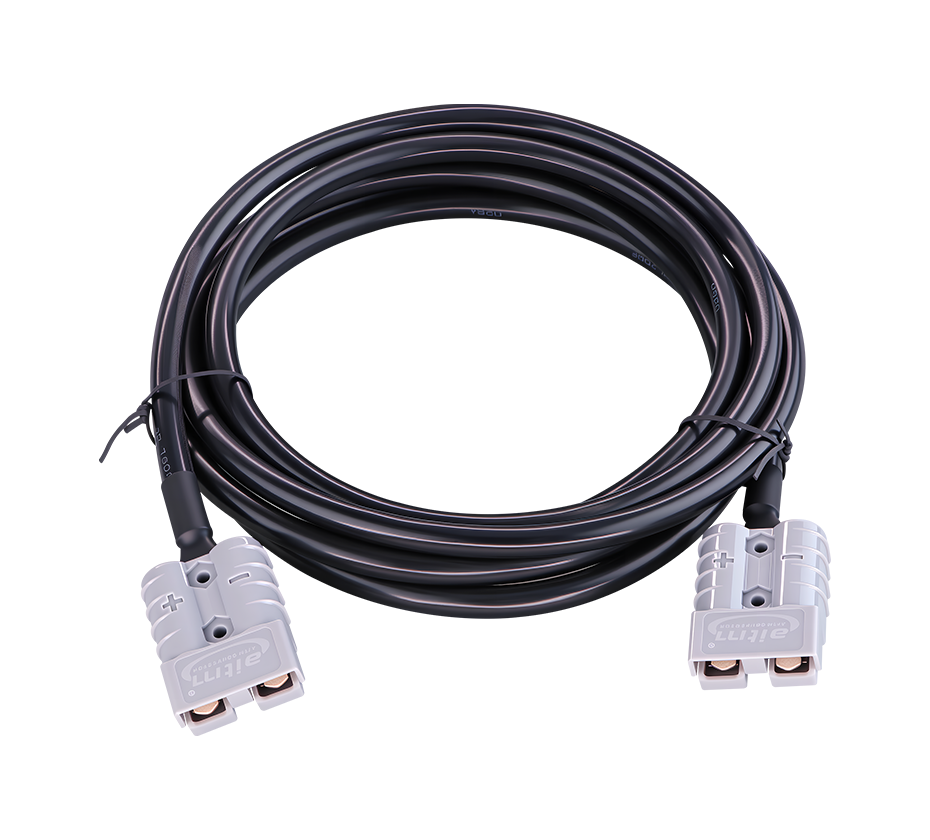
Certified Anderson-compatible connectors (the AITM tier). Manufacturers such as AITM produce Anderson-style connectors from 5A up to 350A, covering the SB50 footprint, and state compliance with CE, RoHS, REACH, CA65, and UL-compliant design standards, typically under an ISO 9001 quality system. These are the pragmatic choice for most e-bike wholesale programs: they deliver the SB50 electrical footprint and pin-out at a fraction of the cost, with test documentation that supports your own product certification.
Uncertified / counterfeit parts. The danger zone. These are visually similar connectors without real test data, often using lower-grade plastic that fails the UL94 V-0 flame test, thinner contacts with higher resistance, and weaker springs. In a 50A e-bike circuit, such a part can run hot, deform, or fail catastrophically.
Your job as a wholesale buyer is to confirm — via documentation, not promises — which tier your supplier is selling you.
How to Evaluate a Wholesale Supplier: A Practical Checklist
Before you negotiate price, run every candidate supplier through this checklist:
1. Verify the manufacturing base. Look for suppliers who describe their own tooling — plastic injection and hardware (stamping) workshops — rather than pure traders. A supplier who manufactures owns the tooling, the QC, and the ability to hold tolerances. A pure trader cannot guarantee batch consistency or traceability.
2. Ask for the model-specific test reports. A reputable supplier can produce test reports and certificates for the specific model you are buying — not generic "we are certified" marketing language. Request the UL-style, IEC 60512, or TÜV/SGS report covering the exact part number, and confirm the current and voltage figures match your 50A application.
3. Review material evidence. Confirm the housing is UL94 V-0, the contacts are copper with silver or tin plating, and the springs are stainless steel. If a supplier cannot articulate the materials, walk away.
4. Order samples and test them yourself. The fastest way to separate tiers is to buy samples, measure contact resistance, run a 50A current test, and check temperature rise. A genuine-spec connector will stay cool; a cheap counterfeit will heat visibly.
5. Check MOQ and lead time realism. Chinese connector factories commonly quote MOQs in the hundreds to thousands of pieces. Be wary of quotes that are unrealistically fast or suspiciously cheap — both are red flags for inventory dumping rather than controlled manufacturing.
6. Confirm documentation for export. For cross-border wholesale you will need, at minimum, a commercial invoice, packing list, and the relevant certificates (RoHS/REACH for EU, and where required, UL/CSA documentation). A mature supplier handles this routinely.
Pricing, MOQ, and Cost Modelling for Your E-Bike Build
Wholesale pricing for a 50A Anderson-style connector pair typically depends on four variables: volume, contact plating (silver vs. tin), wire-assembly vs. loose parts, and brand tier. Silver-plated contacts command a premium but offer lower and more stable resistance — important for high-cycle applications. Tin-plated contacts are cheaper and adequate for most e-bike duty cycles.
When you build your cost model, remember that the connector is a system:
Housing (1 pair)
Contacts (2 per connector)
Springs
Optional strain relief
Optional pre-assembled pigtail / wire harness
A supplier offering one-stop wire-harness assembly — where the connector arrives crimped onto your specified cable lengths — can actually reduce your total landed cost by removing an assembly step from your production line, even if the per-part price is slightly higher.
Quality Control and Incoming Inspection
Once you have selected a supplier, do not assume quality is automatic. Build an incoming inspection (IQC) checklist:
Visual inspection: uniform colour, no flash or sink marks on the housing, clean contact surfaces.
Contact resistance test: measure across a mated pair; reject any pair deviating significantly from the ~200 micro-ohm spec.
Temperature rise test: run 50A for a defined period and measure housing temperature.
Mechanical test: cycle the connector (mate/unmate) several hundred times and confirm retention force and contact integrity.
Flammability spot check: confirm the plastic self-extinguishes.
Retain the supplier's test report as your baseline, and re-qualify the product if the supplier changes tooling or contact material without notice.
Logistics and Documentation for International Wholesale
Most quality suppliers of e-bike Anderson connectors are based in Guangdong (Shenzhen, Dongguan) and ship worldwide. Plan for:
Sea freight for container volumes, or express/air for sample and mid-volume orders
Incoterms clarity (FOB, EXW, CIF, DDP)
Customs documentation including RoHS/REACH declarations for EU-bound goods
Incoterms-based pricing so you know exactly where the cost boundary sits
Common Mistakes Wholesale Buyers Make
Buying on price alone. The cheapest 50A connector is almost always a counterfeit or downgraded part that will fail in the field and cost more in warranty claims.
Skipping the sample test. Never scale an order from a datasheet alone.
Accepting vague certification language. "UL compliant" is not the same as "UL listed, model-specific." Demand the document.
Ignoring the wire gauge. Using too-thin wire with a 50A-rated connector creates a bottleneck regardless of connector quality. Match 6 AWG to 8 AWG for high-current e-bike runs.
The 50A Anderson connector is the workhorse of the electric-bike power system, and choosing the right wholesale supplier is a decision that compounds — good suppliers give you cost control, consistent quality, traceable documentation, and export readiness. Start with a clear specification (SB50 footprint, 600V, 50A sustained, UL94 V-0), evaluate suppliers on their manufacturing capability and model-specific test reports rather than on marketing claims, test real samples under load, and formalise incoming inspection. Done correctly, your connector supply becomes an invisible source of reliability — the quiet reason your e-bikes keep running, order after order.
 Yang.taya@aitmpower.com
Tel: 15382891313
Phone: 0769-88878951
Fax: 0769-88878955
Wechat: 15382891313


 CN
 CN
 Home >