
 2026-10-14
 3
PV harness connectors are specialized integrated connection components designed for photovoltaic system cable harness assembly, centralized wiring and modular power transmission. Different from single independent PV connectors, PV harness connectors take the photovoltaic cable harness as the carrier, integrating precision crimped terminals, high-performance insulation harnesses, waterproof sealing structures and standardized plug-in interfaces, forming a complete set of modular connection units. They are mainly used for series-parallel connection of solar panel arrays, convergence of branch circuits of photovoltaic power stations, connection between photovoltaic modules and inverters, and wiring transition of photovoltaic combiner boxes, and are the key bridge for realizing efficient transmission and stable distribution of electric energy in photovoltaic systems. With the continuous scale and standardization of photovoltaic power station construction, the traditional discrete wiring mode of single connectors can no longer meet the requirements of rapid construction, unified standardization and convenient operation and maintenance of large-scale photovoltaic projects. PV harness connectors, with their advantages of integrated assembly, standardized production, convenient installation and stable performance, have become the core supporting components of modern photovoltaic modular construction, and are widely used in distributed rooftop photovoltaics, large ground-mounted power stations, industrial and commercial photovoltaic systems and new energy storage photovoltaic integrated projects. This article systematically expounds the structural composition, core classification, technical characteristics, production process, performance advantages, engineering application scenarios, matching standards and future development trend of PV harness connectors in detail, comprehensively analyzing their important role in improving the construction efficiency and operational reliability of photovoltaic systems.
The complete structure of PV harness connectors is composed of three core parts: standardized PV connector terminals, high-quality photovoltaic special harness and integrated sealing and protective accessories, and each part has strict technical standards and process requirements. The terminal part adopts high-purity tinned copper conductive terminals consistent with mainstream PV connectors, with ultra-low contact resistance and excellent conductivity, ensuring no heat generation and low loss during long-term power transmission. The terminals are crimped with the cable core through fully automatic precision crimping equipment, realizing seamless fitting between terminals and cable conductors, avoiding virtual connection, poor contact and heating failure caused by manual crimping errors in traditional discrete wiring . The harness part uses photovoltaic special cross-linked polyethylene insulated cables, which have excellent ultraviolet resistance, high and low temperature resistance, insulation performance and mechanical tensile strength. The cable insulation layer and outer sheath are made of weather-resistant modified materials, which can resist outdoor long-term sunlight aging, rainwater erosion and mechanical friction damage, and adapt to long-term outdoor exposed laying conditions. The protective accessories include waterproof sealing rings, insulating protective sleeves, cable fixing buckles and anti-aging binding belts, which form a multi-layer protective system for the harness connector, effectively improving the environmental adaptability and service life of the whole set of products .
According to the structural form, functional purpose and wiring mode, PV harness connectors can be divided into multiple classification types to meet the differentiated wiring needs of different links of photovoltaic systems. First, according to the interface type, they are divided into MC4 series harness connectors, PV4 series harness connectors and special customized harness connectors. Among them, MC4 harness connectors are the most mainstream universal type in the market, with standard male and female plug-in structures, strong compatibility, suitable for series-parallel connection of conventional photovoltaic modules . PV4 series harness connectors are optimized and upgraded on the basis of MC4, with smaller volume and higher integration, suitable for compact distributed photovoltaic projects. Second, according to the wiring structure, they are divided into straight-through single-head harness connectors, double-head butt harness connectors, multi-way shunt harness connectors and combiner box special harness connectors. Straight-through single-head harnesses are mainly used for single-module outgoing line transition, double-head butt harnesses are used for series connection of photovoltaic modules, and multi-way shunt harnesses can realize one-to-many circuit convergence, greatly simplifying the on-site wiring process of photovoltaic arrays. Third, according to the protection level, they are divided into IP67 and IP68 waterproof harness connectors, among which IP68 fully waterproof harness connectors are specially used for harsh environments such as waterlogging, high humidity and salt spray, realizing all-round sealed protection of the whole harness connection system . In addition, according to the voltage and current specification, they are divided into 1000V low-voltage and 1500V high-voltage harness connectors, covering all mainstream photovoltaic system voltage standards in the world.
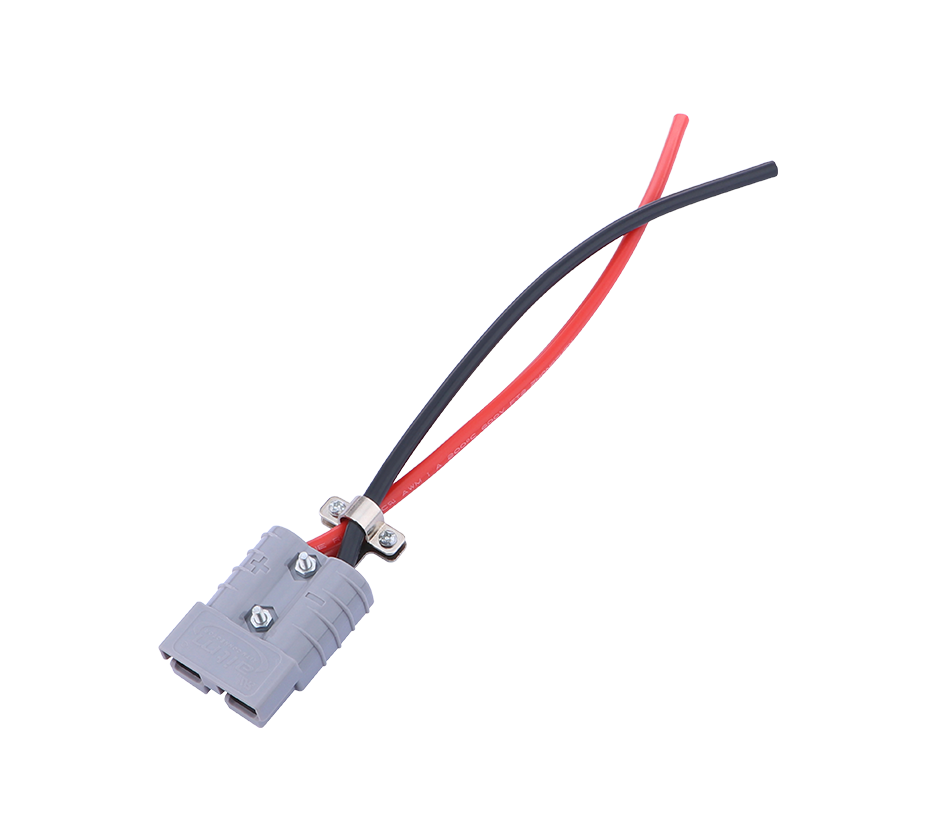
The standardized production process is the core guarantee for the stable performance of PV harness connectors. Different from the on-site manual assembly of traditional single connectors, PV harness connectors are produced in batches through factory standardized automated processes, with precise process control and stable product consistency. The whole production process includes raw material inspection, cable cutting, terminal crimping, insulation detection, interface assembly, sealing installation, performance testing and finished product packaging. First of all, raw material inspection strictly screens cables, terminals and sealing accessories to ensure that all materials meet photovoltaic industry weather resistance and safety standards, and unqualified raw materials are prohibited from entering the production link. The cable cutting link adopts fully automatic cutting equipment to ensure accurate cable length and flat incision, avoiding cable core damage. The terminal crimping link uses computer numerical control crimping equipment to realize constant-pressure and constant-speed crimping, with uniform crimping force and firm fitting, ensuring the stability of electrical connection performance . After crimping, the insulation resistance and conductive performance of each harness connector will be tested one by one to eliminate products with poor insulation and virtual connection. Then complete the assembly of connectors and sealing accessories, and carry out waterproof performance test, plugging durability test and tensile test. Finally, the qualified finished products are packaged in a sealed and dust-proof manner to avoid secondary pollution and damage during transportation and storage. The whole process realizes full automation and full inspection, which fundamentally solves the problems of inconsistent quality, unqualified crimping and poor sealing of on-site manual assembly products.
PV harness connectors have obvious comprehensive technical advantages compared with traditional discrete single connector wiring mode, which are mainly reflected in construction efficiency, operational stability, safety performance and later operation and maintenance. In terms of construction efficiency, PV harness connectors are pre-assembled and pre-tested in the factory, and can be directly plugged and used on site without manual crimping, stripping and assembly, which reduces the on-site construction process by more than 60%, greatly shortens the construction cycle of photovoltaic power stations, and reduces the dependence on on-site construction personnel's technical level . For large-scale photovoltaic array wiring projects, the modular matching of harness connectors can realize rapid circuit layout and series-parallel connection, effectively improving the overall construction progress of the power station. In terms of operational stability, factory standardized crimping and assembly make the electrical connection of harness connectors more stable, with consistent contact resistance of each interface, no local overheating and power loss, and the overall circuit stability is far higher than that of manual assembly products. The integrated sealing and protective structure avoids the problem of water and dust ingress caused by on-site assembly gaps, ensuring long-term stable operation of the circuit .
In terms of safety performance, PV harness connectors have multiple safety protection mechanisms to effectively avoid common safety hazards of photovoltaic circuits. First of all, the overall flame-retardant materials of the harness and connectors meet UL94 V-0 grade, which can prevent flame spread in case of short circuit and electric arc, and improve the fire safety level of photovoltaic power stations. Secondly, the male and female connectors adopt a fool-proof and anti-misplug design, which can effectively avoid circuit reverse connection and wrong connection caused by human operation errors, and prevent module reverse charging and circuit burnout accidents. The self-locking anti-loosening structure ensures that the plug-in interface will not be loose and disconnected due to external vibration, wind force and cable pulling, avoiding power failure and arc discharge phenomena . In addition, the integrated harness has neat wiring and fixed routing, which avoids circuit winding, extrusion and friction damage caused by disorderly on-site wiring, reduces the risk of cable insulation damage and leakage, and greatly improves the overall operational safety of the photovoltaic system. All PV harness connectors comply with RoHS environmental protection standards, with no toxic and harmful substances, meeting the green and environmental protection requirements of new energy projects.
In terms of system matching performance, PV harness connectors are designed in strict accordance with international photovoltaic industry standards, with strong universality and compatibility, and can perfectly match mainstream photovoltaic modules, inverters, combiner boxes and supporting equipment on the market. The interface size, electrical parameters and mechanical structure of the harness connectors are fully in line with IEC 62852 and UL 6703 standards, realizing universal interconnection of mainstream brand equipment . According to the different power and wiring distance of photovoltaic systems, PV harness connectors support the matching of multiple cable specifications from 2.5mm² to 10mm², and can adapt to the current transmission requirements of small household 300W-500W solar systems and large industrial megawatt-level photovoltaic arrays. The 1000V and 1500V dual voltage specifications cover all low-voltage and high-voltage photovoltaic system designs, which can effectively reduce the line loss of high-voltage long-distance transmission and improve the power generation efficiency of the system. At the same time, customized harness connectors can be developed according to the special wiring requirements of special photovoltaic projects such as floating photovoltaics, agricultural photovoltaics and building-integrated photovoltaics (BIPV), meeting the differentiated wiring needs of various complex scenarios.
PV harness connectors have a wide range of engineering application scenarios, covering all links of photovoltaic power generation, transmission and convergence. In distributed rooftop photovoltaic projects, small-sized double-head harness connectors and straight-through harness connectors are used for series connection of single solar modules, with simple wiring, neat layout and convenient later maintenance, which are very suitable for household and industrial and commercial rooftop scattered photovoltaic layout. In large-scale ground-mounted photovoltaic power stations, multi-way shunt harness connectors and combiner box special harness connectors are used for centralized convergence of photovoltaic array branch circuits, which simplifies the complex wiring of large-area modules, reduces the number of on-site wiring nodes, and reduces the failure rate of circuit nodes . In offshore floating photovoltaic and coastal photovoltaic projects, IP68 waterproof grade harness connectors are selected, with excellent salt spray corrosion resistance and water immersion resistance, adapting to high humidity and high salt fog marine climate environment. In agricultural complementary photovoltaic and desert photovoltaic projects, UV-resistant and high-temperature resistant harness connectors are used to resist strong ultraviolet radiation and extreme temperature changes, ensuring long-term stable operation of the system. In addition, PV harness connectors are also widely used in solar street lights, mobile solar power supplies, photovoltaic energy storage systems and other new energy equipment, providing reliable connection support for small and medium-sized photovoltaic power generation equipment.
In the actual engineering application and installation process, the standardized selection and wiring specification of PV harness connectors directly affect the operational quality and service life of the photovoltaic system. First of all, the protection level, voltage and current specification of the harness connector should be reasonably selected according to the project environment and system parameters. For ordinary indoor and dry outdoor environments, IP67 harness connectors can meet the demand; for humid, flood-prone and coastal environments, IP68 fully waterproof harness connectors must be selected . The current carrying capacity of the harness should be greater than the maximum working current of the photovoltaic module string to avoid long-term overload operation and heating damage. Secondly, during the installation process, the harness should be laid neatly, avoiding excessive bending, stretching and extrusion, and the cable bending radius should meet the industry standard to prevent insulation layer cracking and cable core damage. The plug-in interface should be locked in place to ensure tight fitting and no gap, and the redundant harness should be fixed and bound to avoid swinging and friction damage in the wind. In addition, in the same photovoltaic system, harness connectors of unified brand and unified specification should be used to avoid performance mismatch and potential safety hazards caused by mixed use of different products . Daily operation and maintenance should regularly check the harness insulation integrity, interface sealing state and locking firmness, timely clean surface dust and sundries, and replace aging and damaged harness connectors to ensure the stable operation of the photovoltaic system throughout the life cycle.
With the continuous upgrading of photovoltaic industry technology and the continuous improvement of project standardization, PV harness connectors are showing obvious intelligent, high-efficiency and durable development trends. In terms of product upgrading, high-voltage 1500V, large-current and miniaturized harness connectors have become the mainstream development direction, which can further improve the power transmission efficiency of photovoltaic systems and reduce the engineering cost. In terms of performance optimization, new composite weather-resistant materials are gradually applied to harness connectors, further improving ultraviolet resistance, low-temperature toughness and corrosion resistance, and extending the service life to more than 30 years, exceeding the service life of traditional photovoltaic components. In terms of intelligent upgrading, some new PV harness connectors are integrated with temperature sensing, current monitoring and fault alarm functions, which can realize real-time monitoring of the operating state of the connection interface, quickly locate fault points such as interface heating and poor contact, and improve the intelligent operation and maintenance level of photovoltaic power stations . In addition, with the rapid development of photovoltaic modular prefabricated construction technology, fully prefabricated integrated PV harness connector components will be more widely used, realizing zero on-site welding, zero crimping and rapid installation of photovoltaic systems, and further improving the construction standardization and efficiency of photovoltaic projects.
PV harness connectors, as modular integrated connection components specially designed for photovoltaic systems, break through the limitations of traditional discrete wiring modes, and have irreplaceable advantages in improving the construction efficiency, operational stability and safety level of photovoltaic power stations. Through factory standardized production, precise structural design and high-performance material matching, PV harness connectors solve many pain points such as irregular on-site wiring, inconsistent product quality and high node failure rate in traditional photovoltaic projects. They are not only an important symbol of the standardized and modular development of the photovoltaic industry, but also a key basic component to ensure the long-term efficient and stable operation of photovoltaic power systems. With the continuous expansion of the global photovoltaic market and the continuous improvement of engineering construction standards, PV harness connectors will become the standard configuration of all photovoltaic power generation projects, playing a more important role in promoting the high-quality and sustainable development of the new energy industry.
 Yang.taya@aitmpower.com
Tel: 15382891313
Phone: 0769-88878951
Fax: 0769-88878955
Wechat: 15382891313


 CN
 CN
 Home >