
 2026-10-14
 4
The Mode 2 charging cable connector represents one of the most fundamental yet frequently misunderstood components in the electric vehicle charging ecosystem. Unlike its Mode 3 counterpart, which operates as part of permanently installed charging infrastructure, the Mode 2 connector serves as the portable, emergency-oriented interface that allows electric vehicle owners to charge from standard domestic power outlets. This comprehensive examination explores the technical specifications, regulatory framework, safety mechanisms, and practical applications of the Mode 2 charging cable connector, providing an in-depth understanding of its role in the broader electric mobility landscape.
Defining Mode 2 Charging
To understand the Mode 2 connector properly, one must first grasp the charging mode classification system established by the International Electrotechnical Commission (IEC). The IEC 61851 standard defines four distinct charging modes, each representing a different level of communication and safety capability between the vehicle and the power supply. Mode 2 charging occupies a specific and important position within this hierarchy: it provides charging from a standard household socket-outlet, but with the critical addition of an in-cable control and protection device (IC-CPD) that monitors and manages the charging process.
The defining characteristic of Mode 2 charging is the presence of this IC-CPD, typically housed in a compact rectangular enclosure positioned somewhere along the length of the charging cable. This device performs several essential functions that distinguish Mode 2 from the unregulated Mode 1 charging. It provides residual current detection, protective conductor continuity monitoring, and automatic disconnection of the power supply under fault conditions. Without these safety features, charging an electric vehicle from a standard domestic socket would present unacceptable risks of electric shock, overheating, and fire.
The IC-CPD: The Heart of Mode 2 Safety
The in-cable control and protection device constitutes the most critical safety component of any Mode 2 charging cable. This device must comply with the EN 62752 standard, which specifies the requirements for in-cable control and protection devices for Mode 2 charging of electric road vehicles. The IC-CPD continuously monitors the electrical parameters of the charging circuit and can interrupt the power supply within specified time limits when it detects abnormal conditions.
One of the most important functions of the IC-CPD is DC residual current detection. Electric vehicle charging systems can generate smooth DC residual currents that are not detected by conventional AC residual current devices. The IC-CPD addresses this by incorporating detection capabilities for DC fault currents with a threshold typically set at 6 milliamperes. This is particularly important because DC residual currents can saturate the magnetic cores of standard RCDs, effectively blinding them to subsequent AC fault currents and creating a serious safety hazard.
The IC-CPD also monitors the protective conductor continuity. The protective earth connection is fundamental to electrical safety, providing a low-impedance path for fault currents to return to the source and enabling protective devices to operate correctly. If the protective conductor becomes disconnected or presents excessive impedance, the IC-CPD will prevent charging from commencing or will interrupt an ongoing charging session. Additionally, modern IC-CPDs often incorporate temperature monitoring at the plug and connector interfaces, reducing or interrupting the charging current if excessive heating is detected.
Technical Specifications and Power Ratings
Mode 2 charging cables are typically designed to operate from standard household alternating current supplies. In Europe, this means a nominal voltage of 230 volts single-phase, while in North America, the standard is 120 volts. The maximum current draw is limited by the capacity of the domestic circuit and the specifications of the IC-CPD. Common configurations provide charging power ranging from 1.4 kilowatts to 3.7 kilowatts.
The specific power rating depends on several factors, including the current rating of the domestic socket, the capabilities of the IC-CPD, and the onboard charger of the vehicle. A typical European Mode 2 cable might be rated for 6 amperes, 8 amperes, 10 amperes, or 16 amperes, corresponding to charging powers of approximately 1.4 kilowatts, 1.8 kilowatts, 2.3 kilowatts, and 3.7 kilowatts respectively. For example, a Mode 2 charging cable kit designed for the Danish market operates at 230 volts, 6 amperes, and 50 hertz, delivering a maximum charging power of 1.4 kilowatts.
The connector on the vehicle side of a Mode 2 cable typically conforms to the Type 2 standard in Europe or the Type 1 standard in North America and Japan. The infrastructure-side connector, which plugs into the domestic socket, varies according to regional standards. In Denmark, for instance, the Mode 2 cable may be equipped with a DS 60884-2-D1 type K plug featuring round plug contacts. In other markets, the household plug may conform to Schuko, BS 1363, or NEMA standards, depending on local electrical infrastructure.
Construction and Environmental Protection
Mode 2 charging cables must be constructed to withstand the rigors of daily use while maintaining safety under a variety of environmental conditions. The connectors themselves are typically rated to protection class IP44, providing resistance to solid objects larger than 1 millimeter and protection against water spray from any direction. The charging module or IC-CPD enclosure often achieves an even higher protection rating of IP67, which indicates complete protection against dust ingress and protection against the effects of temporary immersion in water.
The materials used in Mode 2 connectors must also meet stringent requirements for flame retardancy, impact resistance, and temperature tolerance. High-quality Mode 2 cables employ thermoplastic shells with flame retardant ratings such as UL94 V-0, copper alloy contacts with silver or nickel plating for optimal conductivity and corrosion resistance, and rubber or silicone gaskets for environmental sealing. The mechanical durability of the connector is tested through repeated insertion and withdrawal cycles, with typical specifications calling for 10,000 mating cycles without failure.
Regulatory Framework and Certification
Mode 2 charging cables are subject to a complex regulatory framework that varies by jurisdiction but generally follows the IEC standards. The primary international standard governing Mode 2 charging is IEC 62752, which specifies the requirements for in-cable control and protection devices. This standard is complemented by IEC 61851-1, which establishes the general requirements for conductive charging systems, and IEC 62196-2, which defines the dimensional compatibility requirements for AC pin and contact-tube accessories.
In the European Union, Mode 2 cables must comply with the Low Voltage Directive and carry the CE marking. The certification pathway for Mode 2 cables is significantly more complex than for Mode 3 cables due to the presence of active electronics. The IC-CPD must be independently certified to EN 62752, and any wireless communication module incorporated into the device triggers additional requirements under the Radio Equipment Directive. This effectively splits Mode 2 cable certification into three parallel workstreams: the cable assembly under the Low Voltage Directive, the IC-CPD under the Low Voltage Directive and functional safety requirements, and any wireless module under the Radio Equipment Directive.
Manufacturers must provide comprehensive test reports from ISO 17025-accredited laboratories covering EN IEC 61851-1, EN 62196-2, EN IEC 61851-21-2, and EN 62752. Component-level compliance evidence, including connector certification from bodies such as VDE or ENEC, cable HAR marking or EN 50620 compliance statements, and IC-CPD test reports, must also be available. This extensive certification regime reflects the inherent risks associated with charging high-power electrical systems from domestic infrastructure not originally designed for such loads.
Practical Applications and Limitations
The primary application of Mode 2 charging cables is as an emergency or convenience charging solution. These cables enable electric vehicle owners to charge their vehicles wherever a suitable domestic power outlet is available, whether at home, at a workplace, or at a destination such as a hotel or holiday rental. The portability of Mode 2 cables makes them an essential accessory for electric vehicle owners who may need to charge outside of the regular home charging setup.
However, Mode 2 charging has significant limitations that must be understood. The relatively low power delivery means that charging times are considerably longer than with dedicated charging infrastructure. A vehicle with a 60 kilowatt-hour battery would require more than 16 hours to charge from empty to full at 3.7 kilowatts, and more than 40 hours at 1.4 kilowatts. This makes Mode 2 charging impractical as a primary charging solution for most users, but entirely adequate for maintaining charge or adding range during extended parking periods.
Another important limitation concerns the domestic electrical infrastructure. Continuous charging at the maximum rated current of a domestic socket can cause overheating in wiring that was not designed for sustained high-current loads. The IC-CPD addresses this by limiting the charging current and monitoring for thermal anomalies, but users should still exercise caution and consider having a qualified electrician verify that their domestic circuits can safely support the intended charging load. In some cases, the installation of a dedicated Mode 3 charging point may be necessary to provide safe and convenient home charging.
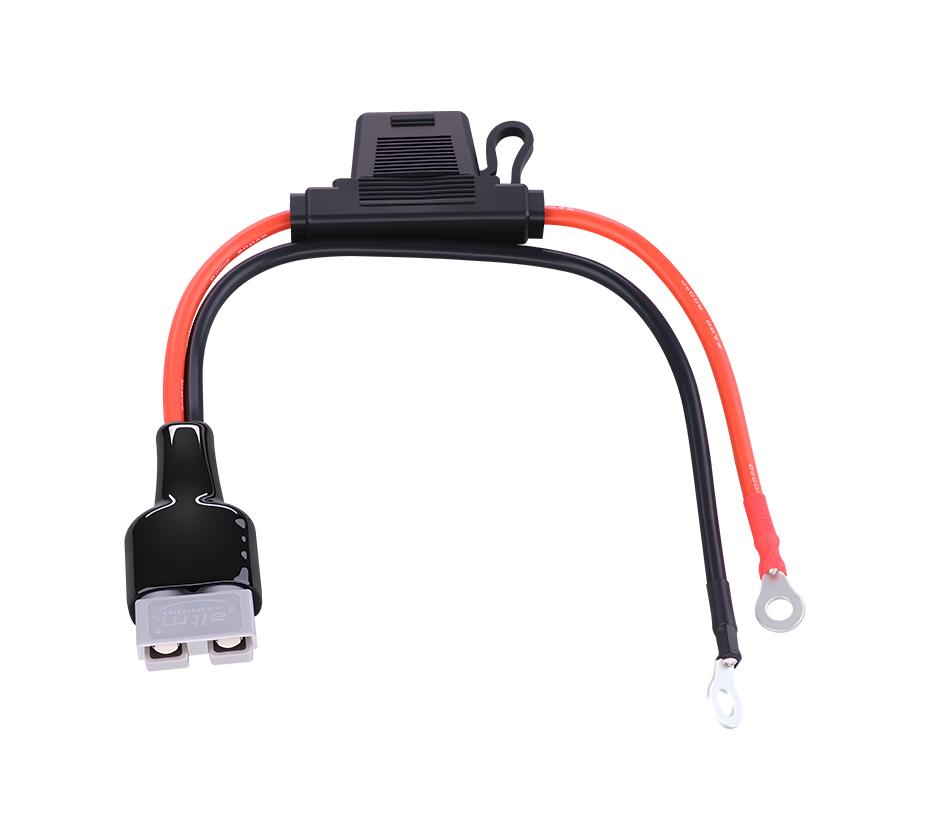
The Mode 2 charging cable connector represents a carefully engineered compromise between convenience and safety. By incorporating sophisticated protection electronics into a portable cable assembly, Mode 2 charging enables electric vehicle owners to access the ubiquitous domestic power grid while maintaining acceptable levels of electrical safety. The IC-CPD at the heart of every Mode 2 cable transforms an ordinary household socket into a controlled charging interface, monitoring for residual currents, protective conductor integrity, and thermal anomalies. While the power levels are modest and the charging times extended, the Mode 2 connector fulfills an essential role in the electric mobility ecosystem, providing the flexibility and peace of mind that comes from knowing that a charging opportunity exists wherever a standard power outlet can be found. As electric vehicle adoption continues to grow, the Mode 2 connector will remain a vital accessory, bridging the gap between the limited range of domestic infrastructure and the boundless mobility aspirations of electric vehicle owners.
 Yang.taya@aitmpower.com
Tel: 15382891313
Phone: 0769-88878951
Fax: 0769-88878955
Wechat: 15382891313


 CN
 CN
 Home >


