
 2026-10-14
 4
1. Introduction to Industrial Robot Power Connectors
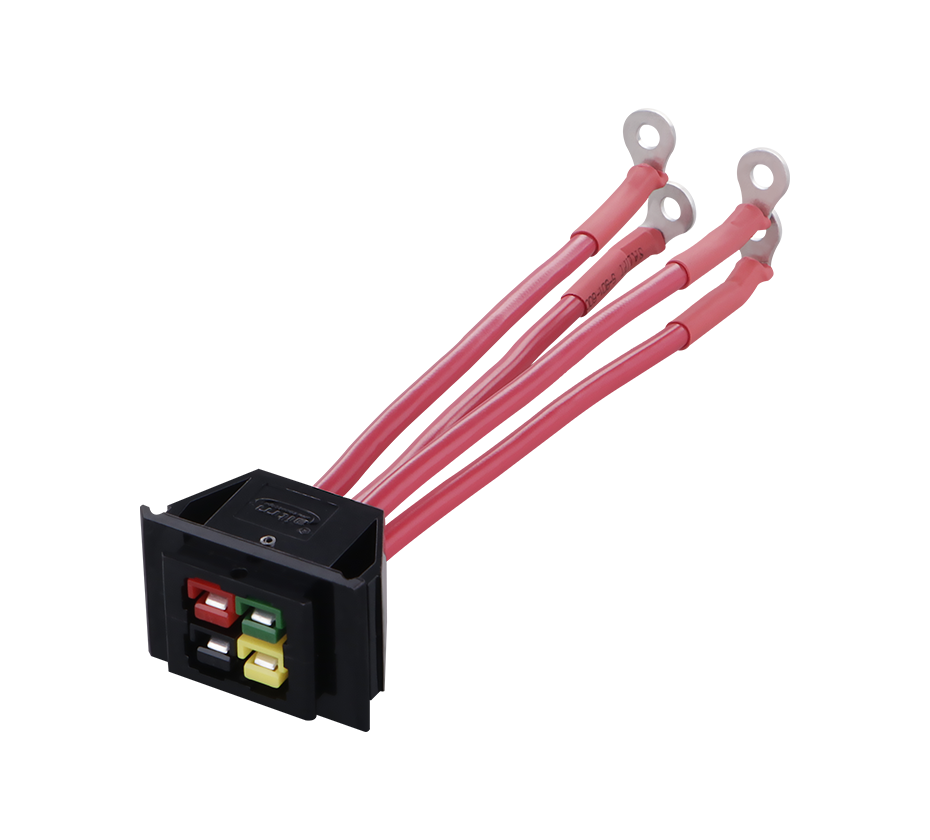
Industrial robot power connectors are core electromechanical components specially designed to transmit stable power for various industrial robot systems, including articulated robots, SCARA robots, delta robots, mobile industrial robots, and collaborative robots. As the “power transmission veins” of robotic equipment, these connectors undertake the key task of delivering AC and DC power to robot joints, drive systems, control cabinets, and end-of-arm tooling (EOAT). Unlike ordinary civilian power connectors, industrial robot power connectors are developed to adapt to the harsh and complex working environments of industrial automation production lines, featuring extreme durability, anti-interference performance, structural stability, and environmental adaptability. With the rapid advancement of industrial automation, intelligent manufacturing, and flexible production, modern industrial robots are developing towards high precision, high speed, multi-axis linkage, and long-term continuous operation, which puts forward higher and stricter requirements on the reliability, safety, and service life of supporting power connectors.
In the entire robotic system architecture, power connectors are independent of signal connectors and data connectors, focusing solely on high-efficiency and stable power transmission. They connect fixed control cabinets and moving robot arms, stationary power supply equipment and rotating joint modules, solving the power supply transmission problems of dynamic operating equipment. In traditional industrial production, unstable power connections often cause robot shutdowns, position deviation, motor jitter, and even equipment damage. Industrial robot power connectors are precisely optimized to avoid these problems, becoming an indispensable basic component to ensure the stable operation of automated production lines. At present, mainstream industrial robot manufacturers such as ABB, Fanuc, KUKA, and Yaskawa all adopt customized or standardized high-performance power connector solutions in their mainstream robotic products.
2. Core Working Principles and Structural Composition
The basic working principle of industrial robot power connectors is to realize physical plug-in docking and electrical conduction through precise contact between internal conductive terminals, so as to complete the continuous transmission of electric energy. Its structural design is highly specialized, and the whole set of connectors is composed of four core parts: conductive contact system, insulating housing, locking and fixing mechanism, and sealing and protection structure. Each part is designed for the dynamic working characteristics and harsh industrial environment of robots.
The conductive contact system is the core functional part of the power connector, directly determining power transmission efficiency and electrical stability. Mainstream products adopt high-purity copper alloy materials such as phosphor copper and beryllium copper, which have excellent electrical conductivity, low resistance, and good elastic fatigue resistance. The surface of the conductive terminals is usually plated with gold, silver, or tin to prevent oxidation and corrosion, reduce contact resistance, and avoid heating and power loss during long-term high-current operation. Different from ordinary connectors, robot power contacts adopt a multi-point contact structure, which can maintain stable electrical connection even under frequent vibration, swing, and torsion of robot joints, preventing instantaneous disconnection caused by mechanical displacement.
The insulating housing is made of high-performance engineering plastics such as PBT, PA66, and LCP. These materials have high temperature resistance, flame retardancy, insulation strength, and mechanical toughness. They can effectively isolate conductive terminals, prevent short circuits and electric leakage, and resist aging and deformation caused by long-term high-temperature operation and environmental changes. The internal structural design of the housing adopts precise positioning grooves and anti-misplug coding structures to avoid wrong docking of power circuits and ensure the safety of equipment operation.
The locking and fixing mechanism is a key structural feature that distinguishes industrial robot power connectors from ordinary connectors. Robots will generate continuous vibration, torsion, and swing during operation, and ordinary plug-in connectors are prone to loosening and falling off. Therefore, mainstream robot power connectors are equipped with professional locking structures, including threaded locking, bayonet locking, push-pull self-locking, and flange fixed locking. Threaded locking structures represented by M12, M23, and M40 series have the highest vibration resistance, and can maintain stable contact under 20g high-intensity vibration conditions, fully adapting to the high-frequency vibration environment of robot joint operation. Bayonet locking realizes fast docking through quarter-turn rotation, balancing locking stability and assembly efficiency. Push-pull self-locking structures support tool-free quick plugging and unplugging, which is convenient for on-site maintenance and replacement of robot equipment.
The sealing and protection structure determines the environmental adaptability of the connector. Industrial robot working environments often have dust, oil stains, cooling liquid, water mist, and corrosive gases. The connectors are equipped with rubber sealing rings, integral cable seals, and shell waterproof structures, reaching IP67 or even IP69K protection level in accordance with IEC 60529 standard. IP67 protection can completely prevent dust intrusion and resist short-term immersion in 1-meter deep water, while IP69K can withstand high-pressure and high-temperature water flushing on industrial production lines, effectively protecting internal conductive components from environmental erosion and ensuring long-term stable operation of the connector.
3. Key Technical Specifications and Classification
Industrial robot power connectors have complete and standardized technical parameter systems, and their performance indicators cover electrical parameters, mechanical parameters, environmental parameters, and structural parameters, which are important bases for model selection and application. In terms of electrical performance, the rated voltage of mainstream products covers multiple grades: low-voltage DC 60V/75V, industrial AC 250V/400V, and high-voltage 500V/690V, which can meet the power supply requirements of robot low-voltage control circuits and high-power drive circuits. The rated current ranges from 4A for small micro connectors to 100A for high-load heavy-duty connectors. Small-sized M8 series connectors are suitable for low-power auxiliary power supply of robot sensors and small modules with a single-contact maximum current of 4A; M12 series connectors support 10A-16A current transmission, suitable for conventional joint power supply; large-scale GWconnect high-load connectors and M40 series products can withstand 35A-100A high current, meeting the power supply demand of high-power industrial robots and heavy-load handling robots.
In terms of structural classification, industrial robot power connectors can be divided into wire-to-wire connectors, wire-to-board connectors, and board-to-board connectors according to the connection form. Wire-to-wire connectors are widely used in the internal wiring of robot arms and movable joint connections, adapting to frequent bending and torsion of cables; wire-to-board connectors are mainly used for power connection between robot control board, drive board and external power cables; board-to-board connectors are applied to internal power docking of fixed modules of robot control cabinets. According to the number of poles, they are divided into 2-core, 3-core, 4-core and multi-core power connectors. 2-core connectors are mostly used for DC power input, 3-core and 4-core connectors are suitable for three-phase AC power supply and include grounding protection poles, which conform to industrial electrical safety standards.
According to the locking mode, they are divided into threaded locking, bayonet locking, push-pull locking and flange locking connectors. Threaded locking connectors have the highest mechanical stability and are mostly used in robot base fixed connections and high-vibration joint positions; bayonet locking connectors are applied to medium-frequency replacement parts due to their fast docking speed; push-pull self-locking connectors are suitable for EOAT and frequently disassembled and assembled modules; flange locking heavy-duty connectors are used for high-power main power input ports of robot control cabinets.
In terms of environmental adaptability parameters, the operating temperature range of mainstream industrial robot power connectors is -40℃ to +105℃, which can adapt to low-temperature workshop environments and high-temperature heat generation environments of robot long-term operation. The bending life of cable-matched connectors can reach more than 10 million times, which fully meets the requirements of repeated bending and swinging of robot joints. The connectors have excellent oil resistance, corrosion resistance and aging resistance, and can work stably for a long time in oil-stained, humid and dusty industrial environments.
4. Core Performance Advantages for Robotic Applications
Compared with ordinary industrial power connectors, industrial robot power connectors have targeted optimized performance advantages to adapt to the special working conditions of robots. The first is excellent dynamic anti-vibration and anti-torsion performance. Industrial robots will generate continuous mechanical vibration and cyclic torsion during multi-axis linkage operation. Ordinary connectors are prone to contact fatigue, loosening and instantaneous power failure. Robot-specific power connectors adopt elastic reinforced contact structures and high-precision locking mechanisms, which can keep the contact resistance stable for a long time under high-frequency vibration and repeated torsion, avoiding power supply interruption and equipment failure caused by mechanical movement.
The second is high-power and low-loss power transmission performance. Robot drive motors and joint modules require stable high-current power supply. The high-purity conductive terminals and multi-point contact design of robot power connectors effectively reduce contact resistance, avoid heat accumulation and power loss during power transmission, and solve the problem of connector burnout caused by long-term high-load operation. The optimized circuit structure can realize balanced transmission of three-phase power, ensuring the stability of robot motor speed and torque output.
The third is superior environmental protection and durability. Industrial production lines usually have harsh working conditions such as welding spatter, oil pollution, cutting fluid erosion, dust accumulation and high-pressure flushing. Robot power connectors adopt special shell materials and multi-layer sealing structures, with IP67/IP69K high protection level, which can effectively block the invasion of external pollutants. At the same time, the surface anti-corrosion treatment enables the connectors to resist chemical corrosion and mechanical wear, greatly extending the service life. The overall service life of high-quality robot power connectors can match the service life of robot equipment, reducing the frequency of replacement and maintenance.
The fourth is high safety and anti-misoperation design. The power supply system of industrial robots involves high current and high voltage, and safety is the primary factor. Robot power connectors are equipped with professional grounding protection poles, insulation reinforcement structures and anti-electric leakage designs. At the same time, different coding designs are adopted for power connectors of different specifications to prevent wrong plugging and misconnection of power circuits. Some high-end products also have power-off self-protection functions, which can automatically cut off the power connection when the connector is loose or abnormally separated, avoiding equipment short circuit and electric shock accidents.
The fifth is flexible adaptability and easy maintenance. Modern industrial robots have diversified structural designs and complex internal wiring. Robot power connectors support customized pole number, cable length and interface form, and can adapt to different types of robot structures and power supply requirements. Most products support on-site assembly and wiring, without complex professional tools, which is convenient for on-site installation, debugging and later maintenance and replacement of robots, effectively improving the operational efficiency of automated production lines.
5. Main Application Scenarios
Industrial robot power connectors run through the entire power supply system of robotic equipment, covering core application links such as robot control cabinet power input, internal power distribution, joint module power supply, and end effector power supply. In the robot control cabinet, high-load heavy-duty power connectors are mainly used for mains power input and internal power module docking, undertaking the overall power transmission of the robot system. These connectors need to bear long-term high-current load and have high stability and safety requirements to ensure the stable power supply of the entire control system.
In the robot arm and joint parts, small and medium-sized circular power connectors such as M12 and M23 are widely used. Robot joints need to rotate, swing and bend frequently, and the matching power connectors have excellent bending resistance and torsion resistance, which can adapt to the dynamic movement of the robot arm and ensure uninterrupted power transmission during joint movement. Each independent joint of multi-axis robots is equipped with independent power connectors to realize independent power supply and drive of a single joint, ensuring the precision of multi-axis linkage operation.
In the end-of-arm tooling (EOAT) of robots, miniaturized high-flexibility power connectors are adopted. Robot end tools such as grippers, welding torches, and cutting tools need frequent replacement and high-frequency movement, and the supporting power connectors have the characteristics of small size, fast plugging and unplugging, and high flexibility, which can meet the power supply requirements of end executive components and facilitate quick replacement of tooling modules.
In addition to traditional industrial articulated robots, power connectors are also widely used in SCARA robots for electronic assembly, delta robots for sorting and packaging, mobile AGV/AMR industrial robots, and collaborative robots. Mobile industrial robots require power connectors to have ultra-high vibration resistance and impact resistance due to frequent movement and bumping; collaborative robots working in human-machine cooperation scenarios need connectors to have higher safety and anti-interference performance to ensure stable operation in complex human-machine interaction environments.
6. Selection Criteria and Common Failure Solutions
The correct selection of industrial robot power connectors directly affects the operating stability and service life of robot equipment. The selection needs to comprehensively consider electrical parameters, mechanical environment, installation space and application scenarios. First of all, electrical matching is the primary standard. It is necessary to select connectors with rated voltage and current higher than the actual operating parameters of the robot to avoid long-term overload operation leading to connector aging and damage. For high-power robot drive systems, high-current heavy-duty connectors above 35A need to be selected; for low-power auxiliary modules, small micro-power connectors can be used to save installation space.
Secondly, the mechanical working condition should be matched according to the robot operation mode. For fixed parts such as robot base and control cabinet, threaded locking connectors with high stability can be selected; for movable joints and frequently bent parts, high-flexibility connectors with strong bending and torsion resistance are required; for frequently disassembled end tooling, push-pull self-locking connectors with fast assembly are preferred. At the same time, the vibration level of the working environment should be considered, and high-vibration-resistant locking structures should be selected for high-frequency vibration scenarios such as welding robots.
In terms of environmental adaptability, select connectors with corresponding protection levels according to the production environment. For ordinary assembly workshops, IP67 protection level connectors can meet the demand; for harsh environments such as welding, spraying, and chemical production, IP69K high-pressure waterproof and anti-pollution connectors are required, with oil-resistant, corrosion-resistant and high-temperature resistant cable matching. In addition, the operating temperature range and service life of the connector should be matched with the robot's continuous working cycle to ensure long-term stable operation.
In actual industrial application, industrial robot power connectors have several common failure modes, including poor contact, connector loosening, shell aging and water and dust intrusion. Poor contact is mostly caused by terminal oxidation, loose contact or excessive contact resistance, which will lead to unstable power supply and robot jitter. The solution is to select gold-plated and silver-plated high-precision contact terminals, and regularly clean the connector contacts and check the docking tightness. Connector loosening is mainly caused by insufficient locking force or long-term vibration fatigue, which can be solved by regularly checking the locking structure and selecting reinforced locking products for high-vibration positions.
Shell aging and sealing failure are caused by long-term environmental erosion and high-temperature aging, which will lead to dust and water intrusion and short circuit failure. It is necessary to regularly replace aging sealing rings and aging connectors, and select high-environmental-adaptability products for harsh working environments. In addition, unreasonable cable bending and stretching will lead to internal wire breakage of the connector. During installation and maintenance, it is necessary to reserve a reasonable bending margin and avoid excessive stretching and sharp bending of the cable.
7. Industry Development Trends
With the rapid development of intelligent manufacturing, industrial robots are evolving towards high precision, high intelligence, miniaturization and high integration, which drives the continuous upgrading of industrial robot power connector technology. The first development trend is miniaturization and high power density. Modern collaborative robots and lightweight industrial robots have compact structural space, putting forward miniaturization requirements for connectors. Under the premise of realizing small-size and light-weight design, new-generation power connectors maintain high-current transmission capacity, realizing high power density output, which saves installation space and optimizes the internal wiring structure of robots.
The second trend is intelligent and integrated development. Traditional power connectors only have single power transmission function. New-generation robot power connectors integrate temperature monitoring, current detection, fault alarm and other intelligent functions, which can monitor the operating state of the connector in real time, feed back abnormal temperature rise, overload and poor contact information to the robot control system, realize early warning of faults, and avoid equipment shutdown and damage caused by connector failure. At the same time, hybrid power and signal integrated connectors have become popular, which can transmit power and control signals at the same time, simplifying robot wiring and reducing equipment volume and failure rate.
The third trend is high durability and ultra-long life. Industrial automated production lines pursue 24-hour uninterrupted operation, and the service life of connectors needs to match the full life cycle of robot equipment. Major manufacturers are optimizing connector materials and structural design, improving the bending life, vibration resistance and fatigue resistance of products, realizing maintenance-free operation for many years, and reducing enterprise operation and maintenance costs.
The fourth trend is environmental protection and high safety. With the continuous improvement of industrial electrical safety standards and environmental protection requirements, new robot power connectors adopt halogen-free, low-smoke and flame-retardant environmental protection materials, which will not produce toxic and harmful gases in case of high temperature and combustion. At the same time, the anti-electric shock, anti-short circuit and anti-arc performance of products are further improved, and the safety protection level of the whole machine is continuously upgraded to adapt to higher-standard industrial production safety specifications.
 Yang.taya@aitmpower.com
Tel: 15382891313
Phone: 0769-88878951
Fax: 0769-88878955
Wechat: 15382891313


 CN
 CN
 Home >