
 2026-10-14
 3
In the modern industrial ecosystem, heavy equipment serves as the foundational backbone of infrastructure construction, mining operations, agricultural production, port logistics, and energy development. From large-scale excavators, bulldozers, and mining loaders to industrial cranes, generator sets, and offshore engineering machinery, all heavy-duty mechanical equipment relies on stable, high-efficiency, and safe power transmission systems to maintain continuous and reliable operation. At the core of these power transmission systems lie high-current plugs for heavy equipment, specialized electrical connection components designed to withstand extreme current loads, harsh operating environments, and long-duration high-intensity working conditions. Unlike ordinary civilian and low-power industrial plugs, heavy equipment high-current plugs are engineered to solve the core pain points of high-current transmission loss, electrical connection instability, environmental interference damage, and safety hazards in heavy machinery operation, becoming an indispensable key component ensuring the normal operation of heavy industrial equipment and the safety of industrial production.
High-current plugs for heavy equipment, also known as heavy-duty high-amperage power plugs, refer to specialized plug electrical connectors with a rated current generally ranging from 50A to 500A and a rated voltage covering low-voltage 220V/380V AC and high-voltage 600V DC scenarios. These plugs are exclusively developed for high-power heavy equipment with large instantaneous starting current, long-term continuous power supply, and complex working condition interference. In practical industrial applications, ordinary plugs are only suitable for low-current, static, and mild-environment power connection scenarios, and they are prone to heating, oxidation, loose contact, arcing, and even burnout and short-circuit failures when facing the high-current impact and severe vibration of heavy equipment. In contrast, heavy equipment high-current plugs adopt optimized structural design, high-conductivity materials, and multi-dimensional protection technology, which can stably transmit high current for a long time, resist mechanical vibration and impact, and adapt to extreme environments such as dust, water immersion, high temperature, low temperature, and chemical corrosion, fully meeting the stringent power connection requirements of heavy equipment.
The core technical characteristics of high-current plugs for heavy equipment are mainly reflected in material selection, structural design, electrical performance, and environmental adaptability, which together constitute the professional advantages that distinguish them from ordinary electrical plugs. In terms of conductive materials, high-quality heavy-duty high-current plugs universally adopt silver-plated copper terminals and high-purity copper conductive cores. High-purity copper has excellent electrical conductivity, which can effectively reduce resistance loss during high-current transmission and avoid excessive heat generation caused by current accumulation. The silver-plated treatment on the surface of the conductive terminals further enhances electrical conductivity and anti-oxidation ability, preventing the contact resistance increase and poor electrical connection caused by long-term oxidation and corrosion of the terminals in harsh environments. This material design enables the plugs to maintain stable conductive performance under continuous high-current operation for thousands of hours, with extremely low heat generation and no hot melting or carbonization of conductive parts.
In terms of structural design, heavy equipment high-current plugs adopt a professional locking and anti-loosening structure to adapt to the high-frequency vibration and mechanical impact of heavy machinery operation. Most products are equipped with rotary locking, snap-in locking, or bolt fixing structures, which can realize tight and firm connection between the plug and the socket, completely avoiding the loose contact and power failure problems caused by equipment vibration. In addition, the internal structural design optimizes the contact area of the conductive terminals. Compared with ordinary plugs with point contact or line contact, high-current plugs adopt surface contact or multi-point dense contact design, which greatly increases the current-carrying area, reduces unit contact pressure, and improves the stability of high-current transmission. At the same time, the internal wiring structure adopts crimping and integrated injection molding technology, which enhances the connection firmness between the cable and the plug, prevents cable falling off and wire exposure, and improves the overall structural durability of the product.
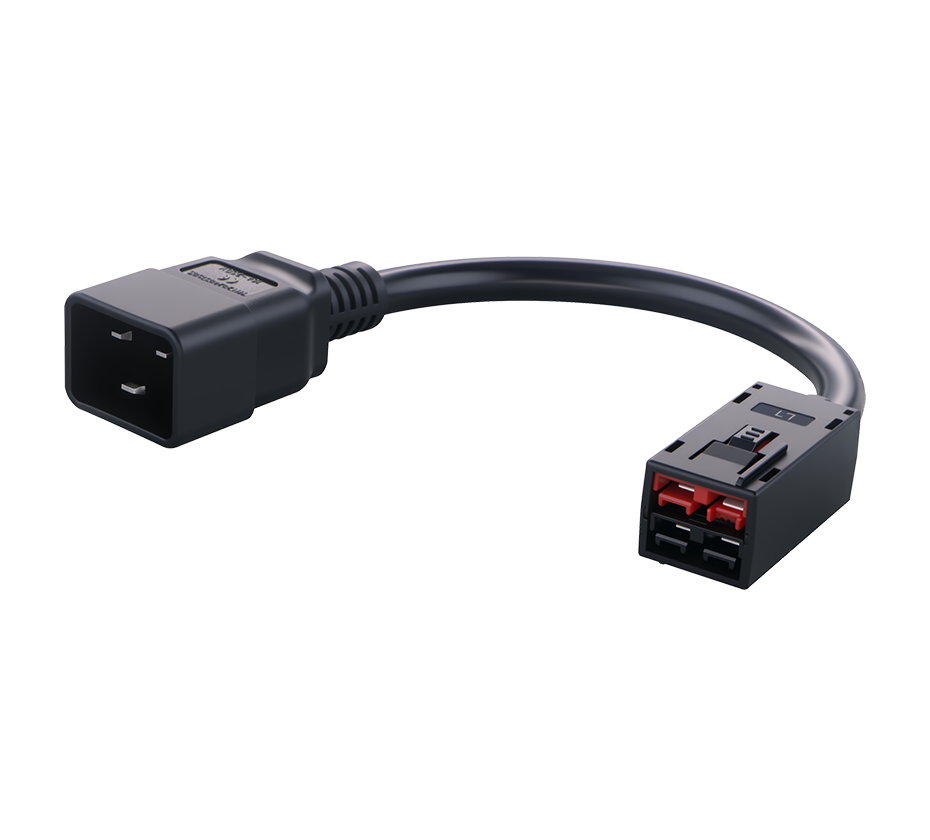
Environmental protection and safety performance is another core advantage of heavy equipment high-current plugs. Most high-standard heavy-duty plugs reach IP66, IP67, or even IP6K9K protection levels, which can completely resist dust intrusion, prevent water splash and short-term water immersion, and adapt to outdoor open-air operation, mining dust environment, and wet construction sites. The shell materials are mostly high-strength engineering plastics such as PA66 and PBT with UL94 V-0 flame retardant grade, which have excellent flame retardant, high temperature resistance, low temperature resistance, and impact resistance. They can work stably in the temperature range of -40°C to 125°C, avoiding shell cracking, deformation, and aging failure caused by extreme temperature changes. For special industrial scenarios such as chemical mines and coastal salt spray environments, the shells are also treated with anti-corrosion and anti-salt spray coating, which can effectively resist chemical corrosion and salt spray erosion and extend the service life of the plugs.
In terms of electrical safety performance, high-current plugs for heavy equipment are equipped with multiple safety protection mechanisms to eliminate electrical hazards in high-current transmission. The products are designed with anti-electric shock insulation protection structures, and all conductive parts are completely wrapped by insulating materials to prevent accidental contact and electric shock accidents. The built-in arc suppression structure can quickly extinguish the electric arc generated by plugging and unplugging the plug with electricity, avoiding arc burning of terminals and fire accidents caused by electric arc splashing. In addition, professional high-current plugs have over-current resistance and short-circuit resistance, which can withstand instantaneous large current impact when heavy equipment starts, and will not be damaged by instantaneous current surge, ensuring the stable start and operation of heavy equipment.
High-current plugs for heavy equipment cover a wide range of application scenarios, penetrating almost all fields involving heavy mechanical power operation. In the construction machinery industry, they are widely used in excavators, bulldozers, road rollers, pavers, and large crane equipment, providing stable power connection for equipment main power supply, battery charging, and auxiliary electrical systems. Construction sites are characterized by dust, mud, frequent equipment movement, and severe vibration, and the high protection level and anti-vibration performance of heavy-duty high-current plugs can fully adapt to such harsh conditions, avoiding frequent power failure and equipment failure caused by poor plug connection.
In the mining industry, high-current plugs are core connecting components for mining loaders, underground mining transport vehicles, drilling rigs, and mining power distribution equipment. The underground mining environment has extreme characteristics such as high dust, high humidity, low temperature, and occasional gas erosion, which puts forward higher requirements for the explosion-proof, dust-proof, and moisture-proof performance of electrical connectors. Mining-specific high-current plugs adopt explosion-proof structural design and intrinsically safe circuit design, which can avoid spark generation during operation, meet mining safety production standards, and ensure safe power transmission in underground high-risk environments.
In the field of port and logistics machinery, large container cranes, gantry cranes, forklifts, and shore power supply equipment all rely on high-current plugs for power connection. Port equipment operates outdoors for a long time, facing wind, rain, sun exposure, and coastal salt spray corrosion. The anti-aging, anti-corrosion, and weather-resistant performance of heavy-duty high-current plugs can resist long-term outdoor environmental erosion, maintaining stable connection performance throughout the year. At the same time, port equipment has frequent start-stop and large load changes, and the high-current impact resistance of the plugs can adapt to instantaneous current fluctuations and ensure continuous and stable operation of logistics handling equipment.
In the new energy and industrial manufacturing industry, high-current plugs are widely used in large generator sets, industrial laser equipment, heavy-duty processing machine tools, and energy storage equipment power connection scenarios. These devices have long-term high-power operation characteristics, requiring connectors to have low loss and high stability current transmission performance. High-current plugs can effectively reduce power transmission loss, improve energy utilization efficiency, and avoid equipment shutdown and production interruption caused by connector failure. In addition, in the field of agricultural machinery, large agricultural equipment such as large harvesters, rotary tillers, and agricultural engineering machinery also use high-current plugs to adapt to the complex field environment of mud, dust, and vibration.
The selection of high-current plugs for heavy equipment needs to follow scientific and standardized principles, and comprehensive consideration should be given to current rating, voltage level, environmental conditions, structural matching, and safety standards to avoid model mismatch causing performance failure and safety hazards. First of all, the current rating selection is the core link. It is necessary to select the plug rated current according to the maximum working current and instantaneous starting current of the equipment, and reserve a certain current margin. Generally, the plug rated current should be 1.2 to 1.5 times the maximum working current of the equipment, so as to avoid long-term overload operation leading to plug heating and aging. For heavy equipment with large instantaneous starting current such as cranes and excavators, a higher current margin needs to be reserved to resist instantaneous current impact.
Secondly, the voltage level should match the equipment power supply system. Industrial heavy equipment is mainly divided into 380V three-phase alternating current and 600V direct current power supply systems, and it is necessary to select plugs with corresponding voltage levels to avoid insulation breakdown and electrical failure caused by voltage mismatch. In terms of environmental adaptability selection, different protection levels and material types should be selected according to the equipment operating environment. For indoor fixed equipment with mild environment, IP54 protection level products can meet the demand; for outdoor, dusty, and wet working environments, IP67 and above high protection level plugs must be selected; for chemical corrosion and salt spray environments, anti-corrosion customized products are required.
In addition, structural matching and safety certification are essential selection indicators. The plug pin number, interface size, and locking structure need to match the equipment socket and cable specifications to ensure seamless assembly and stable connection. Regular heavy equipment high-current plugs must pass international and industry safety certifications such as IEC 60309, UL, and CE, which can ensure product quality and safety performance, and avoid unqualified products causing production safety accidents. At the same time, considering the maintenance convenience of equipment, it is preferred to select plug products with simple assembly, easy plugging and unplugging, and replaceable terminals, which can reduce later maintenance costs and improve equipment maintenance efficiency.
Daily maintenance and maintenance of high-current plugs for heavy equipment are crucial to extending product service life and ensuring equipment operation safety. In the daily operation process of heavy equipment, the plugs will be affected by vibration, dust accumulation, and environmental erosion for a long time, and regular inspection and maintenance can effectively avoid connection failure. First of all, regular appearance inspection should be carried out to check whether the plug shell is cracked, deformed, or aging, whether the locking structure is loose or invalid, and whether the cable connection part is worn or exposed. If damaged parts are found, they should be replaced in time to avoid potential safety hazards.
Secondly, regular cleaning and dust removal treatment should be carried out. Dust, mud, and impurities accumulated on the plug surface and inside the socket will lead to poor contact and increased contact resistance, resulting in heating failure. It is necessary to use dry clean air or soft tools to clean the internal and surface impurities regularly, and keep the plug connection part dry and clean. For plugs working in humid environments, moisture-proof and drying treatment should be done regularly to avoid terminal oxidation and short-circuit accidents caused by moisture intrusion.
In addition, regular electrical performance detection is required, including contact resistance detection, insulation resistance detection, and current-carrying performance detection. Excessively high contact resistance will cause serious heating during high-current operation, and insufficient insulation resistance will lead to electric leakage hazards. Professional testing instruments should be used for regular detection to ensure that the electrical performance of the plugs meets the standard requirements. At the same time, it is necessary to avoid violent plugging and unplugging, overload use, and long-term high-temperature baking of the plugs in daily use, so as to prevent mechanical damage and electrical performance attenuation of the products.
With the continuous upgrading of industrial intelligence and heavy equipment technology, the development trend of high-current plugs for heavy equipment is gradually moving towards intelligence, miniaturization, high efficiency, and environmental protection. In terms of intelligent development, more and more high-end heavy-duty high-current plugs are integrated with temperature monitoring, current monitoring, and fault alarm functions, which can monitor the real-time working temperature and current of the plug during operation, and automatically alarm and protect in case of overheating, overload, and poor contact, realizing intelligent fault early warning and improving equipment operation safety.
In terms of high-efficiency and energy-saving optimization, through the upgrading of conductive materials and structural optimization design, the transmission loss of high-current plugs is further reduced, the current-carrying efficiency is improved, and the energy consumption of industrial power transmission is reduced. The new generation of high-conductivity alloy materials replaces traditional copper materials, which not only ensures high current-carrying capacity but also reduces product weight, realizing lightweight design while improving performance. In terms of environmental protection and durability, new flame-retardant, low-smoke, and halogen-free environmental protection materials are widely used, which can avoid toxic gas emission in case of product combustion, meet industrial environmental protection standards, and have better aging resistance and longer service life.
In conclusion, high-current plugs for heavy equipment are vital basic components in the field of heavy industrial machinery. Their performance stability, safety, and durability directly determine the operation efficiency and production safety of heavy equipment. With the continuous development of industrialization and the increasing complexity of industrial working conditions, the performance requirements for heavy equipment high-current plugs will continue to improve. Continuous technological innovation, structural optimization, and quality upgrading of products are required to adapt to the iterative upgrading of heavy equipment, provide more reliable power connection guarantees for industrial production, and promote the stable development of the heavy industry field.
 Yang.taya@aitmpower.com
Tel: 15382891313
Phone: 0769-88878951
Fax: 0769-88878955
Wechat: 15382891313


 CN
 CN
 Home >


