
 2026-10-14
 1
With the rapid iteration of global mobile communication technology from 4G to 5G and the large-scale commercial deployment of 5G-A networks, the power load, operating density and environmental adaptability requirements of communication base stations have been comprehensively upgraded. As the core power transmission component of base station systems, high-current plugs undertake the key task of stable power supply for core equipment such as Remote Radio Units (RRU), Active Antenna Units (AAU), power distribution cabinets and base station main control units. Different from ordinary industrial plugs, base station high-current plugs are specially optimized for high-power transmission, long-term continuous operation, harsh outdoor environment resistance and anti-interference performance, and have become an indispensable basic component to ensure the high-reliability operation of 5G communication infrastructure. In the context of the continuous expansion of 5G base station coverage, the deepening of ultra-dense networking and the rise of edge computing base stations, the technical performance, structural design and service life of high-current plugs directly determine the operating stability, energy consumption level and maintenance cost of the entire base station system.
The core application scenario of base station high-current plugs is the power connection link of macro base stations, micro base stations, outdoor distributed base stations and edge communication stations. Traditional 4G base stations have relatively low power consumption, and ordinary low-current connectors can meet the operational needs. However, 5G base stations adopt multi-band, high-frequency and large-bandwidth signal transmission technology, and the power consumption of single-station equipment has increased by 2-3 times compared with 4G. High-power AAU and multi-channel RRU equipment put forward higher requirements for current transmission capacity, requiring plugs to stably carry high-current loads for a long time without heating, aging or poor contact. At present, the mainstream base station high-current plugs on the market have a current coverage range of 20A to 60A, and some high-power customized models can reach 100A or even higher, which fully matches the power supply requirements of different types of 5G base station equipment. In addition, base station power supply systems mostly adopt 48V DC power supply mode, and high-current plugs need to adapt to wide-voltage DC transmission scenarios, with a rated voltage range covering 0-400V DC, which can effectively cope with voltage fluctuations in the actual operation of base station power grids.
The electrical performance design of base station high-current plugs is the core of ensuring stable power transmission. First of all, low contact resistance is a key technical indicator of high-current plugs. The contact parts of high-quality base station high-current plugs are made of high-purity copper alloy materials with silver or gold plating treatment. The high-precision contact structure increases the contact area, effectively reducing contact resistance to below 0.5mΩ. Low contact resistance can significantly reduce heat generation during high-current transmission, avoid energy loss caused by resistance heating, and prevent equipment failure risks such as circuit burnout and power interruption caused by long-term high-temperature operation. In high-current working conditions, even a tiny increase in contact resistance will lead to a sharp rise in temperature, which will accelerate the aging of insulating materials and reduce the service life of connectors. Therefore, strict resistance control standards run through the entire production and testing process of base station high-current plugs.
Secondly, the high-current load resistance and surge resistance of the plug are crucial to the safety of the base station system. Base station equipment will generate instantaneous current surges during startup, peak operation and line switching. Qualified base station high-current plugs can withstand short-term surge current impact, and some professional models can resist 40kA instantaneous surge current for 1 second, which effectively avoids plug ablation and line tripping caused by current spikes. At the same time, these plugs have excellent continuous load capacity, supporting long-term full-load operation without performance attenuation, meeting the 24-hour uninterrupted operation requirements of communication base stations throughout the year. Compared with ordinary industrial plugs, base station-specific high-current plugs have undergone strict high-temperature aging tests and load cycle tests, and can maintain stable electrical performance after thousands of mating cycles and long-term high-load operation.
In terms of mechanical structure design, base station high-current plugs fully consider the complex installation and operating environment of communication base stations. Most products adopt professional bayonet locking or thread anti-loosening structures, which can effectively resist vibration and impact. Base stations are mostly built on tower poles, building roofs and outdoor open areas, and will be affected by natural wind vibration, equipment operation vibration and external impact forces for a long time. Ordinary plugs are prone to loose contact and line disconnection due to vibration, while base station high-current plugs are equipped with customized anti-loosening locking devices. After precise mating and locking, the connection gap is completely eliminated, ensuring zero disconnection and zero poor contact in a vibration environment. In addition, some high-end models are designed with keyed anti-reversal structures, which can prevent reverse installation and wrong connection during on-site construction and maintenance, greatly improving the accuracy and safety of field operation.
The structural size of the plug is optimized for the compact layout of base station equipment. With the development of 5G base stations towards miniaturization and integration, the internal space of base station cabins and outdoor equipment boxes is increasingly compact. High-current plugs adopt a compact integrated design, integrating power transmission and structural protection functions, which saves installation space while ensuring high-current transmission capacity. The wiring part supports multi-specification cable matching, compatible with copper core cables of 2.5mm² to 16mm², covering the wiring requirements of low-power micro base stations, medium-power macro base stations and high-power AAU equipment. At the same time, the plug is equipped with an integrated strain relief structure, which can effectively disperse the tension of the cable root, avoid cable breakage and core wire exposure caused by long-term tension and bending, and improve the durability of the connection system.
Environmental adaptability is another core advantage of base station high-current plugs. Most base station power plugs need to adapt to outdoor open-air working conditions, and face extreme environmental tests such as high temperature, low temperature, rainwater erosion, ultraviolet radiation, dust deposition and chemical corrosion. The shell of high-quality base station high-current plugs is made of UL94 V-0 grade flame-retardant nylon and high-strength engineering plastic materials, which has excellent flame retardant, high temperature resistance and aging resistance. The operating temperature range can cover -55°C to +105°C, which can adapt to the extreme temperature differences in northern cold regions and southern high-temperature and high-humidity regions throughout the year. The internal sealing structure is matched with high-performance silicone rubber sealing rings, which can reach IP67 dustproof and waterproof protection level, completely isolating rainwater, dust and humid air, and preventing internal metal contacts from oxidation, corrosion and short circuit failure.
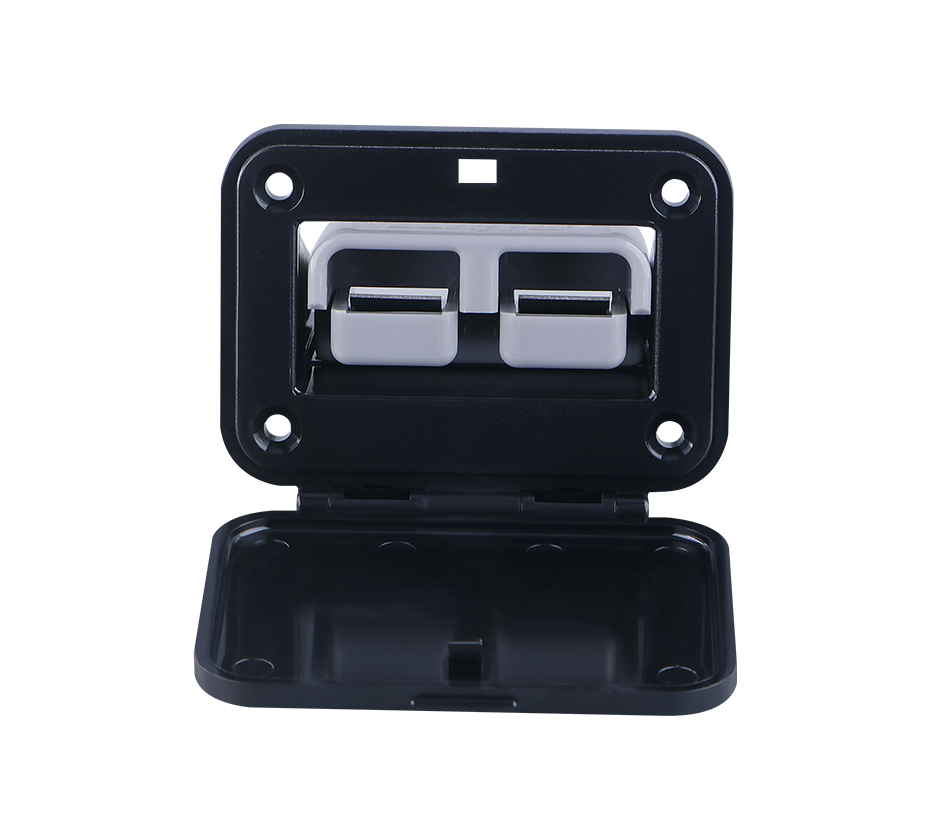
In terms of safety performance, base station high-current plugs meet the strict safety standards of the communication industry. All products have passed UL, RoHS, REACH and other international certifications, with non-toxic and environmentally friendly materials and safe and reliable structural design. The integral insulating shell can completely isolate the live parts, avoiding electric leakage and electric shock risks during installation and maintenance. The flame-retardant materials can effectively prevent flame spread in case of circuit short circuit and overload, reducing the risk of base station fire accidents. In addition, the plug has excellent electromagnetic shielding performance, with a 360° full shielding structure, which can effectively isolate external electromagnetic interference and prevent the power transmission line from generating electromagnetic radiation interference to the base station signal receiving and transmitting system, ensuring the stability of 5G signal transmission quality.
In practical engineering applications, base station high-current plugs form a complete product series to meet the differentiated needs of various base station scenarios. For low-power 5G micro base stations and indoor distribution base stations, compact low-current high-power plugs with 20A-30A rated current are adopted, which are small in size and easy to install, adapting to narrow indoor installation spaces. For medium-power macro base station RRU equipment, 30A-50A universal high-current plugs are used, which balance transmission performance and cost, and are suitable for large-scale popularization and application. For high-power 5G AAU equipment and multi-band integrated base stations, 50A-60A high-current enhanced plugs are configured, which support ultra-high power load operation and meet the high-energy consumption operation needs of new-generation 5G equipment. At the same time, the product series includes 2-pin DC power plugs and 3-pin AC power plugs, which are compatible with AC and DC dual power supply systems of base stations, realizing full-scene coverage of base station power connections.
The maintenance convenience of base station high-current plugs is fully considered in the design. The plug and socket adopt a modular detachable structure, and the internal contacts and sealing parts can be replaced independently without replacing the entire connector, which greatly reduces the later maintenance cost of base stations. The field wiring mode adopts screw crimping or quick crimping design, which can be installed and maintained with conventional tools, without professional welding equipment, improving the efficiency of on-site construction and emergency maintenance. For legacy 4G base station renovation and 5G base station upgrade projects, most high-current plugs have backward compatibility, which can be perfectly matched with traditional base station power distribution systems, avoiding overall line replacement and saving project investment costs.
With the continuous development of 5G network construction and the arrival of 5G-A and 6G pre-research stages, the power demand of communication base stations will continue to rise, and the technical requirements for high-current plugs will be further improved. Future base station high-current plugs will develop towards higher current density, smaller volume, intelligent monitoring and ultra-long service life. The intelligent high-current plug with built-in temperature and current sensing modules can realize real-time monitoring of plug operating temperature, current load and working state, actively warn of abnormal heating and overload faults, and realize predictive maintenance of base station power systems. At the same time, with the popularization of green energy-saving base stations, low-energy-consumption and low-loss high-current plugs will become the mainstream of the market, helping communication operators reduce the overall energy consumption and operating cost of base stations. In conclusion, high-current plugs for base stations, as the basic guarantee for the stable operation of communication power systems, play an irreplaceable role in the construction and operation of modern 5G communication infrastructure, and their technical upgrading and iterative innovation will continue to empower the high-quality development of mobile communication networks.
Outdoor 5G Connectors (IP67)
IP67-rated outdoor 5G connectors are core passive components specially designed for the outdoor harsh environment of 5G communication networks, covering radio frequency signal transmission, power supply connection and signal control link connection of outdoor base station equipment. The IP67 protection standard is defined by the International Electrotechnical Commission (IEC 60529), where the first digit "6" means completely dust-tight, with no dust entering the internal structure of the connector, and the second digit "7" means waterproof immersion protection, which can resist short-term immersion in 1-meter deep water without water ingress and functional failure. This high-level protection capability enables outdoor 5G connectors to adapt to various complex and harsh outdoor working conditions such as wind, rain, snow, frost, ultraviolet radiation, dust storm and industrial pollution, and is the key to ensuring the long-term stable operation of outdoor 5G base station equipment. Different from indoor connectors, IP67 outdoor 5G connectors take environmental adaptability, anti-interference performance and long-term reliability as the core design indicators, and are widely used in outdoor macro base stations, tower-mounted RRU/AAU equipment, roof base stations, outdoor distribution boxes and 5G edge outdoor equipment.
The iterative upgrade from 4G to 5G communication networks has put forward revolutionary requirements for outdoor connectors. 5G communication adopts high-frequency band transmission, large bandwidth and ultra-low delay technical standards, and the signal transmission frequency is significantly higher than that of 4G. The traditional outdoor connectors used in 4G networks are difficult to meet the high-frequency transmission performance requirements of 5G, and are prone to signal attenuation, passive intermodulation interference and electromagnetic leakage in high-frequency working conditions. At the same time, 5G base stations are deployed more densely, with a large number of outdoor small cells and distributed base stations, and the operating environment is more diverse and complex. A considerable number of base stations are built in coastal high-humidity and salt-fog areas, industrial pollution areas and desert dust areas, which put forward higher requirements for the corrosion resistance, dust resistance and waterproof performance of connectors. Therefore, IP67 high-protection outdoor 5G connectors have become the standard configuration of modern 5G outdoor base station construction, completely solving the environmental adaptability problems of traditional connectors in complex scenarios.
In terms of product classification, outdoor 5G IP67 connectors can be divided into three core categories according to functional attributes: radio frequency signal connectors, power supply connectors and signal control connectors. Radio frequency connectors are mainly used for 5G antenna and RRU/AAU radio frequency link connection, responsible for high-frequency signal transmission, including mainstream types such as DIN, 4.3-10 and N-type connectors, with excellent high-frequency transmission performance and low passive intermodulation characteristics. Power supply connectors are responsible for the power supply connection of outdoor base station equipment, supporting high-current stable transmission, with anti-loosening and anti-vibration structural design, matching the power demand of 5G high-power equipment. Signal control connectors are used for the transmission of base station monitoring signals, control signals and data signals, realizing remote monitoring and intelligent control of outdoor equipment. All three types of connectors adopt a unified IP67 protection design in outdoor application scenarios, ensuring consistent environmental adaptability of the entire base station connection system.
The core technical advantages of IP67 outdoor 5G connectors are reflected in three dimensions: environmental protection performance, high-frequency transmission performance and structural reliability. In terms of environmental protection performance, the whole series of products adopt multi-layer sealing and integrated waterproof design. The shell is made of high-strength zinc alloy or engineering plastic with anti-corrosion plating treatment, which can resist ultraviolet aging, salt-fog corrosion and chemical erosion. The internal sealing system adopts high-elasticity silicone rubber sealing rings and multi-channel waterproof grooves, which can effectively block the invasion of rainwater, dew and dust. After strict waterproof immersion test, dust aging test and salt-fog corrosion test, the connectors can maintain complete structural integrity and stable electrical performance after long-term outdoor exposure. Compared with IP44 and IP54 low-protection connectors, IP67 connectors have absolute advantages in extreme weather such as heavy rain, typhoon and sandstorm, and can avoid equipment failure caused by environmental intrusion.
High-frequency transmission performance is the key technical indicator that distinguishes 5G outdoor connectors from traditional connectors. 5G networks cover sub-6GHz low-frequency bands and millimeter-wave high-frequency bands, and the signal transmission frequency range is wide and the bandwidth is large. IP67 outdoor 5G radio frequency connectors adopt precision machining technology and optimized impedance matching design, with stable 50Ω characteristic impedance, low insertion loss and high return loss. In the full frequency band of 6GHz and below, the insertion loss is less than 0.1dB, and the return loss is greater than 20dB, which can minimize signal attenuation and ensure the integrity of 5G high-speed data transmission. At the same time, the products have excellent low passive intermodulation performance, with PIM value less than -160dBc, which can effectively avoid intermodulation interference generated during multi-band signal transmission, solve the problem of signal distortion and network interference in 5G multi-band base stations, and ensure the ultra-low delay and high stability of 5G network signals.
Electromagnetic shielding performance is another important core advantage of IP67 outdoor 5G connectors. Outdoor base station equipment is in an open electromagnetic environment, vulnerable to external electromagnetic signal interference, and the internal signal transmission of the base station will also generate electromagnetic radiation. IP67 outdoor 5G connectors adopt 360° full coverage electromagnetic shielding structure, with high-conductivity metal shielding layer inside, which can effectively isolate external electromagnetic interference and prevent internal signal electromagnetic leakage. The shielding efficiency is higher than 90dB in the working frequency band, which fully meets the electromagnetic compatibility standards of communication industry equipment. This excellent shielding performance ensures that the 5G base station can resist complex electromagnetic interference in the outdoor environment, avoid network fluctuation and signal interruption caused by electromagnetic interference, and improve the anti-interference ability and operating stability of the network.
In terms of mechanical structure reliability, IP67 outdoor 5G connectors are fully optimized for outdoor long-term vibration and tensile working conditions. Most products adopt bayonet quick-locking or threaded anti-loosening structure, which has the characteristics of quick mating and firm locking. The bayonet locking structure can complete accurate mating and locking in one step, with clear locking feedback, avoiding virtual connection and wrong connection; the threaded structure has strong tensile resistance and vibration resistance, suitable for tower high-altitude installation scenarios. The connector has a long service life of mating cycles, which can maintain stable electrical and mechanical performance after more than 500 times of plugging and unplugging, meeting the maintenance and upgrading needs of base stations for many years. At the same time, the product is equipped with a professional cable tension relief structure, which can disperse the external tension of the cable, prevent the cable core from breaking and the connection from loosening caused by long-term wind swinging and artificial pulling, and greatly improve the structural durability of the connection system.
The temperature adaptability of IP67 outdoor 5G connectors covers the global extreme climate range. The whole product series can work stably in the temperature range of -55°C to +105°C, and will not have structural deformation, sealing failure and performance attenuation in low-temperature freezing environment and high-temperature exposure environment. The internal insulating materials and sealing materials have passed strict low-temperature toughness test and high-temperature aging test, which can resist extreme temperature changes and long-term temperature cycle impact. For alpine regions with long-term low temperature and high-temperature desert regions, the connectors can maintain consistent working performance, realizing all-weather and full-season stable operation of outdoor base station equipment.
In terms of safety and standard compliance, all IP67 outdoor 5G connectors comply with international IEC 60529 protection standards, 3GPP communication industry standards and domestic communication equipment technical specifications. The materials are environmentally friendly and non-toxic, meeting RoHS and REACH environmental protection certification requirements, and the shell materials have UL94 V-0 flame retardant grade, which can effectively prevent flame spread in case of circuit failure and improve the safety of outdoor base station operation. The power-type IP67 connectors have over-current protection, leakage prevention and short-circuit resistance, while the signal-type connectors have anti-static and anti-surge design, which can resist instantaneous static electricity and surge impact in outdoor environment and protect the internal circuit of base station equipment from damage.
The engineering application scenarios of IP67 outdoor 5G connectors are extremely extensive, covering all outdoor link connections of 5G networks. In macro base station scenarios, they are used for antenna feeder connection, RRU power supply and signal connection of tower-mounted base stations, realizing stable transmission of radio frequency signals and power supply of high-power equipment. In outdoor small cell and micro base station scenarios, compact IP67 connectors are adopted to adapt to the miniaturized and integrated design of small base stations, meeting the connection needs of dense urban network coverage. In coastal and industrial complex scenarios, anti-corrosion enhanced IP67 connectors are used, with upgraded salt-fog corrosion resistance and chemical resistance, adapting to high-humidity salt-fog and industrial pollution environments. In addition, they are also widely used in 5G edge computing outdoor equipment, outdoor communication distribution boxes, smart city communication terminals and other scenarios, becoming a universal connection solution for outdoor 5G communication equipment.
The construction and maintenance advantages of IP67 outdoor 5G connectors are prominent in engineering practice. The quick-mating structure simplifies the on-site installation process, reduces the technical threshold of construction personnel, and greatly improves the construction efficiency of base station projects. The modular design realizes the standardization of product interface, which is convenient for later equipment replacement, line maintenance and network upgrading. Compared with traditional low-protection connectors, IP67 connectors have extremely low failure rate in outdoor operation, which can effectively reduce the frequency of on-site maintenance, reduce the operating and maintenance costs of communication operators, and improve the overall operational efficiency of 5G networks. In the renovation project of old 4G base stations, IP67 outdoor connectors can be perfectly compatible with traditional base station interfaces, realizing seamless network upgrading without large-scale transformation of original lines and equipment.
With the continuous expansion of 5G network scale and the commercialization of 5G-A technology, the market demand for IP67 outdoor 5G connectors is constantly upgrading. Future products will develop towards miniaturization, high integration, intelligence and ultra-low loss. Miniaturized high-density IP67 connectors can adapt to the ultra-dense networking of 5G small cells and save equipment installation space; integrated connectors integrating power supply, signal and radio frequency functions simplify the base station connection structure and reduce equipment volume and cost. Intelligent IP67 connectors with built-in monitoring modules can realize real-time monitoring of connection temperature, signal quality and working state, support intelligent operation and maintenance of base stations, and realize early warning and automatic troubleshooting of hidden faults. In addition, with the development of green low-carbon communication, energy-saving and low-loss IP67 connectors will further reduce the energy consumption of base station transmission, helping the communication industry achieve the goal of carbon peaking and carbon neutrality. As the core guarantee for outdoor 5G network operation, IP67 outdoor connectors will continue to iterate and upgrade with the development of communication technology, providing solid basic support for the high-reliability and high-efficiency operation of 5G and future 6G networks.
 Yang.taya@aitmpower.com
Tel: 15382891313
Phone: 0769-88878951
Fax: 0769-88878955
Wechat: 15382891313


 CN
 CN
 Home >