
 2026-10-14
 1
As the global energy storage industry continues its rapid expansion, the demand for reliable, high-current electrical connectors has never been greater. Among the most critical components in battery energy storage systems (BESS), electric vehicles, and industrial power distribution networks, the 175A wire-to-wire connector occupies a strategic middle ground—delivering substantial current-carrying capacity while maintaining a compact form factor suitable for a wide range of applications.
The global energy storage connector market was valued at approximately US$597 million in 2024 and is projected to reach US$1.616 billion by 2031, representing a compound annual growth rate of 15.3% during the forecast period. This remarkable growth trajectory underscores the pivotal role that connectors like the 175A wire-to-wire variant play in enabling the clean energy transition. Whether deployed in residential battery backup systems, commercial microgrids, or the high-voltage battery packs of electric forklifts and automated guided vehicles, the 175A connector serves as the vital electrical bridge that ensures safe, efficient, and durable power transmission.
This comprehensive guide examines every facet of 175A energy storage wire-to-wire connectors—from their fundamental design principles and material composition to their performance characteristics, industry standards, application scenarios, and future development trends. By the end of this article, engineers, procurement specialists, and system integrators will possess a thorough understanding of how to evaluate, select, and deploy these essential components in demanding energy storage environments.
What Is a 175A Energy Storage Wire-to-Wire Connector?
A 175A energy storage wire-to-wire connector is an electromechanical device designed to establish a reliable electrical connection between two conductors, each carrying currents of up to 175 amperes. Unlike wire-to-board connectors that terminate directly onto a printed circuit board, wire-to-wire configurations join two cable ends, making them particularly suitable for battery-to-battery interconnections, battery-to-inverter links, and other high-current power distribution pathways where flexible cable routing is required.
The "175A" designation refers to the connector's rated current capacity under specified test conditions, typically at a defined ambient temperature and with a maximum permissible temperature rise. It is essential to recognize that the rated current is not a fixed value but rather a parameter that depends on factors including conductor size, ambient temperature, and the allowable temperature rise of the contact system.
These connectors are engineered to meet the rigorous demands of modern energy storage systems. They must maintain low contact resistance over thousands of mating cycles, withstand harsh environmental conditions ranging from extreme temperatures to moisture and vibration, and provide robust safety features that prevent accidental disconnection or electrical hazards. The 175A wire-to-wire connector family includes products from established manufacturers such as Anderson Power Products (SB175 series), Amphenol FCI (IPC-M175), and numerous compatible alternatives that have become de facto standards in the industry.
Technical Specifications and Performance Parameters
Electrical Characteristics
The electrical performance of a 175A wire-to-wire connector is defined by several interrelated parameters that collectively determine its suitability for a given application.
Rated Current: The nominal current rating of 175A is typically specified for a specific conductor size—most commonly 1/0 AWG (approximately 53.5 mm²)—under defined ambient temperature conditions. For the Anderson SB175 series and equivalent products, the rated current reaches 175A with 1/0 AWG wire, while configurations using smaller conductors such as 2 AWG or 4 AWG may carry lower currents. The IPC-M175 connector from Amphenol FCI achieves its 175A rating with 1/0 contact size, delivering rated mating cycles of up to 10,000.
Rated Voltage: The majority of 175A wire-to-wire connectors are rated for 600V AC/DC operation. This voltage rating is sufficient for most low-voltage energy storage applications, including 48V, 96V, and 400V DC battery systems commonly found in residential and commercial energy storage installations. Some variants may offer higher voltage ratings for specialized applications, but the 600V ceiling reflects both the intended application scope and the dielectric properties of the insulating materials employed.
Contact Resistance: Low contact resistance is paramount for minimizing power loss and heat generation at the connection interface. High-quality 175A connectors typically exhibit contact resistance values of less than 90 micro-ohms (μΩ) per contact pair. Some premium products achieve even lower values, with contact resistance specified at 0.05 milliohms (mΩ) or approximately 50 μΩ. This low resistance is achieved through the use of silver-plated copper alloy contacts that provide both excellent conductivity and resistance to oxidation.
Insulation Resistance: The insulating materials used in 175A connectors provide insulation resistance values typically exceeding 5,000 megohms (MΩ), ensuring that leakage currents remain negligible even under humid conditions. This high insulation resistance is critical for maintaining system safety and preventing ground faults in high-voltage battery systems.
Withstand Voltage: The dielectric strength of the connector is verified through withstand voltage testing, typically at 2,200V DC for one minute without breakdown. This test confirms that the insulating barriers between adjacent contacts and between contacts and the housing can withstand transient overvoltages that may occur during switching operations or fault conditions.
Mechanical Properties
The mechanical design of a 175A wire-to-wire connector determines its durability, ease of use, and reliability over its service life.
Mating Cycles: The rated mechanical life of these connectors is typically specified at up to 10,000 mating and unmating cycles without load. This high cycle life reflects the robust contact design and the use of durable materials that resist wear and deformation. Under load conditions (hot plugging), the cycle life is substantially lower—typically limited to approximately 250 cycles at reduced current levels—because electrical arcing during disconnection accelerates contact degradation.
Insertion and Withdrawal Forces: The force required to mate and unmate the connector must balance ease of use against secure retention. For a typical 175A connector, the average insertion force is approximately 110N, while the connector holding force (the force required to separate mated connectors) is specified at a minimum of 500N. These values ensure that the connector can be easily assembled by hand while providing sufficient retention to withstand vibration and accidental pulling in field installations.
Contact Barrel Wire Size: The contact barrels accommodate wire sizes ranging from 4 AWG to 1/0 AWG, providing flexibility in system design. The ability to terminate different conductor sizes within the same connector family allows engineers to optimize cable gauge based on specific current requirements and routing constraints, without changing the connector interface.
Material Composition
The materials selected for a 175A wire-to-wire connector directly influence its electrical performance, thermal behavior, and environmental durability.
Housing Material: The insulating housing is typically molded from polycarbonate (PC) or similar engineering thermoplastics that offer an optimal balance of mechanical strength, dielectric properties, and flame resistance. Polycarbonate housings are characterized by high impact resistance and dimensional stability, ensuring that the connector maintains its form and function throughout its service life. The flammability rating of the housing material is typically UL94 V-0, meaning that the material self-extinguishes within 10 seconds when removed from a flame source—a critical safety characteristic for energy storage applications.
Contact Material and Plating: The contact terminals are precision-stamped from high-conductivity copper alloys. Silver plating is the preferred surface finish due to its excellent electrical conductivity, low contact resistance, and resistance to oxidation. Unlike gold plating, which is cost-prohibitive for high-current applications, silver plating maintains low resistance even after repeated mating cycles and provides reliable performance across a wide temperature range. The silver plating thickness typically ranges from 3 to 5 microns, sufficient to ensure consistent contact performance over the connector's rated life.
Spring Elements: Internal spring mechanisms, typically fabricated from stainless steel, provide the contact normal force required to maintain low-resistance electrical contact between mating terminals. These springs are designed to maintain consistent force over thousands of cycles, compensating for any minor wear or deformation that may occur during repeated mating operations.
Design Features and Safety Mechanisms
Color-Coded and Mechanical Keying
One of the most important safety features of 175A wire-to-wire connectors is the color-coding and mechanical keying system that prevents accidental cross-mating of connectors with different voltage ratings. The IPC-M series, for example, uses different housing colors—grey, blue, and red—to designate different current and voltage ratings. Even though all connectors in the IPC-M family are UL-rated at 600V, the color-coding serves as a visual and mechanical barrier against misconnection, which could result in dangerous overcurrent conditions or equipment damage.
The mechanical keying mechanism physically prevents a connector of one rating from mating with a connector of a different rating, providing a fail-safe against human error during installation or maintenance. This feature is particularly valuable in complex energy storage systems where multiple voltage rails may be present in close proximity.
Hermaphroditic Contact Design
Many 175A wire-to-wire connectors employ a hermaphroditic contact design, in which both mating halves utilize identical contact configurations rather than the conventional male-female pin-and-socket arrangement. This design approach, exemplified by the Anderson Power Products SB series and the Amphenol IPC-M series, offers several advantages. First, it simplifies inventory management because only one type of connector housing and contact kit is required for both cable ends. Second, it eliminates the risk of mismatched male-female pairs in the field. Third, the flat, self-wiping contact surfaces maintain low resistance even if the connector is subjected to vibration or thermal cycling.
Retention and Locking Mechanisms
The retention system of a 175A wire-to-wire connector comprises multiple elements working in concert to ensure a secure, vibration-resistant connection. The primary retention force is provided by the contact spring system, which maintains a minimum of 500N of holding force between mated connectors. Secondary retention features may include locking tabs, latches, or threaded coupling rings, depending on the specific product design and application requirements.
For applications subject to high levels of shock and vibration—such as electric forklifts, construction machinery, and mobile energy storage systems—additional retention mechanisms such as secondary locks or mounting brackets may be specified to ensure that the connector remains securely mated under all operating conditions.
Standards and Compliance
UL 94 Flammability Rating
The UL 94 V-0 rating is a fundamental requirement for connector housings used in energy storage applications. This standard specifies that the plastic material must self-extinguish within 10 seconds after removal of an ignition source, with no dripping of flaming particles that could ignite underlying materials such as cotton. The polycarbonate and nylon materials commonly used in 175A connector housings meet or exceed this requirement, providing an essential layer of fire safety in battery systems where thermal runaway is a recognized hazard.
Intermateability and Compatibility Standards
A defining characteristic of the 175A wire-to-wire connector market is the widespread adoption of standardized mating interfaces. The Anderson Power Products SB series has become a de facto industry standard, with numerous manufacturers producing connectors that are form, fit, and function compatible with the original design. This intermateability is not merely a market convenience—it has been validated through rigorous testing, including UL testing and approval for intermating with competitive connectors. For system integrators, this compatibility ensures supply chain flexibility and reduces the risk of vendor lock-in.
RoHS and REACH Compliance
Modern 175A wire-to-wire connectors must comply with the European Union's Restriction of Hazardous Substances (RoHS) directive and the Registration, Evaluation, Authorisation and Restriction of Chemicals (REACH) regulation. These requirements restrict the use of substances such as lead, mercury, cadmium, and certain phthalates in electrical and electronic equipment, ensuring that connectors can be safely deployed in global markets without environmental or health concerns.
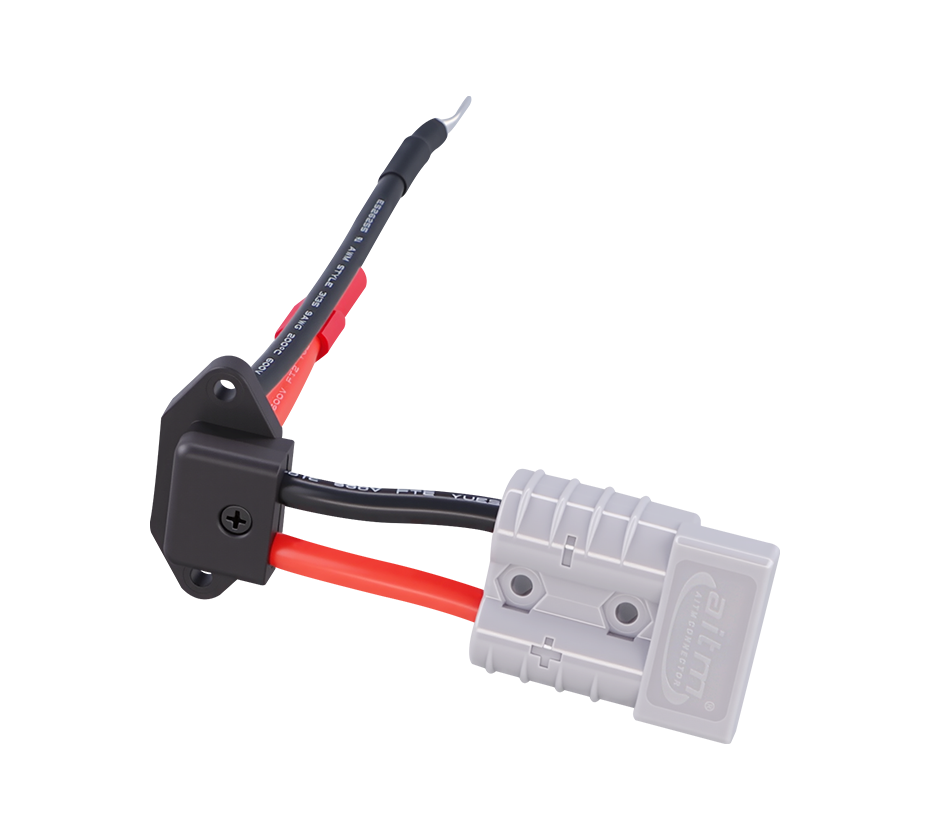
Application Scenarios in Energy Storage Systems
Battery Energy Storage Systems (BESS)
The most prominent application for 175A wire-to-wire connectors is in battery energy storage systems, where they serve as the critical links between battery modules, racks, and power conversion systems. In a typical containerized BESS, hundreds of individual battery cells are organized into modules and racks that must be interconnected with high-current, low-resistance connections. The 175A connector is ideally suited for this role because it provides ample current capacity for module-to-module and rack-to-rack connections while its wire-to-wire configuration accommodates the flexible cable routing required in dense battery enclosures.
The IPC-M175 connector, for instance, is specifically marketed for energy storage system (ESS) applications, offering 175A per 1/0 contact and UL-tested intermating capability with competitive products. In these installations, the connector's low contact resistance (typically below 90 μΩ) is critical for minimizing energy losses and reducing heat generation within the battery enclosure—a key consideration for maintaining thermal stability and maximizing round-trip efficiency.
Electric Vehicle Charging Infrastructure
The electric vehicle charging market represents another significant application domain for 175A wire-to-wire connectors. While high-power DC fast charging (150kW and above) typically employs specialized connector standards such as CCS or CHAdeMO, lower-power AC charging stations and the internal wiring of charging cabinets frequently utilize 175A connectors for power distribution. In fleet charging depots and commercial charging installations, 175A connectors provide a reliable, cost-effective solution for distributing AC power from the grid connection to individual charging posts.
Industrial Machinery and Robotics
Industrial equipment such as electric forklifts, automated guided vehicles (AGVs), and heavy-duty robotics rely on 175A wire-to-wire connectors for battery pack connections. The Anderson SB175 series, in particular, has a long history of use in forklift battery applications, where the connector must withstand frequent battery swaps, exposure to industrial environments, and the mechanical stresses of vehicle operation. The high cycle life (up to 10,000 mating cycles) and robust construction of these connectors make them well-suited to the demanding duty cycles of industrial machinery.
Renewable Energy Integration
In solar photovoltaic (PV) and wind energy systems, 175A wire-to-wire connectors facilitate the connection between energy storage batteries and inverters, as well as within battery banks used to smooth the intermittent output of renewable generation sources. The ability of these connectors to operate reliably across a wide temperature range (-20°C to +105°C or wider) ensures dependable performance in outdoor installations subject to seasonal temperature variations.
Installation Best Practices
Proper Crimping Techniques
The performance and reliability of a 175A wire-to-wire connector depend heavily on the quality of the crimped connection between the contact barrel and the conductor. Proper crimping requires the use of a calibrated crimping tool matched to the specific contact and wire size. The crimp must achieve a specified compression ratio that ensures intimate metal-to-metal contact between the conductor strands and the contact barrel without fracturing the conductor strands or damaging the plating.
Visual inspection of the crimped connection should verify that the conductor is fully inserted into the contact barrel, that the crimp indentation is centered on the barrel, and that there are no signs of cracking or deformation in the contact material. For critical applications, pull-testing a sample of crimped connections can provide quantitative verification of crimp quality.
Cable Routing and Strain Relief
Proper cable routing is essential to prevent mechanical stress from being transmitted to the connector contacts. Cables should be routed with sufficient bend radius to avoid kinking or excessive tension at the connector interface. Strain relief mechanisms, such as cable clamps or heat-shrink tubing, should be employed to secure the cable and prevent movement that could cause contact fretting or connector disengagement.
In energy storage cabinets, cables should be routed away from sharp edges and heat sources, and adequate spacing should be maintained between power cables and signal cables to minimize electromagnetic interference.
Environmental Protection
While many 175A wire-to-wire connectors are not inherently waterproof, they can be deployed in outdoor or humid environments when installed within appropriate enclosures or when supplemented with environmental sealing accessories. For applications requiring direct exposure to moisture, connectors with integrated sealing gaskets or those rated to IP67 should be specified. Proper installation of sealing components—including correct orientation of gaskets and uniform tightening of coupling mechanisms—is essential to achieving the rated ingress protection.
Market Trends and Future Developments
Increasing Voltage Ratings
As energy storage systems evolve toward higher voltages to improve efficiency and reduce conductor sizes, the demand for connectors rated at 1,000V DC and above is growing. While the current generation of 175A wire-to-wire connectors is predominantly rated at 600V, manufacturers are developing higher-voltage variants to meet the requirements of next-generation BESS architectures. This trend is driven by the adoption of 1,500V DC system architectures in utility-scale energy storage installations, which require connectors capable of withstanding higher dielectric stresses and providing greater creepage and clearance distances.
Enhanced Thermal Management
Thermal management is emerging as a critical design consideration for high-current connectors. The push toward higher power densities in energy storage systems—driven by space constraints in urban installations and the desire to minimize balance-of-system costs—is placing greater demands on connector thermal performance. Manufacturers are responding with innovations such as improved contact geometries that reduce current density, advanced materials with higher thermal conductivity, and integrated temperature sensors that enable real-time monitoring of connector temperature for predictive maintenance and safety assurance.
Digitalization and Smart Connectors
The broader trend toward digitalization in energy storage systems is extending to the connector domain. Future 175A wire-to-wire connectors may incorporate embedded sensors for monitoring temperature, current, and mating status, enabling predictive maintenance and enhancing system safety. These "smart connectors" could communicate with battery management systems (BMS) to provide early warning of contact degradation, overcurrent events, or incomplete mating—conditions that, if undetected, could lead to catastrophic failures in high-energy battery systems.
Sustainability and Recyclability
Environmental sustainability is increasingly influencing connector design and material selection. Manufacturers are exploring bio-based engineering plastics and recycled materials for connector housings, while also designing products for easier disassembly and material recovery at end of life. These initiatives align with the broader circular economy objectives of the energy storage industry and are expected to become standard practice as regulatory requirements for electronic waste management tighten globally.
The 175A energy storage wire-to-wire connector represents a mature yet continuously evolving technology that is indispensable to the modern energy storage ecosystem. From its robust electrical and mechanical specifications to its comprehensive safety features and broad application versatility, this connector class delivers the performance and reliability that energy storage systems demand. As the industry advances toward higher voltages, greater power densities, and increasingly sophisticated monitoring capabilities, the 175A wire-to-wire connector will continue to adapt and evolve, remaining a cornerstone of safe and efficient power interconnection for years to come.
For engineers and system integrators, the key to successful deployment lies in a thorough understanding of the connector's electrical, mechanical, and environmental characteristics, combined with careful attention to installation practices and rigorous adherence to applicable standards. By selecting the right connector for the application and installing it correctly, stakeholders can ensure that their energy storage systems operate safely, efficiently, and reliably throughout their intended service life.
 Yang.taya@aitmpower.com
Tel: 15382891313
Phone: 0769-88878951
Fax: 0769-88878955
Wechat: 15382891313


 CN
 CN
 Home >